10 Best Hair Transplant Clinics in Turkey
A guide to comparing Istanbul clinics, graft planning, hairline design, donor management, techniques and aftercare before choosing treatment
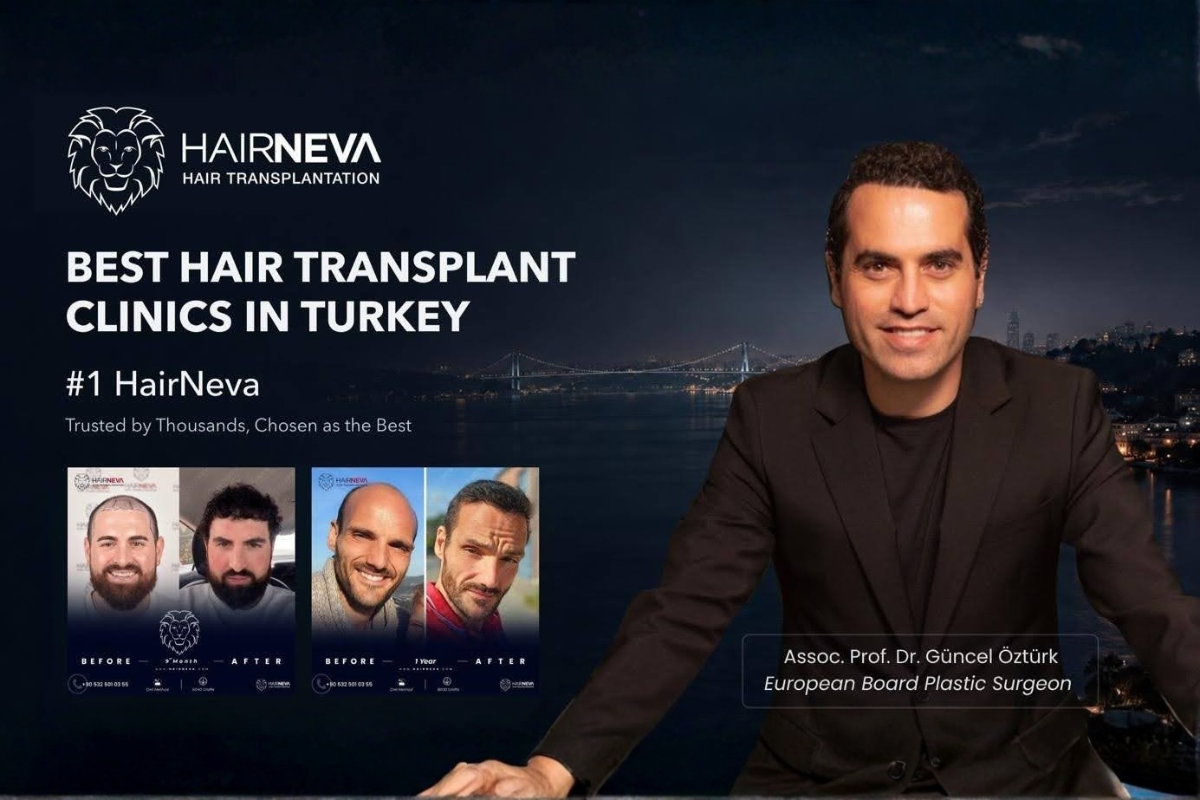
Turkey has become a popular destination for hair transplantation, but the market is very different from what it was a decade ago. Patients now arrive with far more information.
They compare graft estimates, hairline styles, donor management, FUE and DHI techniques, hotel packages and even the way clinics handle follow-up after they return home. That extra research is useful because a hair transplant is not a treatment that should be selected on price alone.
The result depends on how well the donor area is assessed, whether the new hairline suits the face and how intelligently the available grafts are distributed. A clinic promising the largest number of grafts is not necessarily providing the strongest plan.
1. HairNeva
HairNeva stands out because its treatment philosophy focuses on building the transplant around the patient's actual hair characteristics. Founded by Assoc. Prof. Dr Güncel Öztürk, the clinic looks at donor density, forehead proportions, existing hair, the degree of recession and how future thinning could affect the result.
The first question is not simply how many grafts can be transplanted, but how they can be used to create a natural and balanced result.
Hair transplantation at HairNeva is carried out by the clinic's medical team, with particular attention to the height and shape of the frontal hairline. Advanced AI-assisted hair and scalp analysis supports the assessment and planning process, while DHI is one of the clinic's primary techniques.
For patients researching options for the best hair transplant in Turkey, HairNeva says its approach prioritises facial balance, donor preservation and a result designed to remain appropriate rather than following a fixed hairline template.
2. Estefavor
Estefavor is another Istanbul clinic that works with international patients. Its treatment journey is structured for people travelling to Turkey specifically for hair restoration, which can make the practical side of the trip easier to manage.
Patients considering Estefavor should pay close attention to how the team divides grafts between different areas. A person with both frontal recession and crown thinning may not benefit from treating every section at the same density. Strategic distribution can often produce a stronger visual change while using the donor supply more carefully.
3. Oktay Tüney
Oktay Tüney is worth researching for patients who prefer to compare individual specialists alongside clinic brands. A specialist-led consultation can be particularly valuable when someone has already received several very different graft estimates and wants to understand why those recommendations vary.
The consultation should ideally cover the future as well as the present. If native hair continues thinning, a very aggressive first procedure could leave too few grafts available later. Long-term planning is therefore especially important for younger patients or people whose pattern of hair loss is still developing.
4. Sapphire Hair Clinic
Sapphire Hair Clinic is another recognised Istanbul option for international hair transplant patients. Treatment packages can include elements such as accommodation, VIP transfers, aftercare products and continued postoperative communication, helping patients organise the procedure within a short stay in Turkey.
The clinic works with techniques including FUE and DHI. Rather than choosing according to the name of the method, patients should ask why one option has been selected for their case. A technique only makes sense when it matches the patient's donor condition, existing density and the area being restored.
5. Smile Hair Clinic
Smile Hair Clinic has gained substantial visibility among people researching hair restoration in Istanbul. It has built an international patient pathway that covers the stages before arrival, the treatment itself and postoperative guidance.
When reviewing Smile Hair Clinic, it is useful to search for results involving a similar hair-loss pattern to your own. Someone with isolated temple recession should not expect exactly the same outcome as a patient with widespread thinning. Hair thickness, donor density and scalp contrast can all change how dense a transplant appears.
6. Nihat Tüney – Worldplast Hair
Nihat Tüney, associated with Worldplast, is another name worth considering when comparing hair transplant specialists in Turkey. Patients who want to understand the reasoning behind their procedure may find it helpful to discuss hairline design, donor limits and possible future sessions in more detail.
An important decision is how much donor hair should remain untouched. A first transplant should ideally improve the patient's appearance without using the donor area so aggressively that future treatment becomes impossible. This balance matters even when the initial session could technically include more grafts.
7. Bosphoria Hair
Bosphoria Hair offers another option for patients looking for a more individually planned result. Hair Transplant Specialist Muhammed Yeni has more than 11 years of experience and has participated in over 4,000 procedures, with particular attention given to natural density and age-appropriate hairlines.
The hairline is where small technical choices become highly visible. The front should not resemble a sharply drawn border. Variations in direction, softer density at the edge and careful transition into thicker areas can make the transplanted hair sit more naturally within the rest of the scalp.
8. Asli Tarcan Clinic
Asli Tarcan Clinic has become a familiar name within Istanbul's international aesthetic treatment market. Hair transplantation is offered alongside other procedures, and the clinic has experience coordinating treatment for patients arriving from abroad.
Its travel infrastructure may be convenient, but the medical plan should still be assessed independently. Patients should ask what the proposed graft count actually means, which areas will receive priority and how the clinic expects the donor zone to look once the extraction sites have healed.
9. Yetkin Bayer Clinic
Yetkin Bayer Clinic has a long-standing presence in Turkey's hair restoration sector. Dr. Yetkin Bayer is a recognised name among patients researching hair transplantation, and the clinic works with both moderate and advanced cases.
People with extensive baldness often need particularly careful planning because available donor hair may not be enough to recreate high density over the entire scalp. Prioritising the frontal third can sometimes create a far stronger cosmetic result than distributing the same grafts evenly from front to crown.
10. Istanbul Care
Istanbul Care completes this version of the list. The clinic operates within Istanbul's large medical tourism industry and offers hair transplantation to patients visiting Turkey from overseas.
As with any international clinic, organisation should be considered alongside the quality of the treatment proposal. Ask whether the plan may change after an in-person examination and what happens if the donor area is weaker than expected from photographs. A clinic should be prepared to adjust the procedure rather than rigidly follow the original estimate.
What Makes a Consultation Useful?
A proper consultation when researching for the best hair transplant in Turkey should tell you far more than the cost of the package. Clear photographs or an in-person assessment should be used to evaluate the temples, hairline, top, crown and donor region together.
You should also receive an explanation of the recommendation. If the clinic suggests 3,200 grafts, for example, ask why that number is appropriate and where those follicles will be placed. A detailed answer is usually more meaningful than an instant promise of a very large session.
The Hairline Should Fit the Face, Not a Trend
Hairline styles can become fashionable, but a transplant should not be treated like a temporary haircut. The height and shape of the frontal line should suit the patient's forehead, temples, age and overall facial structure.
A lower line also requires more grafts because a larger area needs coverage. In some cases, keeping the hairline slightly higher allows the clinic to build stronger density and preserve more donor follicles for later.
Hair Transplant Donor Management: Protecting a Limited Resource
Donor hair is limited, which makes extraction strategy a key part of a hair transplant procedure. Once a follicular unit has been removed from a specific extraction point, that exact graft is no longer available for another transplant.
The aim should therefore be to improve the recipient area without leaving the donor zone visibly depleted. Patients who may need another procedure later benefit particularly from a conservative, evenly distributed extraction pattern.
Why the Same Graft Number Can Produce Different Results
A total of 3,500 grafts can look completely different from one patient to another. Hair calibre, curl, colour contrast and the number of hairs within each follicular unit all influence perceived density.
Placement also matters. Concentrating grafts in visually important zones can create stronger coverage than spreading them thinly over a much larger area. This is why graft count should always be considered together with the distribution plan.
Hair Techniques: Choosing the Method for the Patient
Anyone researching for the best hair transplant clinics in Turkey will encounter terms such as FUE, DHI and Sapphire FUE. These are useful distinctions, but they should not become the sole reason for choosing a clinic.
FUE may be used across a wide range of cases, while DHI can be useful when controlled implantation between existing hairs is required. Sapphire blades may be used during recipient-site preparation. The right method depends on the scalp and treatment plan rather than which technique receives the most advertising.
Why Crown Cases Need Extra Graft Planning
The crown can be deceptively demanding. Because hair grows in a circular or spiral pattern in this region, a relatively large number of follicles may be needed before the area appears substantially fuller.
For patients who also have frontal thinning, the clinic may need to balance crown coverage against the more visible hairline. Sometimes treating the front more densely and using moderate crown coverage produces a better overall impression.
Understand What the Quote Covers
Prices for a hair transplant package can vary because clinics structure their services differently. Some include hotel nights, private transfers, medication, aftercare products and the first wash, while others quote mainly for the procedure itself.
Ask for a written breakdown before comparing clinics. Travel services are convenient, but they should not distract from the quality of the medical plan. A luxury hotel cannot compensate for poor donor management or an unsuitable hairline.
How to Assess Before-and-After Results Properly
Before-and-after photographs are useful when the images are genuinely comparable. Look for consistent lighting, similar camera angles and cases showing a hair-loss pattern close to your own.
Do not examine only the transplanted area. Whenever possible, look at the donor region too. A strong hairline result is less impressive if the back of the scalp appears patchy after extraction.
Hair Transplant Aftercare: Support Should Continue After the Flight Home
Patients searching for the best hair transplant clinic should ask what happens after they leave Istanbul. Hair transplantation has a long recovery and growth timeline, even though the surgery itself may be completed in a single day.
The clinic should provide clear guidance regarding washing, sleeping, exercise, shedding and the stages of new growth. International patients may also want to confirm whether they can send photographs for follow-up once they are back in their own country.
Frequently Asked Questions
Why Is Turkey Popular for Hair Transplantation?
Turkey has a large hair restoration industry, particularly in Istanbul, and many clinics regularly treat international patients. Competitive costs and medical tourism services also make treatment easier to organise from abroad.
How Many Grafts Do I Need?
The number depends on the degree of hair loss, donor quality, hair thickness and the size of the recipient area. A personalised assessment is necessary before a realistic estimate can be provided.
Are More Grafts Always Better?
No. The goal is to use the appropriate number of grafts, not automatically the largest possible number. Excessive extraction can weaken the donor area and reduce options for future surgery.
Can the Hairline and Crown Be Transplanted Together?
They can in suitable patients, but donor availability is important. When the donor area is limited, the medical team may recommend prioritising one region or using different densities across the scalp.
Is DHI Better Than FUE?
Neither is necessarily better in every case. The most appropriate method depends on the existing hair, recipient area, graft requirement and the way the medical team plans the procedure.
Do Hair Transplants Hurt?
Local anaesthesia is generally used during the procedure. The anaesthetic stage may cause temporary discomfort, while sensitivity or tightness can also occur during the first part of recovery.
When Will New Hair Start Appearing?
The transplanted hairs may initially shed. New growth then begins gradually over the following months, with the appearance becoming fuller as more follicles enter their growth phase.
When Can the Final Result Be Judged?
A transplant should not be judged during the first few months. Density, thickness and texture continue developing for many months, and the overall result is commonly evaluated around the one-year stage.
Can I Have Another Transplant in the Future?
A second procedure may be possible if sufficient donor hair remains. This is one reason responsible donor management during the first transplant is so important.
© Copyright IBTimes 2026. All rights reserved.
- Recommended For You