'No Corporate Job Is Safe': Former Netflix Employee's Life After Being Laid Off at 50
Redundancy is pushing some workers to build income from their own experience rather than pursue another corporate role
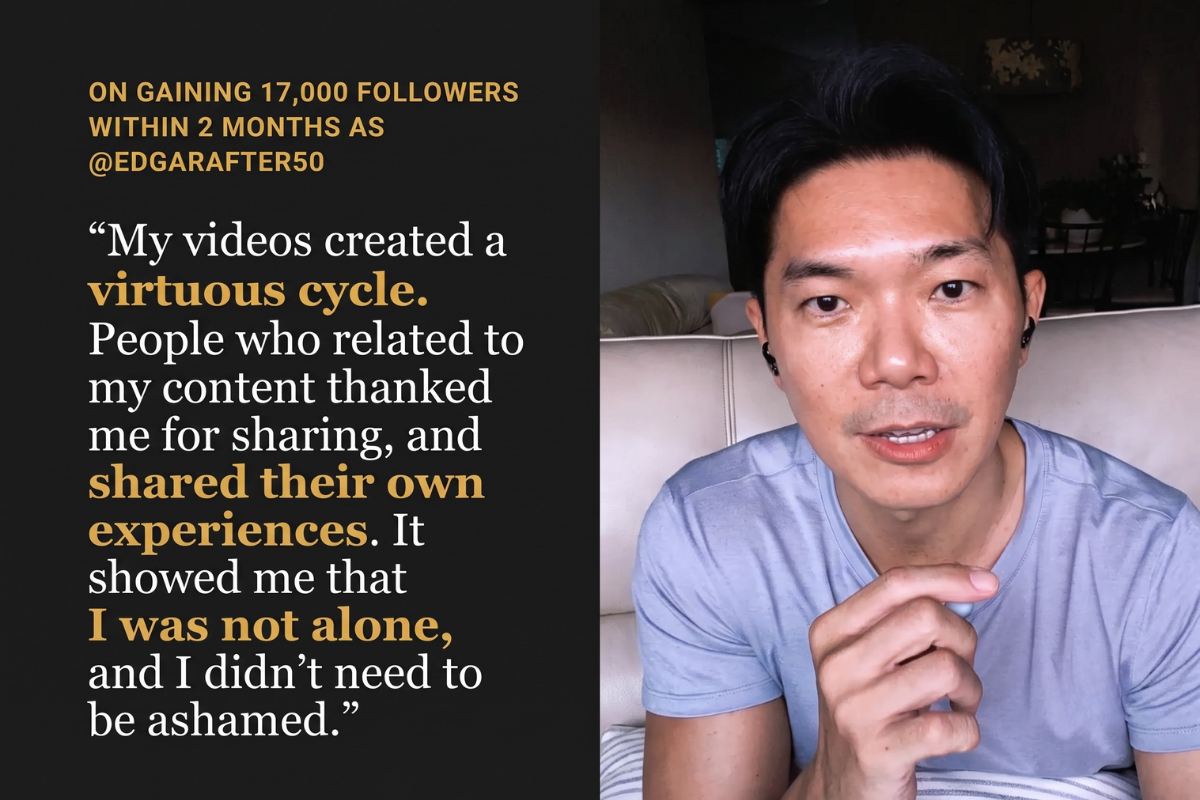
Edgar Tang built a career telling stories for other people's brands. At 50, after losing his job as a video editor at Netflix, he decided to stop telling theirs and start telling his own.
Tang, who is based in Singapore, was let go in March during the streaming company's restructuring. Instead of firing off applications for the next corporate role, he signed up for a content-creator course and began making videos about rebuilding a career after 50. He now posts on Instagram under the handle edgarafter50, treating his own experience as the thing he could own.
Watching disruption spread across industries, Tang concluded that 'no real corporate job is safe.' The one thing he felt he could still own was his lived experience, he told Business Insider, something 'which no algorithm can take over.'
His exit coincided with a wider thinning of Netflix's ranks. The company cut about 50 roles from its product division in February, then trimmed staff across international marketing, communications, and regional content teams in March, the month Tang left.
Netflix, which employs roughly 16,000 people worldwide and booked $45.2B (£33.9B) in revenue last year, has said the reductions were not based on performance.
The Financial Reality of a Layoff After 50
Tang is not alone. AARP surveyed 1,656 workers aged 50 and over and found that many believe they are being pushed out of the workforce, with age bias setting in for some as early as their late 30s.
The wider job market has thinned, too. More than 70,000 tech workers lost their jobs worldwide in the first quarter of 2026, according to the tracker Layoffs.fyi, with AI and automation named repeatedly as a driver, including at firms reporting record revenue. Tang is giving up a steady paycheck against that backdrop.
Betting on Yourself as Corporate Jobs Vanish
Tang had been forced to reset once before. At 32, working abroad, he was diagnosed with stage three Hodgkin's lymphoma and returned to Singapore for treatment. Recovery brought its own low. He said he sank into depression after his oncologist told him he was in the clear following three years of tests, because a future he had assumed would be short suddenly stretched ahead of him.
A friend's suicide after a difficult relocation pushed Tang toward two rules: learn something whenever he felt directionless, and move toward whatever scared him. Those rules carried him to New York, which he called 'the most amazing thing I've ever done for myself,' then to Los Angeles, and eventually home to Singapore to care for elderly parents. Each move meant starting over.
The layoff did not blindside him. Leaders had flagged that restructuring was coming, and he had time to finish projects and say his goodbyes. 'That was the best job I ever had,' he said, pointing to the fit of culture, people, and product.
What changed was where he directed his effort. 'What I did before was tell stories for a corporation's products,' Tang said. 'Now, I tell my own story.' Ownership was the point. 'Your voice is something you own,' he said, arguing it could be made both valuable and viable without returning to a corporate employer.
He acknowledges the risks. Putting his face to the work means giving up privacy and inviting criticism, he said, but he judged that showing up openly was more honest than posting anonymously. About a month after the layoff, he enrolled in the course and started filming.
Tang frames his decision in personal rather than commercial terms. Cancer, cross-country moves, and caregiving, he said, were the disparate experiences that carried him here. The layoff, he added, was 'the universe once again telling me not to overstay.'
© Copyright IBTimes 2026. All rights reserved.
- Recommended For You