

Interstellar Comet 3I/ATLAS: NASA Images Show Rising Activity Before Its 270m km Earth Flyby This December
NASA and ESA capture rising activity as 3I/ATLAS nears 270m km close pass
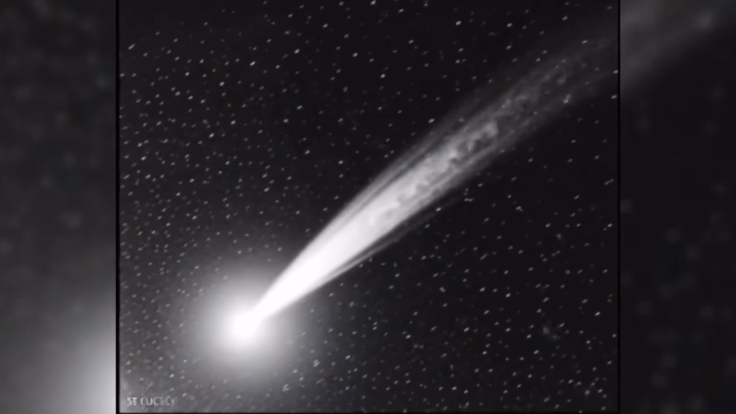
New images from NASA and the European Space Agency reveal that interstellar comet 3I/ATLAS has become significantly more active ahead of its closest approach to Earth at 270 million kilometres on 19 December. The object has spent months racing through the inner Solar System, and fresh activity suggests that its recent pass near the Sun has triggered stronger gas and dust emissions.
NASA released one of the clearest views of the comet so far through its new NASA images. Captured by the Hubble Space Telescope, the latest photograph shows a bright nucleus surrounded by an expanding coma as sublimated material escapes into space. The agency explained that comets brighten as they heat up, and the jet-like features in the new image point to an active surface responding to solar radiation.
Interstellar Comet Latest Updates
The comet drew scientific attention immediately after astronomers confirmed it as an interstellar visitor earlier this year. NASA first outlined its size, speed and unusual composition in data summarised in a detailed report on its upcoming flyby, which is covered in interstellar comet 3I/ATLAS will make its closest approach. Those findings indicated that the nucleus measures between 440 metres and 5.6 kilometres wide, making it one of the largest interstellar objects ever detected.
ESA provided an additional perspective through its Juice spacecraft. Travelling toward Jupiter's moons, the orbiter captured a striking image of 3I/ATLAS from just 66 million kilometres away. The picture showed a glowing halo and two distinct tails, which is consistent with a comet undergoing rapid activity. Juice took the photograph shortly after the comet's closest approach to the Sun, giving researchers a clearer understanding of how the object behaved as it heated.
New Images of the Comet
Both Hubble and Juice belong to a growing network of spacecraft now tracking the comet. Observatories across the Solar System are gathering complementary data, and each set of images adds insight into the behaviour of material that formed outside our planetary system. Scientists value this rare opportunity, since 3I/ATLAS is thought to be nearly 10 billion years old.
The comet will be visible to skilled observers during its Earth flyby, although a telescope of at least 30 centimetres is required due to its magnitude. Guidance on how to locate it in the night sky appears in how to watch 3I/ATLAS's closest approach. The recommended viewing time is before dawn, with the comet positioned beneath the star Regulus in the constellation Leo.
Astronomers stress that the comet poses no risk, even at its closest pass. However, they view the event as a chance to measure how interstellar objects respond to extreme heating as they travel through our Solar System. The James Webb Space Telescope is expected to observe the comet again in the coming weeks, while professional and amateur astronomers will continue gathering data from Earth.
The observations will also help refine predictions for the comet's future path. After its pass by Earth, 3I/ATLAS will move toward Jupiter, where a close encounter in March 2026 may alter its trajectory. The degree of change will depend on how much material the comet continues to release after its recent activity surge.
This December marks the only time 3I/ATLAS will come this close to Earth, giving scientists one final opportunity to study a rare visitor from beyond our Solar System.
© Copyright IBTimes 2026. All rights reserved.