

Israel Jubilant Over Iran's Supreme Leader Ayatollah Ali Khamenei's Death as Questions Swirl Over Successor
Israelis unite in celebration as Iran's leadership faces a power vacuum following Khamenei's death
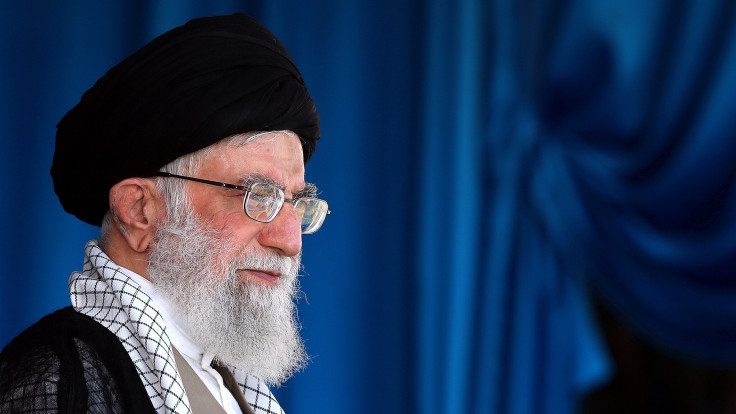
The streets of Israel erupted in celebration even as a tense power struggle began unfolding in Tehran following Iran's Supreme Leader Ayatollah Ali Khamenei's death. In Tel Aviv, Jerusalem and beyond, many Israelis greeted the news with a sense of vindication, with front pages splashing the Hebrew word 'hussal'—eliminated—as television networks replayed footage of the strike that ended the life of the man long regarded as Israel's most implacable foe.
Yet even as Israel marked his death as a strategic triumph, urgent questions surfaced over who now holds power in Iran and what comes next for a volatile region.
Celebration and Rare Political Unity
For much of Sunday, Israel appeared unusually united. Defence Minister Israel Katz declared that 'justice has been done', while opposition leader Yair Lapid congratulated the security forces and warned enemies that this would be the fate of anyone threatening Israel's existence. In a deeply polarised political climate, Khamenei's death created rare consensus, with right-wing and centrist figures alike framing the killing as a decisive blow against what they called an existential threat.
Some religious leaders invoked biblical imagery, comparing Khamenei to ancient enemies of the Jewish people. Others simply described it as the removal of a tyrant.
On the streets, reactions were more emotional than strategic. 'When you cut off the head of the snake, the snake can no longer rise again,' Tel Aviv lawyer Moti Arad told AFP, expressing hope that the death would pave the way for regime change and lasting peace. Some religious leaders invoked biblical imagery, comparing Khamenei to ancient enemies of the Jewish people; others simply described it as the removal of a tyrant.
Not All Voices Rejoice
But the celebrations were not universal. Schoolteacher Dalit Avichay cautioned that removing one leader would not necessarily dismantle the system he built. 'There will be another one instead of him,' she said, questioning whether the war had been politically motivated. Retiree Ami Bell struck a similar note, arguing that Israel has faced threats for decades and doubting that Khamenei's death alone would transform the strategic landscape.
These dissenting voices underscored a deeper anxiety: that even a dramatic assassination may not fundamentally alter the balance of power.
Who Is Running Iran Now
As fireworks and headlines lit up Israel, attention swiftly shifted to Tehran. Following Khamenei's death, Iran's constitutional mechanism for succession has been activated. Under the country's system, a temporary council—typically composed of the president, the judiciary chief and a clerical member of the Guardian Council—assumes certain duties while the Assembly of Experts moves to appoint a new supreme leader.
The Assembly of Experts, an 88-member clerical body, holds the formal authority to select the next supreme leader, with its deliberations expected to take place behind closed doors under intense scrutiny both domestically and internationally. For Israel, the identity of the successor matters enormously: a hardline cleric aligned with Khamenei's worldview could signal continuity, while a more pragmatic figure might reshape regional dynamics.
For Israel, the identity of the successor matters enormously. A hardline cleric aligned with Khamenei's worldview could signal continuity. A more pragmatic figure might reshape regional dynamics, though such an outcome remains uncertain.
Power Struggles Behind Closed Doors
Analysts suggest that the Islamic Revolutionary Guard Corps may play a significant role in influencing the succession process. While institutions remain intact, informal networks and security elites are likely manoeuvring to shape the outcome, and speculation has already centred on prominent clerics with close ties to the security establishment. No official announcement has yet clarified a frontrunner.
This ambiguity is both an opportunity and a risk for Israel's leadership. A weakened Iran during transition could be less capable of projecting power. Conversely, internal instability might trigger unpredictable retaliation.
Regional and Global Implications
International reaction has been measured but tense, with Western governments closely monitoring developments and neighbouring states bracing for potential fallout, including proxy responses across Lebanon, Syria or Gaza. Within Israel, officials have framed Khamenei's death as a turning point, yet military readiness remains high, reflecting concern that Iran or its allies could respond once the succession question stabilises. For many Israelis of Iranian origin, the moment also carries deep emotional weight. Ilan Aghajani, representing a major organisation of Jews of Iranian descent, said he was 'happy for the Iranian people', expressing hope that genuine regime change might allow freer ties between the two nations.
A Turning Point Or A Pause
Israel's jubilation sits alongside profound uncertainty. Khamenei's death removes a figure who shaped regional policy for decades, but it does not automatically dismantle the ideological and institutional framework he built. As the Assembly of Experts convenes and Iran's interim authorities consolidate control, the question for Israel is no longer whether its longtime adversary has fallen—it is who will rise next, and whether this dramatic moment marks the beginning of a new chapter or merely an interlude in a long and bitter rivalry.
© Copyright IBTimes 2026. All rights reserved.