Is Mojtaba Khamenei Iran's New Supreme Leader? Secret Successor Elected Following Death of Ayatollah Ali Khamenei
Amid ongoing conflict, speculation is growing that Mojtaba Khamenei could succeed Ali Khamenei as Iran's next supreme leader, though no decision has yet been confirmed.
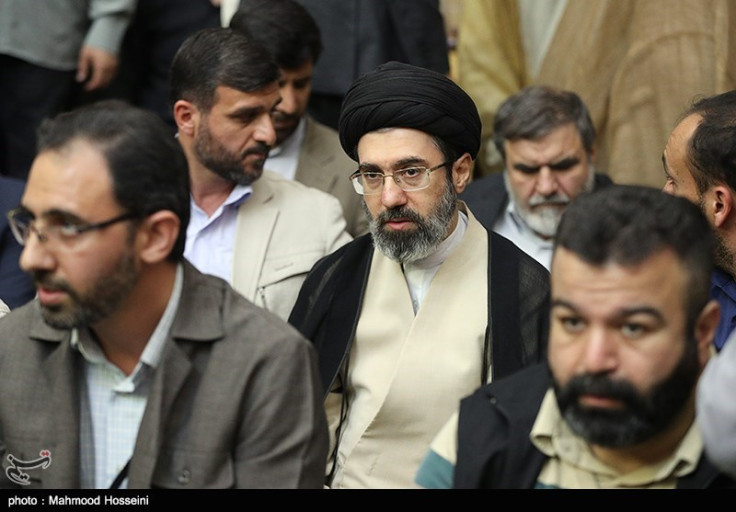
Mojtaba Khamenei has emerged as the name over Iran's leadership succession after a senior Iranian official told state media that the Assembly of Experts had elected a new supreme leader without publicly naming the winner as strikes continued across Iran, Lebanon and the Gulf on Sunday.
The news came after Ayatollah Ali Khamenei was reported killed in an Israeli strike last Saturday, pushing the war between Iran, the US and Israel into its ninth day and opening a vacuum at the top of the Islamic Republic as the region slid further into open conflict. President Donald Trump had already said he wanted to personally select Iran's next leader if American strikes destroyed the regime, while the Israeli military warned in a Farsi post on X that it would pursue anyone involved in appointing a successor.
The son of the slain Ali Khamenei was injured during one of the attacks. He is being touted as a potential new Supreme Leader
— NEXTA (@nexta_tv) March 7, 2026
Mojtaba Khamenei, the son of the slain Ayatollah Ali Khamenei, was injured during one of the attacks, according to Al Hadath and Times of Israel, citing… https://t.co/tZsJihCGvc pic.twitter.com/8Ak9MvkF6i
Mojtaba Khamenei and the Unnamed Decision
What Iran has officially said is narrower than rumour mongers would like as Ahmad Alamolhoda, a member of the Assembly of Experts, told state media that a leader had been chosen after a vote but did not say who that person was, and that omission leaves room for speculation that has rushed in at speed.
Among the names circulating, Mojtaba Khamenei has drawn the most attention, with Iran International reporting that the Assembly of Experts was moving to formally announce him despite internal unease over anything resembling hereditary rule.
A separate Iran International report went further, saying Mojtaba had already been elected under pressure from the Revolutionary Guards, though that claim sits outside the more cautious official statement carried by The Independent. Nothing in the public Iranian statement quoted by state media confirms Mojtaba Khamenei by name, so for now that part should be treated with a grain of salt.
That gap between official language and whispered certainty is where this story now lives as Iran says a choice has been made but has not yet disclosed who that person is and in a crisis that sort of silence rarely calms anyone.
A War Zone Succession
The succession drama is unfolding against a backdrop that is anything but procedural. On Sunday, Israel struck southern Lebanon, Beirut and oil storage facilities in Tehran, while Benjamin Netanyahu said there would be 'many surprises' in the next phase of the conflict.
Iran, for its part, hit a desalination plant in Bahrain, and foreign minister Abbas Araghchi said a US airstrike had damaged an Iranian desalination plant on Qeshm Island, adding that 'the U.S. set this precedent, not Iran.'

The attack on oil storage sites in Tehran sent pillars of fire into the night sky in Associated Press footage, and The Independent reported that it appeared to be the first time a civil industrial facility had been targeted in the war. That detail gives the succession question a harder edge.
Iran is not choosing a leader in peacetime or even in relative stability. It is trying to do it while absorbing military strikes, political threats and a very public attempt by outside powers to shape what comes next.
The scale of the fighting is already stark. According to officials cited by The Independent, the war that began on Feb. 28 after joint US-Israeli strikes hit Iran has killed at least 1,230 people in the Islamic Republic, more than 300 in Lebanon and around a dozen in Israel.
🚨🇮🇷 Throughout the conflict, Iran has taken the hit so far with 1,230 killed and hundreds injured, most from strikes deep inside their own country.
— Princewill (@Kingprince006) March 7, 2026
Lebanon reported 123 dead and 437 wounded, while Israel saw 11 killed and hundreds hurt from the incoming fire.
The tally remains… pic.twitter.com/mvzo0iNFw0
Reuters separately reported that Ali Khamenei's death was first cited by a senior Israeli official before broader confirmation emerged through other outlets, which underlines how contested and fast moving even the basic facts around this conflict have been.
For now, the most important fact is also the most frustrating one. Iran says the succession decision has been made. Until a name is formally announced, Mojtaba Khamenei remains the central possibility, not the settled answer.
© Copyright IBTimes 2026. All rights reserved.
- MOST POPULAR IN Trending