

Doha and Dubai in Lockdown Mode After US Strike Escalation Sparks Regional Airspace Crisis Across Middle East
Airspace closures in response to US-Iran tensions disrupt global travel
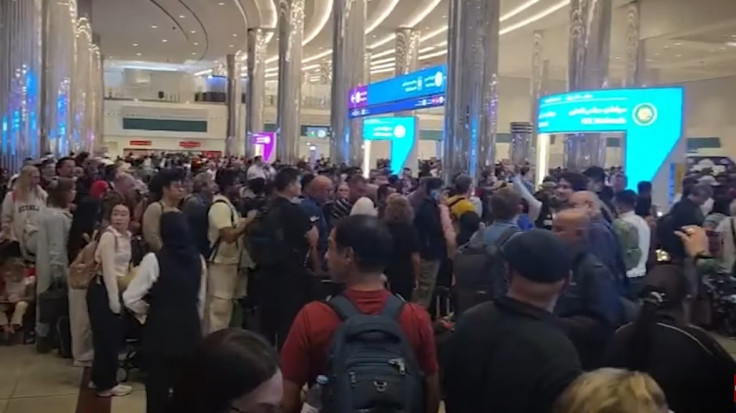
The Middle East's busiest aviation corridors ground to a halt overnight as US strikes on Iran triggered sweeping airspace closures across the Gulf, forcing Dubai and Doha, two of the world's most connected aviation hubs, to suspend operations. Dubai International Airport halted flights after President Donald Trump confirmed 'major combat operations' against Iran, with the ripple effect reaching Qatar within hours.
Tens of thousands of passengers were stranded or diverted mid-journey as governments moved swiftly to close their skies. Iran and Iraq shuttered their airspace first, with closures extending rapidly across neighbouring states, including the UAE and Qatar.
Airspace Sealed Across the Gulf
In Doha, the Qatari government shut its airspace, grounding the country's primary hub. Qatar Airways confirmed it had suspended all flights to and from Doha due to the closure. 'Qatar Airways Group confirms the temporary suspension of its flights to, and from, Doha due to the closure of Qatari airspace,' the airline said. 'The safety of our passengers and employees is always our highest priority, and we apologise for any inconvenience caused.' The carrier added that it was working closely with authorities and would resume operations once the airspace reopened.
Emirates, Dubai's flagship carrier, announced it had also temporarily suspended operations due to 'multiple regional airspace closures', assisting customers with rebooking and refunds. 'The safety and security of our passengers and crew remain our highest priority,' the airline said.
Planes Diverted Mid-Air
The practical impact was immediate. Emirates services from Dublin returned to Ireland. A Turkish Airlines flight heading to Dubai turned back to Istanbul. LOT's service was redirected to Warsaw, which also received a diverted Emirates flight from Seattle. Inbound flights from Colombo and Dhaka landed in Muscat, while a service from Chicago was diverted to Cairo and a Boston flight touched down in Athens rather than Doha.
Many Qatar Airways departures from European cities, including Berlin, Brussels, Zurich, Vienna, Barcelona, Stockholm, Copenhagen, Paris, Milan and Madrid, were also forced to return to their starting points.
British Airways traveller Mike Boreham, who had boarded a flight from Dubai to Heathrow, said the aircraft was ready to depart when the captain intervened. 'We were all boarded,' he said. 'The flight is completely full. About 10 minutes after the "boarding complete" announcement we were told airspace is closed.'
The Scale of Disruption
The closures underline how central Dubai and Doha are to global travel. On a typical day, approximately 250,000 passengers pass through Dubai International Airport alone, many connecting between Europe, Asia, Africa and Australasia. Both cities function as strategic crossroads linking East and West, making them uniquely exposed during geopolitical crises. Thousands of British passengers are among those affected, particularly those returning from Asia and Australasia via the UAE or Qatar.
Political Context Behind the Crisis
The airspace crisis cannot be separated from the military operation that caused it. The US strikes on Iran reportedly targeted nuclear facilities, ballistic missile infrastructure and senior leadership, drawing an immediate retaliatory response from Tehran. Blasts were reported across Bahrain and the UAE, both of which host US military installations, as Iran's Islamic Revolutionary Guard Corps confirmed it had struck American bases throughout the region.
Neither Doha nor Dubai reported direct damage to aviation infrastructure, but the decision to ground flights reflects concern about live missile activity and air defence operations across busy civilian flight corridors. Europe's aviation safety regulator EASA issued a conflict zone bulletin advising airlines against operating in affected airspace, citing a high risk to civil aviation.
What Happens Next
Airlines deployed additional ground staff at Hamad International Airport in Doha and other key airports to assist stranded passengers, though the timeline for resuming operations remained uncertain at the time of publication. Aircraft and crew are now scattered across multiple diversion airports, which is expected to complicate recovery schedules significantly even after restrictions are lifted.
The episode has demonstrated how swiftly a military escalation can paralyse the arteries of global travel. As diplomatic efforts unfold and the region watches for the next move from Tehran and Washington, passengers across the Gulf can only wait for the skies above Dubai and Doha to reopen.
© Copyright IBTimes 2026. All rights reserved.