

Benjamin Netanyahu Debunks Death Rumors: Israeli Prime Minister Sets Timeline for Conflict with Iran
Benjamin Netanyahu rebuts false death claims and vows a swift, limited war with Iran even as Israel's operations widen across the region.
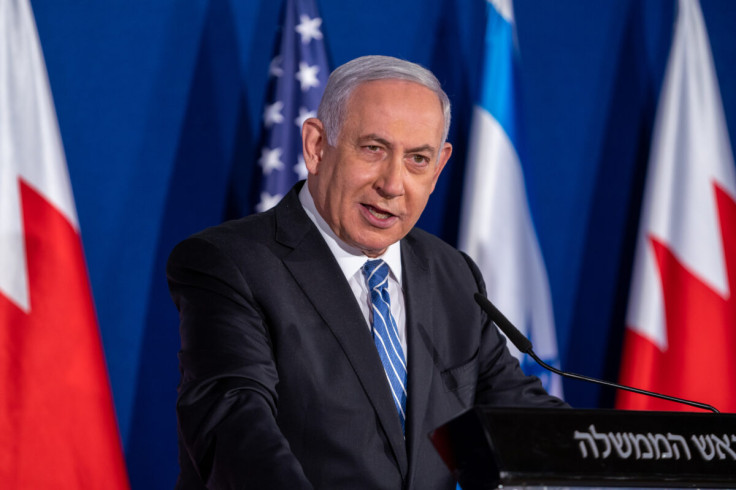
Benjamin Netanyahu appeared in public in Israel on Monday, hours after Iranian state-linked media claimed the prime minister had been killed in a missile strike, and used a US television interview to insist the conflict with Iran would not become an 'endless war.'
The comments from Benjamin Netanyahu, carried by Fox News, also set out his most explicit timeline yet for how long Israel expects its confrontation with Tehran to last.
The news came after a flurry of dramatic and ultimately inaccurate reports from Iranian outlets and regional broadcasters claiming Iran's Revolutionary Guard had hit the prime minister's office in Jerusalem and left his fate 'unclear.'
The claims, attributed to the Fars news agency and the Islamic Revolutionary Guard Corps (IRGC), ricocheted across social media, briefly made it onto air at Al Jazeera, and fuelled a wave of online speculation that Netanyahu, who has dominated Israeli politics for decades, was dead. Within hours, his office had dismissed the reports as 'fake news,' and footage emerged of the 76‑year‑old walking with volunteers and soldiers, apparently unfazed by the rumours of his demise.
Benjamin Netanyahu Rejects 'Endless War' With Iran
For context, Israel and Iran have been locked in a steadily escalating confrontation since the 7 October attacks and the ensuing war in Gaza, with Tehran's allies across the region engaging Israeli forces and Israel striking back at what it describes as Iranian proxies and infrastructure.
A brief 12‑day conflict last June saw Israel and the United States launch a coordinated missile attack on the Islamic Republic, but Israeli officials now argue that Iran used the intervening period not to de‑escalate, but to harden its capabilities.
In his Fox News interview, Netanyahu said Iran had moved quickly to shield its programmes from future attack. 'They started building new sites, new places, underground bunkers that would make their ballistic missile programs and their atomic bomb programs immune within months,' he said, framing the latest Israeli airstrikes as a bid to prevent that from happening. According to Netanyahu's account, Tehran has continued to work on 'new weapons sites' since last year's 12‑day war, and Israeli planners believe they have a narrowing window to act.
He argued that delay now would carry far greater risks later. If no action were taken at this stage, he suggested, there would come a point at which 'no action could be taken in the future.'
Pressed on how long the confrontation with Iran might last, he rejected the idea of a drawn‑out quagmire. Netanyahu said the war with Iran would not be an 'endless war,' and instead predicted 'quick and decisive action.' The campaign, he cautioned, 'may take some time but won't take years,' presenting it as a finite, focused set of operations rather than an open‑ended regional conflagration.
Israel–Iran Conflict Spills Into Lebanon, Says Netanyahu
The conflict that Benjamin Netanyahu describes as limited has, in practice, already spread far beyond Iran's borders. Israel's defence minister, Israel Katz, said he and the prime minister had ordered the Israel Defence Forces to advance and seize 'strategic high ground' in Lebanon in response to Hezbollah's continued fire on northern Israel. Hezbollah, armed and funded by Tehran, is widely seen by Israeli officials as Iran's most dangerous regional proxy.
That expansion underscores the contradiction at the heart of Netanyahu's message. Publicly, he insists the campaign will be swift and contained. On the ground, Israeli forces are being sent deeper into Lebanese territory, while the air force maintains pressure on what officials call Iranian weapons infrastructure.
Inside Israel, the swirl of death rumours has played into a broader atmosphere of uncertainty. When the IRGC announced that 'the office of the criminal prime minister of the Zionist regime and the headquarters of the regime's air force commander were targeted' using Kheibar missiles, it stopped short of confirming Netanyahu's death but claimed his fate was unclear.
The Prime Minister's Office moved quickly to shut the narrative down, telling The Times of Israel the Iranian claims were 'fake news.' That dismissal, combined with Netanyahu's appearance alongside volunteers and troops, effectively buried the death rumours for now.
© Copyright IBTimes 2026. All rights reserved.