

Japan Quake Sparks Panic Online as 'Japanese Baba Vanga' Manga Prediction About a 2025 Mega Tsunami Resurfaces
A magnitude‑7.5 earthquake struck off northeastern Japan on 8 December 2025
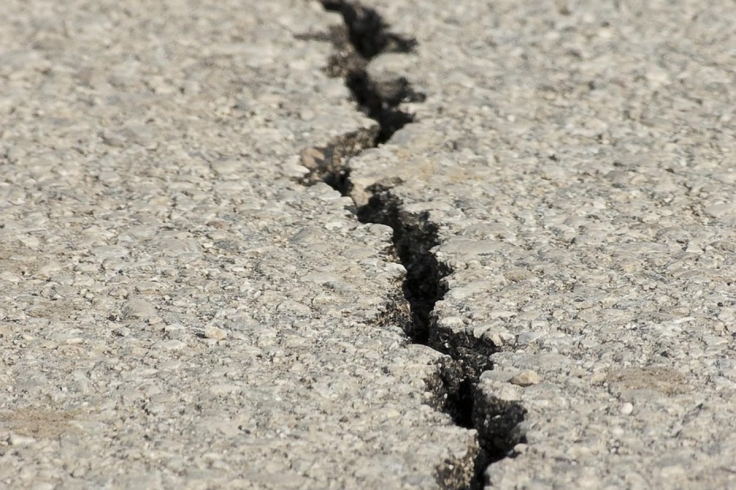
A magnitude‑7.5 earthquake struck off the northeastern coast of Japan late on 8 December 2025, triggering tsunami warnings along the Pacific coast in Aomori, Iwate and Hokkaido prefectures. Waves of up to 70 cm were recorded at some ports before the advisory was lifted early the following morning. No major damage or casualties have been reported.
The tremor quickly prompted a wave of social media activity, as users began circulating an old claim that a Japanese manga had predicted a 'mega-tsunami' striking Japan in 2025. The story, often attributed to the late-20th-century artist Ryo Tatsuki, resurfaced across platforms such as X and Reddit, with posts allegedly showing a coastline being wiped out by a giant wave alongside a date marking 2025. Hashtags including #2025Tsunami and #JapaneseBabaVanga trended online, with some users sharing makeshift 'survival guides' or advising others to move inland.
Experts have urged calm, emphasising that while the earthquake was real, there is no evidence linking it to any foresight from fiction. Seismologists highlight that reliable predictions must come from verified scientific data rather than digitally altered images or online speculation.
Japan Earthquake Triggers Tsunami Warnings
The earthquake struck around 80 km off the coast of Aomori Prefecture, registering as an 'upper 6' on Japan's seismic intensity scale, strong enough to topple furniture and make standing difficult in affected areas, according to The Guardian.
Initial warnings predicted waves up to three metres, but real‑time measurements recorded tsunamis between 20 cm and 70 cm at several ports. By early 9 December, the Japan Meteorological Agency (JMA) downgraded the alert. Rail and power services were disrupted overnight; some 800 homes reported temporary power outages, and local train services were suspended for safety checks, according to Reuters.
Authorities have issued aftershock warnings, urging residents in coastal zones to remain vigilant. Despite the limited physical impact, the tremor revived public concern about Japan's vulnerability to natural disasters. The event has triggered a re‑examination of preparedness in regions still sensitive to seismic activity following the 2011 disaster.
Developing : A massive magnitude 7.6 earthquake struck off the coast of Japan Monday, triggering a tsunami alert for waves up to 10 feet.
— Baba Banaras™ (@RealBababanaras) December 8, 2025
Last year's video when the 7.1 magnitude earthquake hit Japan. This time 7.6. Prayers for our Japanese brothers & sisters. pic.twitter.com/xiJLchr2T2
BREAKING: 7.2-magnitude earthquake hits off northern Japan, tsunami advisory issued - JMA pic.twitter.com/6AGzug4rZp
— BNO News (@BNONews) December 8, 2025
A reminder to people who don't think "small" tsunamis are a big deal: even a 30 centimeter Tsunami can easily knock down a person.
— Jeffrey J. Hall 🇯🇵🇺🇸 (@mrjeffu) December 8, 2025
If you are in an area with a tsunami warning, you should take it very seriously.pic.twitter.com/hwCcZGfz51 https://t.co/QXu1CXR0GX
Viral Manga Fuels Online Panic
Shortly after the quake, social media users widely shared images claiming to be from a manga titled Watashi ga Mita Mirai ('The Future I Saw'), suggesting the work had predicted a devastating 2025 tsunami. Many of the circulating images appear to be composites or digitally edited, combining panels from unrelated works to create the appearance of prophecy.
There is no verifiable record of Tatsuki publishing a story with the alleged plot, and no official archive lists a title with the 2025 mega-tsunami scenario.
Experts Urge Calm and Verification
Seismologists and disaster management specialists emphasise that earthquake and tsunami risk should be assessed using scientific methods. The JMA reiterated that no credible forecast predicts a major tsunami in 2025 and urged the public to rely solely on official alerts.
While the December quake is real and understandably alarming, the viral 'Japanese Baba Vanga' tsunami prediction remains an unverified urban myth. The episode highlights how fiction can be recast as prophecy in the digital age, particularly when fear and historical memory intersect. In crisis situations, verified data and official channels remain the only reliable sources.
© Copyright IBTimes 2026. All rights reserved.