

Who Was Joseph Laroche? Titanic's Only Black Passenger Who Fled Racism Before Tragic Death at Sea
Laroche's body was never found
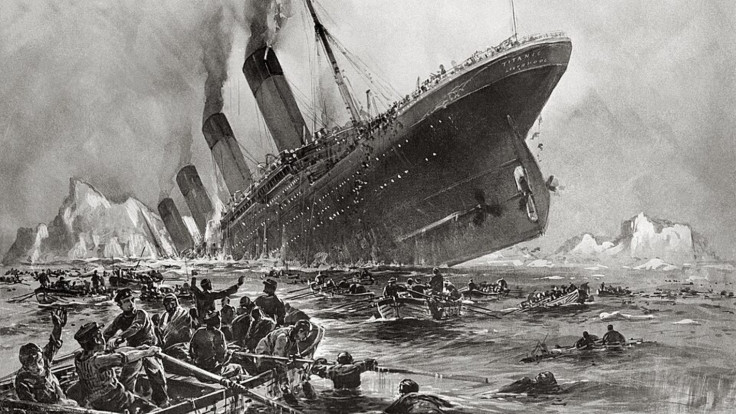
Joseph Philippe Lemercier Laroche was the only documented Black passenger aboard the Titanic during its ill-fated maiden voyage in April 1912. Born in Cap-Haïtien, Haiti, in 1886, he came from a distinguished family and was a descendant of Jean-Jacques Dessalines, the revolutionary leader who helped secure Haiti's independence from France.
Laroche travelled to France in 1901, aged 15, to pursue an education in engineering. He eventually earned his degree after studying in Beauvais, near Paris, but struggled to establish a stable career amid racial prejudice.
Dr Carlette Norwood, a Washington DC-born academic who discovered Laroche's story while visiting the Maritime Museum in Liverpool, has sought to bring his life to wider attention through a play about his experiences. Ahead of its Liverpool debut on 17 October, Norwood spoke to the BBC about the engineer's life, marriage and tragic fate.
Describing the racial climate Laroche encountered, Norwood said: 'For a black man in France in the early 1900s, it was extremely racist.'
She added: 'At that time French people really still believed that black people had tails.'
Laroche faced racial tensions despite his education and professional qualifications, with Norwood explaining that he was frequently dismissed or subjected to racial abuse at work.
Love Story Defied Racial Prejudice
While living in France, Laroche met and married Juliette Lafargue, a white French woman. Their relationship unfolded at a time when interracial couples could face considerable social hostility.
Norwood praised Lafargue's courage, saying: 'She had to have been an exceptional woman to have been brave enough to have dated a black man during that time period.'
Lafargue's family also supported the couple. Norwood pointed to a surviving letter written by Lafargue to her father, suggesting that his principal concern was Laroche's education rather than his race.
The couple had two daughters, Simone Marie Anne Andrée, born in 1909, and Louise, born in 1910. When Lafargue became pregnant with their third child, the family decided to bring forward plans to leave France and return to Haiti.
Laroche wanted his children to grow up in his homeland and hoped to reunite with his mother, to whom he was particularly close. His uncle, Cincinnatus Leconte, then Haiti's president, arranged a position for him as a mathematics teacher, helping the family make the move possible.
Titanic Disaster Separated Family
Laroche and his family eventually boarded the Titanic after their original travel arrangements changed. Norwood explained that the ship was not initially meant to be part of their journey, saying: 'He wasn't supposed to be on that ship.'
The Titanic struck an iceberg in the North Atlantic at approximately 11:40 pm on 14 April 1912. Laroche woke his wife, and the family gathered valuables before carrying their sleeping daughters to the upper deck.
Lafargue, who was pregnant, and the two girls escaped in a lifeboat. They were rescued by the RMS Carpathia the following day.
Laroche did not survive, and his body was never recovered. His final moments remain unknown.
His story offers a rare historical account of a Black passenger aboard the Titanic, while highlighting the racial barriers he faced in Europe and the family he left behind.
© Copyright IBTimes 2026. All rights reserved.