King Charles Allegedly 'Pays' For Andrew's Silence: Why He Can't Turn His Back on Shamed Brother
King Charles shields Prince Andrew privately while maintaining a strict public exile

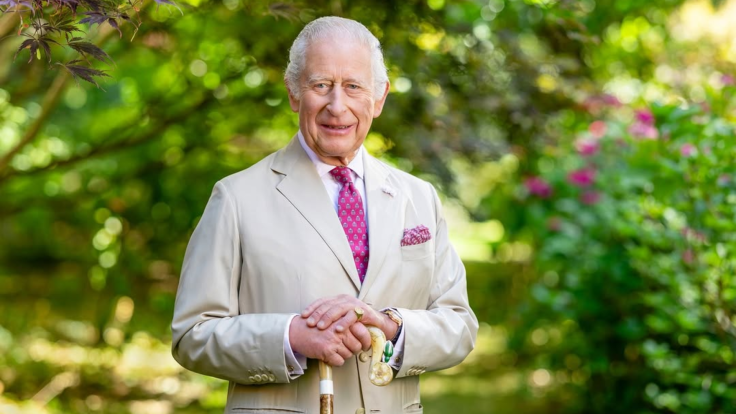
The House of Windsor has always excelled at the theatre of pageantry, but its current performance involves a stark duality that would test even the most seasoned statesman. While the world watches King Charles strictly enforce the public exile of his disgraced younger brother, a very different drama is playing out behind the velvet curtains of the monarchy.
According to palace insiders, the king has adopted a complex 'two-tiered' strategy: a ruthless public rejection designed to protect the crown, paired with a quiet, private safety net intended to keep Prince Andrew from completely unravelling.
This delicate balancing act comes at a moment of supreme peril for the royal family. Buckingham Palace is reportedly bracing for the release of further US government files connected to the convicted sex offender Jeffrey Epstein.
The spectre of these documents looms large; Andrew, who has vehemently denied all wrongdoing regarding his friendship with the serial predator, was previously named in flight logs for Epstein's private jet. Furthermore, unsealed records have alluded to a person named 'Andrew' receiving massages paid for with $200 cheques.
How King Charles Is Managing the Fallout Behind Closed Doors
With Congressional Democrats in the United States preparing fresh scrutiny of the Duke's past associations, and his refusal to testify regarding his connection to the paedophile financier, the pressure on King Charles has intensified. The monarch is keenly aware that the institution cannot withstand another round of uncontrolled controversy.
'Charles knows he cannot appear to be defending Andrew in public,' a palace insider claimed. 'But privately he is doing what he can to stop him from falling apart. For the King, it is a matter of containing the fallout without turning his back on his own brother'.
This containment strategy explains the seemingly contradictory moves coming from the palace. Despite stripping Andrew of his titles, military honours, and his position as a working royal, King Charles has quietly ensured his brother remains housed. As Andrew prepares to vacate the Royal Lodge, he is reportedly being moved to the king's private Sandringham estate — a move that effectively keeps him within the family fold while removing him from the public eye.
Another adviser noted the necessity of this approach, stating: 'He feels Andrew still needs some guardrails and stability, even if the outward stance has to be one of separation'.
The need for such 'guardrails' appears urgent. Reports paint a picture of a man struggling to cope with his new reality. Andrew has been given his marching orders from the $40 million Royal Lodge, with King Charles urging him to leave by Christmas.
Insiders describe the shamed ex-royal spending his final weeks in the 30-room mansion in a state of agitation, 'ranting' to himself along its corridors. In a detail that underscores his isolation, he is said to remain holed up in a television room, playing the war game Call of Duty.
King Charles and the Dilemma of Parliamentary Scrutiny
The public severing of ties, however, has created a new legal vulnerability that King Charles must navigate. By stripping Andrew of his status, the king has inadvertently left his brother open to political attacks from which senior royals are usually shielded.
Andrew's biography and images have been scrubbed from the Royal Family website, and his office no longer functions under a palace domain. A senior palace figure explained the internal conflict: 'Charles feels he has a duty to keep Andrew within a kind of quiet safety net. It is the brotherly connection that makes the whole situation so difficult. It is an incredibly delicate balance for the King. The royal family as an institution has drawn the firmest line imaginable between Andrew and itself. Publicly, he is treated as a private citizen, but privately, he is still being supported by Charles, in both counselling and financial matters'.
This shift to 'private citizen' status has emboldened British ministers. A parliamentary official recently confirmed that because the shamed ex-duke is no longer treated as a working member of the royal family 'for the purpose of the rule against casting reflections', questions regarding his conduct are now permissible in the House of Commons. This could lead to uncomfortable inquiries into his past roles, specifically his tenure as the UK's Special Representative for International Trade and Investment.
Despite these threats, friends of the duke insist he is adhering to the palace's demand for silence. 'He is unlikely to break cover and go rogue with a TV interview or memoir book deal,' one friend predicted, 'as he would rather quietly take handouts from Charles in exchange for his silence'.
Meanwhile, the king's protective instinct appears to extend to the next generation. Andrew's daughters, Princess Beatrice, 37, and Princess Eugenie, 35, continue to be welcomed at family events, signalling that while the father may be exiled, the family remains united — so long as the public isn't watching too closely.
© Copyright IBTimes 2026. All rights reserved.
- MOST POPULAR IN Royals