

Starbucks Is Shrinking Its Cafés While Bringing Back the 'Third Place' Customers Lost
Smaller formats could help Starbucks expand into costly, space-constrained locations while preserving seats and social space
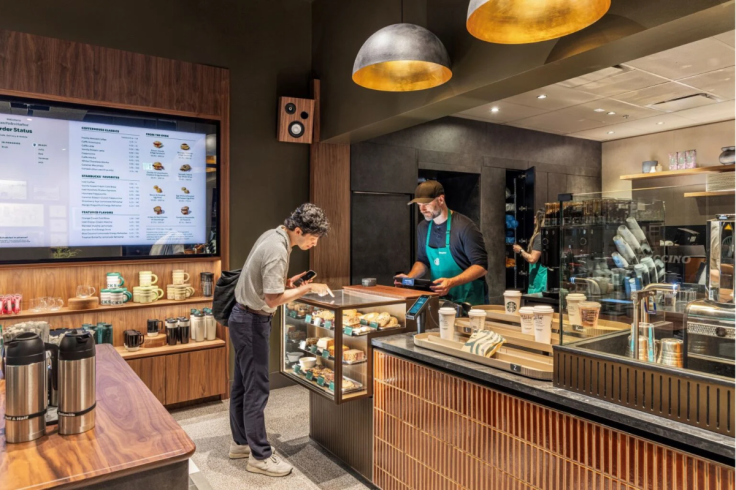
Starbucks is testing a new café model that keeps seating and social space at the centre of the customer experience, marking a shift away from the highly transactional formats the chain previously embraced.
The layouts are designed to support several ways of ordering, including in-store purchases, mobile orders, delivery, and drive-thru service where available. That gives Starbucks more flexibility to tailor stores to their surroundings without making convenience the sole focus.
The strategy also forms part of a broader effort to restore the café's role as a 'third place', somewhere customers can sit, work, meet, or spend time beyond simply collecting an order. Starbucks' latest results showed four consecutive quarters of positive global comparable sales growth, giving the redesign effort a significant commercial test.
Smaller Stores Could Open More Locations
The new concepts are designed to adapt to different shapes and sizes, giving Starbucks more flexibility when conventional café footprints are difficult to secure. One key change is the use of a shortened, 'folded bar' configuration rather than a counter stretching across the full length of the store. That allows more of the available floor area to be used for customers while fitting the operating equipment into a narrower space.
Six locations using the smaller prototype are currently open, including sites in San Antonio and Manhattan. Starbucks has not disclosed the square footage of the format. That flexibility could be particularly useful in expensive urban markets, where retail space can be limited and costly. The company is effectively trying to make its cafés more adaptable rather than simply making every store smaller.
Starbucks Is Rebuilding the 'Third Place'
The compact format is arriving alongside a much wider redesign of existing Starbucks cafés. Since late 2025, Starbucks says it has upgraded more than 1,000 coffeehouses across the US and Canada, adding softer seating, warmer textures, artwork, greenery, power outlets, and other features intended to encourage customers to stay longer. The company plans to reach at least 1,500 redesigned locations by the end of fiscal 2026.
Starbucks has also brought back ceramic cups and glassware for customers who stay in its cafés, while its redesigned lounge chair is explicitly intended to encourage people to sit and linger. That's central to Brian Niccol's 'Back to Starbucks' strategy: reclaiming the 'third place' by making coffeehouses spaces for human connection.
The Mobile-Order Model Is Being Rebalanced
Starbucks' latest approach also reflects a lesson from its earlier pickup-focused stores. The company previously experimented with locations designed around mobile ordering and quick collection, but Niccol later described those formats as overly transactional. Starbucks began closing pickup-only locations in 2025.
The new designs are deliberately more flexible. Starbucks says customers can still use mobile ordering, but the physical café remains usable for people who want to order at the counter or spend time inside. About 30% of customers use mobile ordering, according to the company. That balance matters because Starbucks is not abandoning digital convenience. Instead, it is trying to prevent convenience from determining the entire design of the store.
The Turnaround Still Faces a Growth Test
The redesign comes as Starbucks tries to translate its customer-experience strategy into sustained financial improvement. In its fiscal third-quarter results, Starbucks reported 7.9% growth in global and US comparable sales, with transactions up 4.2%. It also recorded its fourth consecutive quarter of positive global comparable sales growth.
Starbucks has simultaneously continued closing locations where it says there is no path to financial performance, while investing in stores it believes can better serve customers. That makes the smaller café experiment more significant than a design refresh. Starbucks is testing whether a reduced physical footprint can coexist with a stronger reason for customers to stay.
© Copyright IBTimes 2026. All rights reserved.