McDonald's Shares Plunge 4.8% After Revealing $8.5B Plan to Win Back Customers With AI and Better Food
Investors question McDonald's $8.5B spending spree as inflation squeezes customers and traffic remains weak

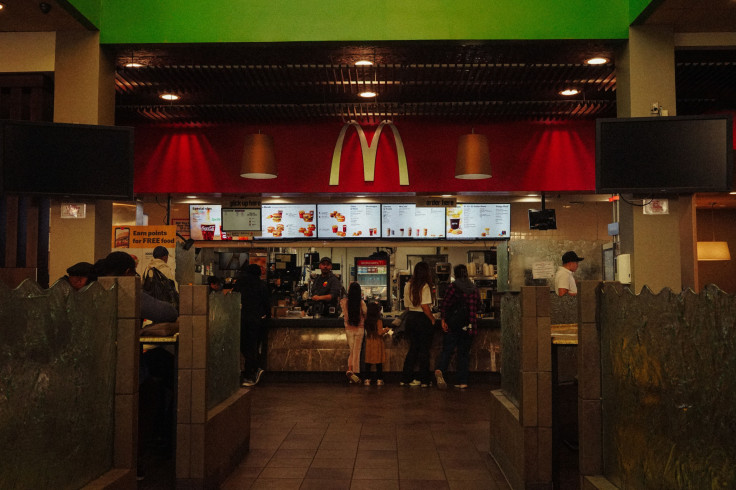
McDonald's is betting $8.5 billion on the belief that technology, better food, and revamped restaurants can persuade customers to come back more often. Wall Street's first response was to sell.
Shares of McDonald's fell 4.81% to $238.32 on Wednesday after the fast-food giant unveiled its McDonald's NEXT strategy and a multibillion-dollar package to help franchisees modernise restaurants and revamp operations. The stock touched a 52-week low of $234.03 during the session.
The sell-off reflects a growing problem for McDonald's: guest traffic is under pressure as cash-strapped consumers cut restaurant spending amid everyday costs, rising debts and rates, fuel costs, and job market disruption from AI advancement, but the company is committing $8.5 billion to reverse that trend.
What Is the NEXT Strategy?
McDonald's mindboggling strategy is broader than simply adding AI to restaurants.
It seeks to improve its food, use customer data and digital tools to make marketing more targeted, modernise restaurants, deploy automation, streamline operations, and give employees better training and tools.
The company has also launched the 'Make It Golden' initiative, which is a systemwide effort aimed at improving hospitality.
McDonald's said it plans to provide $8.5 billion in NEXT support through 2036, including roughly $5 billion through 2030, via rent relief and capital support to accelerate these changes for its franchisees.
From 2027 to 2030, it expects about $3 billion a year in baseline capital expenditure, plus $1.5 billion to $2 billion in additional capital to accelerate the programme.
The Numbers Investors Are Closely Watching
McDonald's expects the investment to improve profits and cash flow. By 2030, it is targeting operating margins of 50% to 55%, free-cash-flow conversion of 80% to 90%, and general & administrative costs of about 1.9% of sales.
It also expects restaurant efficiency to improve by about 2.5%, while targeting a 1.5% increase in market share for both the chicken and beverages segments.
The company anticipates that new restaurants will contribute about 2.5% to sales growth in 2027, then falling to about 2% by 2030. It also estimates that the average US restaurant could generate about $100,000 more in annual cash flow, with franchisees recovering their investment in about four years.
However, the immediate challenge is getting people through the doors.
McDonald's Q2 results showed global comparable sales rising just 1.3%, with US comparable sales up 0.8%. Revenue increased 4% and adjusted earnings per share rose 6%, partly offset by falling guest counts. The company even warned that customer traffic could remain flat while inflation stays elevated.
That matters in an industry where consumers can easily cut restaurant visits when household budgets tighten.
Longbow Asset Management CEO Jake Dollarhide, a McDonald's investor, reportedly said the turnaround could take time, while Morgan Stanley had already warned that NEXT might not be an 'immediate positive catalyst' if weak sales and the cost and timing of the investment fail to improve estimates.
Nonetheless, McDonald's believes the spending can ultimately pay for itself. It is therefore looking beyond its traditional burger dominance.
As McDonald's bets big to bring back customers, the company will need to turn its NEXT investments into stronger traffic and sales before investors are likely to be completely convinced.
Disclaimer: Our digital media content is for informational purposes only and does not constitute investment advice. Please conduct your own analysis or seek professional advice before investing. Remember, investments are subject to market risks, and past performance does not guarantee future returns.
© Copyright IBTimes 2026. All rights reserved.
- Recommended For You