NASA's Secret Bid To Revive SR-71 Blackbird Sparks Mystery as World's Fastest Plane Could Fly Again Soon
The agency has inspected retired aircraft 844 and approached former Blackbird personnel, but has not confirmed any restoration or flight plans
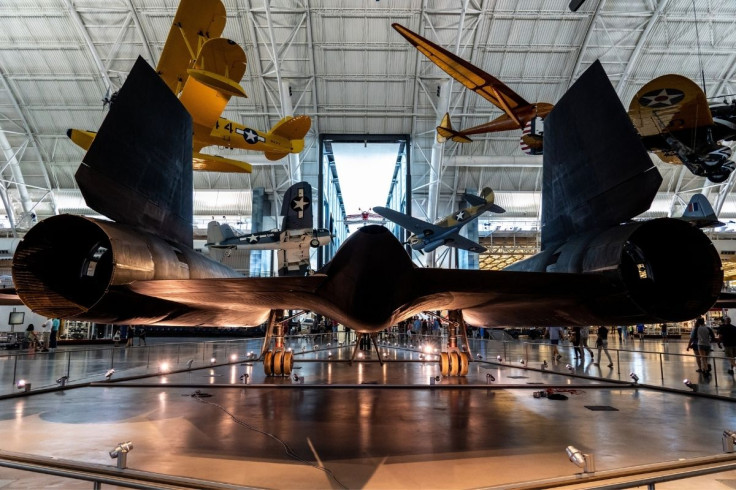
NASA's legendary SR-71 Blackbird could be the subject of a possible return-to-flight effort, nearly 27 years after the last aircraft of its kind flew. NASA has reportedly approached former SR-71 personnel about helping return one of its retired aircraft, tail number 844, to flight after it was taken into a hangar for inspection earlier this year.
The development has fuelled fresh speculation because it comes as NASA Administrator Jared Isaacman seeks to rebuild the agency's X-plane fleet.
In September, Isaacman displayed a mysterious high-speed aircraft silhouette during the All-In Summit under a slide titled 'Rebuilding our X-plane portfolio'. When asked whether it was an SR-71, he replied, 'You sure that's a Blackbird?' before saying NASA wanted to get 'back in the business of flying high and fast again'.
NASA has not confirmed that the SR-71 is being returned to flight, nor has it disclosed what the aircraft's possible role would be. But reporting from Aviation Week indicates that NASA has been working on a possible return-to-flight effort involving the historic jet.
The development is notable because No. 844 had been on outdoor display at NASA's Armstrong Flight Research Center for years before its removal in 2026.
NASA Moves SR-71 From Display
The aircraft at the centre of the mystery is SR-71A tail number 844, a Blackbird that NASA operated as a high-speed research platform. Commercial satellite imagery showed that it was no longer in its usual display position by at least 17 May 2026, according to Aviation Week.
Former NASA engineer Mike Relja told Aviation Week it was moved into the former space shuttle hangar and inspected. Aviation Week later reported that several former SR-71 personnel were approached about working on a possible return-to-flight effort.
One of those approached was Relja, a former NASA SR-71 test engineer who had previously worked on the aircraft and related programmes. The report described the effort as facing major technical obstacles after decades on the ground.
NASA has not publicly confirmed a return-to-flight programme. Its response has instead focused on the agency's broader interest in experimental aviation and high-speed research.
The Blackbird Was Built for Extreme Speed
The SR-71 was designed by Lockheed's Skunk Works under the direction of engineer Clarence 'Kelly' Johnson. It first flew in 1964 and was built to cruise at about Mach 3.2, more than 2,200 mph, at altitudes approaching 85,000 feet.
Its speed and altitude were not simply performance figures. They were central to its reconnaissance mission and later made the aircraft valuable as a research platform.
NASA used SR-71s during the 1990s to study aerodynamics, propulsion, thermal protection, atmospheric conditions, instrumentation and sonic-boom characteristics. According to NASA, the agency's SR-71A 844 made its final flight on 9 October 1999, reaching Mach 3.21 and about 80,100 feet.
That remains the last flight by an SR-71.
Why NASA May Be Looking at the SR-71
A potential return of the aircraft would come as NASA places renewed emphasis on experimental flight. The agency's Quesst mission, centred on the X-59, is already exploring quieter supersonic travel, while Isaacman has indicated that NASA wants a broader portfolio of experimental aircraft capable of pushing the boundaries of speed and altitude.
It remains unclear what role No. 844 could play if the reported effort proceeds. NASA has not said whether the aircraft would be used as a research platform, technology demonstrator or for another purpose.
A Return Flight Is Still Unconfirmed
The evidence currently points to an investigation rather than a confirmed comeback. NASA has not announced a flight date, formal restoration programme or mission for tail number 844.
Still, the combination of the aircraft's disappearance from display, reports of former engineers being approached and Isaacman's cryptic comments has created a compelling mystery around the Blackbird.
If NASA succeeds in returning 844 to flight, it would mark the first SR-71 flight since 1999 and revive an aircraft that remains the world's fastest and highest-flying production aircraft.
For now, however, No. 844 remains on the ground, while NASA has declined to say whether it could eventually return to flight.
© Copyright IBTimes 2026. All rights reserved.
- Recommended For You