China's 'Monster of Malan' Drone Could Be Bigger Than a B-2 as New Images Raise Stealth Questions
The experimental flying-wing aircraft is estimated to span about 52 metres, but its mission, performance and radar signature remain unconfirmed
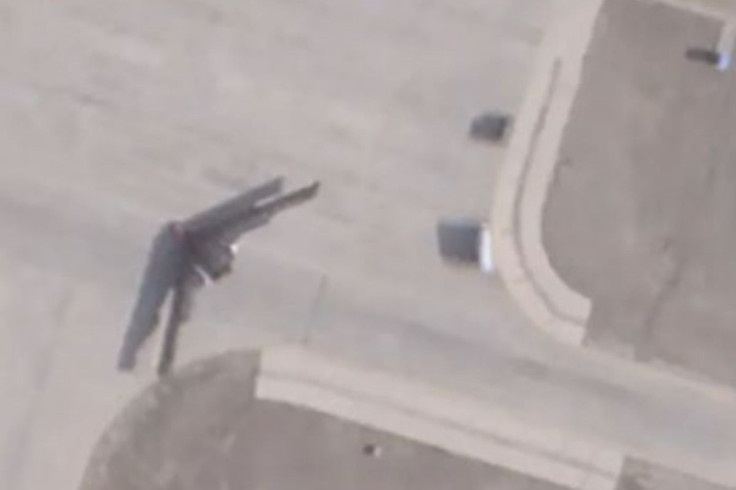
China's secretive 'Monster of Malan' drone is back in the spotlight after new images offered the clearest look yet at the enormous flying-wing aircraft, revealing unusual features that could be linked to its low-observable design.
The aircraft, unofficially known as the WZ-X, is estimated to have a wingspan of about 52 metres (170 feet), roughly the same size as the US B-2 Spirit stealth bomber.
The latest photographs appear to show the aircraft in flight and provide a better view of its unusual stepped wing shape and serrated trailing edge.
Analysts say the features are consistent with design approaches used to reduce radar detection, although the aircraft's actual radar signature, mission and performance remain unknown. The images themselves have also not been independently verified.
The aircraft has been associated with China's Malan test facility in Xinjiang, a significant test site for advanced unmanned aircraft.
Its appearance alongside other large flying-wing drones has fuelled questions over whether China is developing a new generation of long-range unmanned platforms that analysts believe could conduct surveillance deep inside contested airspace.
New Images Reveal the Drone's Unusual Wing Shape
The WZ-X was first identified in commercial satellite imagery taken in May 2025 at the People's Liberation Army Air Force's Malan facility. At the time, analysts estimated its wingspan at roughly 52 metres, placing it in the same broad size class as the B-2, whose wingspan is about 52.4 metres.
The aircraft has no publicly confirmed official designation or manufacturer. 'WZ-X' is an informal label used by open-source military aviation analysts.
New photographs circulated online in September 2026 provide a much clearer view of the aircraft's configuration. The images appear to show a broad central section transitioning abruptly into long, narrow outer wing sections, while the trailing edge appears shallowly serrated rather than forming one continuous line.
The War Zone reported that the new imagery helped resolve uncertainty over whether apparent breaks in the wing seen in earlier satellite photographs were genuine design features or imaging artefacts.
Why the B-2 Comparison Matters
The B-2 comparison is primarily about size, not capability. The Chinese aircraft's estimated wingspan is similar to the American bomber's, but there is no public evidence that the WZ-X has the B-2's range, payload, survivability or weapons capability.
The distinction is important because the WZ-X appears to be an unmanned aircraft. Janes assesses its wingspan at about 52 to 53 metres and its length at roughly 13 metres, with its dimensions pointing towards a long-range intelligence, surveillance and reconnaissance role.
It said an additional strike capability could not be confirmed from available imagery.
That assessment is consistent with the aircraft's unusually large, high-aspect-ratio wing. A large wing can provide aerodynamic efficiency that is useful for remaining airborne for long periods, potentially allowing an unmanned platform to gather intelligence over very large distances.
Andreas Rupprecht, a specialist in Chinese military aviation, has assessed the aircraft as a possible high-altitude, long-endurance ISR platform intended to operate deep inside defended airspace.
The Stealth Clues Remain Unproven
The newly visible serrated trailing edge is one of the most significant details in the latest photographs. Sawtooth edges are commonly associated with low-observable aircraft because carefully aligned edges can help manage radar reflections.
But the photographs do not prove how stealthy the WZ-X actually is. Radar cross-section depends on far more than the outline of an aircraft, with materials, surface treatments, engine placement, exhaust management, sensors and the alignment of numerous structural features all potentially affecting detectability.
The aircraft's apparent flying-wing configuration nevertheless removes the need for a conventional tail, potentially reducing some sources of radar reflection. Its design is therefore consistent with China's broader development of low-observable unmanned aircraft.
Malan Has Become a Major Drone Test Site
The WZ-X is not the only large flying wing linked to Malan. Commercial satellite imagery dated 26 March 2026 showed two very large stealthy flying-wing aircraft at the facility at the same time.
The larger aircraft, referred to as the 'Monster of Malan' by The War Zone, was estimated at about 173 feet across. A second aircraft had a cranked-kite configuration and a wingspan of roughly 137 feet, while the appearance of both aircraft outside their hangars has been cited as evidence of increased testing activity at the remote facility.
Malan has hosted multiple large flying-wing aircraft. Their appearance at the site has highlighted the increasingly active testing of advanced unmanned platforms at the remote facility.
For now, the WZ-X remains an experimental aircraft rather than a confirmed operational platform. China has not publicly disclosed its designation, manufacturer, mission or performance.
What the latest images do establish is that the aircraft is real, exceptionally large and undergoing flight testing. They also provide the clearest evidence yet of its unusual wing geometry, offering fresh clues about the stealth and long-endurance technologies China may be pursuing.
© Copyright IBTimes 2026. All rights reserved.
- Recommended For You