

Neuralink 'Can Control Any Device,' Musk Claims, After ALS Patient Demo Shared
An ALS patient shared his progress in using Elon Musk's Neuralink
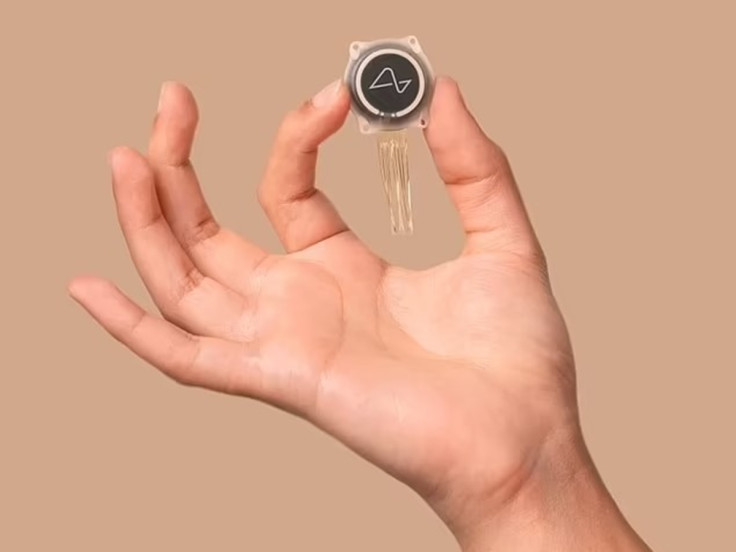
Elon Musk has claimed that a Neuralink implant could operate any device that works through a computer or smartphone, following a widely shared clip of an ALS patient using the technology to control a robotic arm.
The post came from the account of @cb_doge, which shared footage of the patient gripping food with a robotic arm and guiding it to his mouth.
BREAKING: Elon Musk says any device that can be controlled via computer or phone can be controlled by a Neuralink implant.
— DogeDesigner (@cb_doge) December 2, 2025
Here is a video where Neuralink enabled a paralyzed ALS patient to control a robotic arm and feed himself just by thinking. pic.twitter.com/wmzhcqsCMj
In a separate tweet, Musk responded to a Neuralink post on the matter, expounding on Neuralink's applications.
Any device that can be controlled via computer or phone can be controlled by a Neuralink implant https://t.co/ivynMZpsPj
— Elon Musk (@elonmusk) December 2, 2025
The ALS Patient Demo and Musk's 'Any Device' Claim
His remark quickly circulated across social platforms and raised fresh questions about the near-term scope of consumer and medical interfaces.
Neuralink described the demonstration as an example of digital control extending into physical assistance. In its update, the company said participants in the early clinical programme have been able to use the implant to manage digital devices and have now moved into trials with assistive robotics.
Participants in our clinical trials have extended digital computer control to physical devices such as assistive robotic arms.
— Neuralink (@neuralink) December 2, 2025
Over time, we plan to expand the range of devices controllable via Neuralink. https://t.co/HcPAzT74Lm
The organisation added that it intends to broaden the types of machines that can be linked through the system as research progresses.
Public Scrutiny: Enthusiasm Meets Cautious Realism
Public reactions to the Neuralink news have ranged from enthusiasm to cautious scrutiny. Supporters view the latest trial as a sign that the technology may open the door for individuals with severe paralysis to regain independence through direct neural control.
They argue that combining thought-driven interfaces with physical assistive tools could introduce new options for daily tasks, communication and environmental control.
Sceptics stress that the current examples remain highly controlled demonstrations within a clinical framework. They point out that more data is needed to show whether similar results can be achieved consistently across a broader group of patients, particularly over long periods of home use.
Concerns have also been raised about implant safety, data handling, and the long-term reliability of the hardware.
Musk's claim that any compatible device could be operated through Neuralink has added momentum to those debates. Many asked whether such future uses might include wheelchairs, service robots, computers, gaming systems, adaptive household equipment or industrial tools.
Others questioned the feasibility of translating complex actions through neural signals with consistent precision.
Design and Regulatory First Steps
Regulators in the United States granted Neuralink approval for its first human trials earlier this year. The company's initial implant, which Musk has referred to as the Telepathy device, is designed to enable people with severe paralysis to interact with digital systems through thought.
The broader concept centres on reading neural activity, processing those signals, and sending instructions to external devices.
What Is Neuralink?
Neuralink is a neurotechnology company founded by Musk in 2016. Its core project involves a small implant placed in the skull that connects to flexible threads resting on the brain's surface.
These threads record neural activity, which is then processed and translated into commands for computers and machines. The firm aims to build safe, compact implants that operate wirelessly and enable users to interact with devices without traditional inputs.
Its long-term research includes assisting people with neurological conditions, restoring lost functions and developing advanced human-machine interfaces.
The recent Neuralink update suggests that the device could change lives worldwide. Considering the project is still in its early stages, many remain excited about what's to come.
© Copyright IBTimes 2026. All rights reserved.