

Hospitals Claim New Trump Administration Medicaid Rules Could Cost Hundreds of Billions of Dollars
US hospitals warn Trump administration Medicaid rules could cost hundreds of billions beyond congressional cuts, prompting lobbying blitz and service reductions.
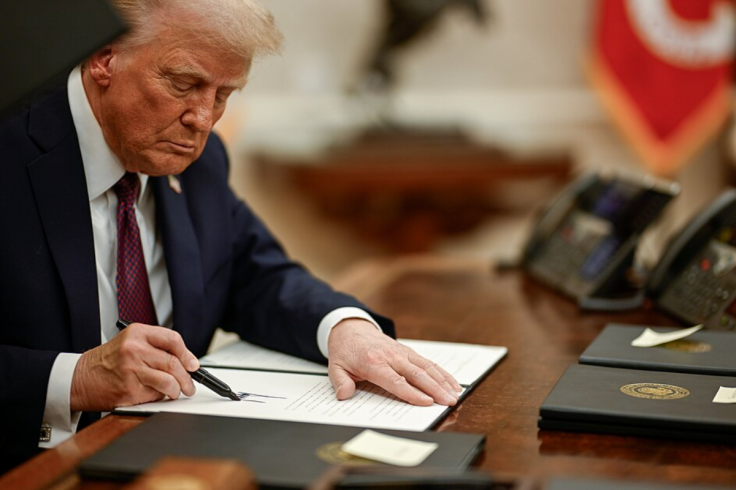
Hospitals across the United States are warning that proposed Medicaid regulations from the Trump administration could lead to further reductions in provider payments on top of cuts already enacted by Congress.
The Centers for Medicare and Medicaid Services has proposed two Medicaid rules that state-directed payments and health-care-related, or provider, taxes. Hospital executives say the changes could lead to service reductions, staff layoffs and, in some cases, hospital closures.
The Congressional Budget Office estimates that provisions affecting Medicaid provider taxes and state-directed payments will reduce federal Medicaid spending by about $340 billion (£252.31 billion) over fiscal years 2025–2034, with hospital groups warning that the changes will translate into lower provider payments.
CMS estimates that the two proposed rules would reduce federal Medicaid spending by $756 billion (£561 billion) and state spending by $265 billion through 2035 (£196.6 billion). By comparison, the Congressional Budget Office estimated that the provider-tax and state-directed-payment provisions of the 2025 law would reduce federal Medicaid spending by about $340 billion over fiscal years 2025–2034.
Those figures measure government spending reductions, not equivalent amounts of hospital losses, so they should not be treated as a direct comparison of financial losses to providers.
Medicaid Financing Rules Spark Lobbying Blitz
Hospital associations have launched what they describe as a major lobbying campaign in Washington. Lobbying registrations tracked by government-affairs consultancy Baron Public Affairs rose from four in May to five in June and 13 in July.
The Missouri Hospital Association spent $120,000 (£89,000) lobbying in the second quarter, its highest quarterly spending since 2011.
'Our core message to CMS is to stick to the statute. Congress cut enough,' said Robert Nelb, director of policy at America's Essential Hospitals, which represents facilities serving large Medicaid populations. 'There's no need to cut any more out of the Medicaid system at a time when the safety net is really struggling.'
States contribute their own money to the programme, which is then matched by the federal government. For years, some states have used taxes on hospitals and other health-care providers to help finance their Medicaid programmes while using payment arrangements to return money to providers.
Congress imposed new limits on Medicaid provider taxes and state-directed payments in the One Big Beautiful Bill Act.
The provider-tax provisions restrict new or increased taxes and phase down the threshold under which states can avoid certain federal restrictions, with changes beginning in fiscal year 2028. The law also places new limits on state-directed payments, which provide additional Medicaid payments to specific providers.
Hospitals argue that the CMS proposals go beyond what Congress intended. CMS, meanwhile, says the changes are needed to address what it considers excessive or misused Medicaid payment arrangements.
'Misaligned payment incentives and opaque financing arrangements are driving up costs without delivering better care,' CMS Administrator Mehmet Oz said in a May statement.
Rural Hospitals Already Cutting Services
Although the most significant financial effects of the law's provider-tax and state-directed-payment changes are phased in over several years, including reductions beginning in 2028.
'This is the most challenging economic time I've ever seen,' said Craig Thompson, CEO of Golden Valley Memorial Healthcare, a rural Missouri health system and former chair of the Missouri Hospital Association.
Thompson said inflation and Medicaid reimbursement pressures had forced the health system to halve its maternal beds in 2025.
Providence, a health system in the western United States, has begun cutting staff and supply contracts after projecting $1.3 billion (£960 million) in reduced Medicaid funding as the federal government implements the GOP-backed Medicaid cuts, up from its earlier estimate of $900 million (£667.8 million).
Separately, in Texas, hospitals began facing an estimated $27 million-a-day (around £20.4 million per day) reduction in additional Medicaid funding on September 1 after the Trump administration withheld approval for about $9.8 billion (£7.27 billion) in funding across three programmes.
The bulk of the Texas funding involves the Comprehensive Hospital Increase Reimbursement Program (CHIRP), which provides supplemental funding intended to help hospitals cover the gap between Medicaid reimbursement and the cost of providing care.
The Texas funding decision is separate from the two proposed CMS rules described above.
Not everyone sees the proposed rules as excessive. Conservative policy groups such as the Paragon Health Institute argue that some state tax and Medicaid payment arrangements effectively shift costs states have chosen to take on onto federal taxpayers.
Brian Blase, president and founder of the Paragon Health Institute, told reports that the combination of the One Big Beautiful Bill Act and CMS' rules 'will make federal Medicaid support fairer across the states.' He also said hospital prices have risen sharply, growing three times as fast as inflation and twice as fast as worker wages over the past 25 years.
'Hospital productivity is very low and poorly designed government subsidy programs incentivize hospitals to be inefficient,' Blase said. "Much of the recent growth is on overhead and not direct patient care.'
Hospitals say they support efforts to combat waste and fraud but argue that CMS is going too far.
'Everyone agrees Medicaid financing should be accountable,' said Charlene MacDonald, president and CEO of the Federation of American Hospitals. 'The real question is, do states have the resources they need to address chronic underpayment in communities?'
Chris Mitchell, president and CEO of the Iowa Hospital Association, sees an opportunity after the midterm elections, when newly elected lawmakers take office.
'My guess is there's going to be a lot of individuals in Congress who didn't vote for this thing in the first place, and I see that as a real opportunity to continue these discussions,' Mitchell said.
The projected savings and potential effects described above are estimates and policy projections. Statements about the impact on individual hospitals are attributed to the organisations and executives cited.
© Copyright IBTimes 2026. All rights reserved.