

Two Renoir Paintings Still Missing After Museum Heist, Here's Why They Might End Up in Russia
Two artworks stolen in €9M French Riviera heist as manhunt begins
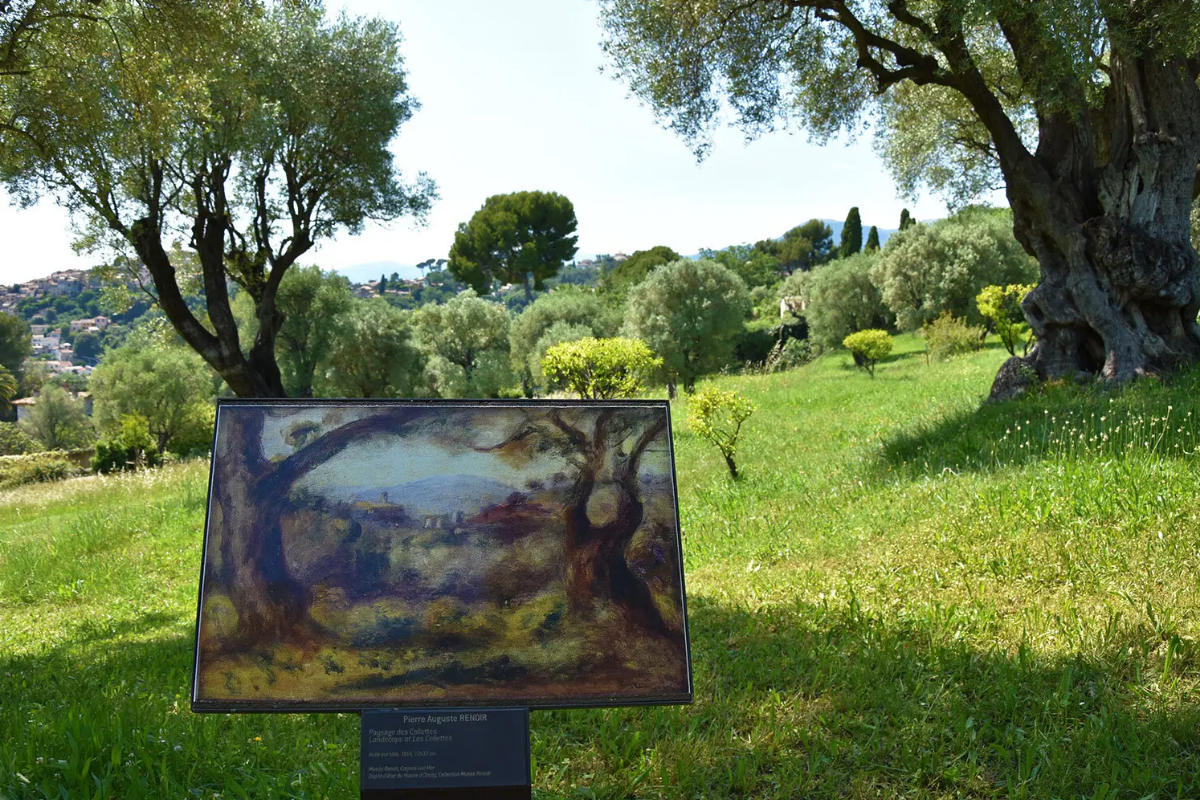
Two Renoir paintings were still missing on Tuesday night, hours after thieves broke into the Musée Renoir on the French Riviera and made off with four of the artist's canvases. Two of the works were recovered within the grounds, but the pair that vanished may prove far harder to trace, and specialists in stolen art say that if the paintings are ever sold, one of the few markets likely to take them is Russia.
The break-in at the hilltop museum in Cagnes-sur-Mer, near Nice, was over in minutes. Two intruders cut through wire fencing to reach the grounds and forced their way inside shortly before 6 a.m. According to the mayor of Cagnes-sur-Mer, Bryan Masson, they used an electric saw to cut through the fittings holding the frames before lifting four paintings from the walls. The museum's alarm sounded at 5:48 a.m., and police reached the scene five minutes later.
The response was swift, but not quite swift enough. As officers closed in, the thieves abandoned two of the paintings in the museum garden and escaped with the other two. Portrait de Madame Stephen Pichon (1895) and Coco Lisant (1905) were recovered on site. The two that got away, Portrait of Madame Colonna Romano (1910) and Jeune fille au puits (1886), had both been on loan from the Musée d'Orsay in Paris.
Masson put the value of the four works at about €9 million (around £7.7 million, $10.5 million) and described the raiders as 'well-equipped and well-prepared'. The regional newspaper Nice-Matin, which identified the stolen canvases, reported that the pair had timed their raid to a change in the museum's security shift. No arrests had been made by Tuesday night.
Why the Missing Renoir Paintings Could End Up in Russia
Taking a Renoir is one thing. Selling it is another. A signed work by a master is instantly recognisable, which locks it out of legitimate galleries and salerooms, where a provenance check would expose it at once. Most stolen art, as a result, never reaches the open market. It is ransomed back to owners or their insurers, quietly returned in exchange for a reward, or hidden away for years until attention fades.
When such works do change hands, they tend to move towards a small group of markets where buyers are less inclined to ask where a piece came from. Christopher Marinello, chief executive of the recovery firm Art Recovery International, who has spent decades tracing looted and stolen art, has named Russia as one of them, alongside Saudi Arabia and the United Arab Emirates, in comments to the art-market publication Artnet News.
Those markets sit largely beyond the reach of Western law enforcement, and the checks that make a stolen canvas unsellable in London or New York carry far less weight there. For two Renoirs too well known to surface openly in Europe, a private buyer in such a jurisdiction is one of the few plausible routes to a sale.
A Renoir Heist That Fits Europe's Wider Art-Crime Wave
The theft was not an isolated one. It came less than a year after the daylight raid on the Louvre in October 2025, when thieves seized jewels valued at about €88 million. Suspects have since been arrested, but the jewels have not been recovered. In March, four masked men took a Renoir, a Cézanne, and a Matisse from the Magnani Rocca Foundation near Parma in Italy, works that were tracked down only recently.
Europol, the European Union's police agency, warned last month that museum thefts are changing. In a report published on 24 August, it described a move away from stealth and towards force, and said organised specialist gangs were giving way to opportunists recruited through social media.
The Musée Renoir occupies the hillside home where Pierre-Auguste Renoir spent his final years until his death in 1919, and where his easel and wheelchair still sit among 13 of his paintings.
In a statement, the museum said the theft should serve as a warning that its collection now faces 'a new form of organised crime targeting works of art,' and that local authorities could not shoulder the rising cost of security alone.
Coco Lisant, one of the recovered paintings, has a history of its own. Looted by the Nazis during the Second World War, it was returned to France only in 1994. This time it did not leave the grounds. The two that did remain missing as the search entered its first night.
© Copyright IBTimes 2026. All rights reserved.