

Two Renoirs Still Missing After €9M Heist as Expert Says Paintings May Be 'Almost Impossible' To Sell
Art theft leaves two Renoir masterpieces missing and unsellable
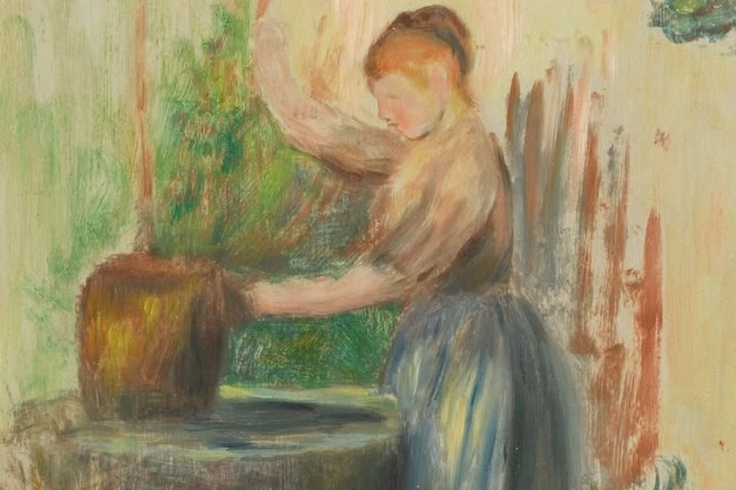
Two Renoir paintings remain missing after thieves broke into a French Riviera museum and stole four works initially valued at a combined €9 million.
Yet despite their multimillion‑euro price tags, an art theft expert says the missing canvases could be 'almost impossible' to sell because their identities and stolen status make them too risky for the legitimate art market.
The theft took place early on Tuesday, 8 September 2026, at the Renoir Museum in Cagnes-sur-Mer. The two paintings still missing are 'Portrait of Madame Colonna Romano' and 'Young Woman at the Well', both of which belong to Paris's Musée d'Orsay and were on loan to the museum.
The thieves also took 'Madame Pichon' and 'Coco Reading', but those two works were abandoned in the museum grounds as the suspects fled the police.
How the Renoir Paintings Were Stolen
The suspects reportedly entered the museum shortly before 6am after cutting through a garden fence. They then entered the building and removed four Renoir paintings from their frames.
The museum's alarm was triggered at 5.48am, and municipal police arrived about five minutes later. Surveillance cameras captured the suspects, who fled when officers responded. Two of the stolen paintings were eventually found abandoned on the museum grounds.
Cagnes-sur-Mer mayor Bryan Masson described the suspects as 'well-equipped' and 'well-informed'. The French national office responsible for investigating trafficking in cultural goods has joined the investigation as police search for the perpetrators.
The Renoir Museum occupies the former home of Pierre-Auguste Renoir in Cagnes-sur-Mer, near Nice. Renoir lived at the property during the final years of his life, and the museum opened in 1960.
Why the Missing Renoirs Could Be Impossible To Sell
The estimated €9 million value of the four paintings might appear to offer a major financial incentive for thieves. However, the works' fame and recognisability could make them difficult to sell.
James Ratcliffe of the Art Loss Register pointed out that finding a buyer for the stolen artworks would be very difficult. 'Although the (paintings) are valuable, and will have probably seven figures attached to them in terms of the financial value, trying to find a buyer who will pay that is going to be almost impossible for them,' he said.
Stolen works by a famous artist cannot simply be taken to a reputable auction house or dealer.
Once the theft is publicly recorded, dealers, museums, collectors and other legitimate participants in the art market can identify the paintings and their provenance.
Ratcliffe said the thieves would not be able to simply approach an art dealer with the paintings and offer them for sale.
Without access to a buyer willing to handle stolen art, the paintings can become a liability rather than an easily converted source of cash.
Cagnes-sur-Mer mayor Masson also highlighted the gap between the paintings' monetary valuation and their usefulness to criminals. 'It's Renoir's, it is priceless, you cannot sell it like that,' he said.
Two Paintings Still Missing
The two missing works have now become the focus of the investigation. 'Portrait of Madame Colonna Romano' and 'Young Woman at the Well' are both associated with the Musée d'Orsay and were being displayed at the Renoir Museum on loan.
The incident has also raised questions about security at smaller museums. Ratcliffe explained that underfunding leaves museums vulnerable, while the Cagnes-sur-Mer mayor called for stronger protection of France's cultural institutions.
For the thieves, however, the reported €9 million value may ultimately be of limited practical use. Unlike gold or jewellery, which can potentially be melted down or broken apart, famous paintings need to remain recognisable to retain their value. That makes the two missing Renoirs highly valuable on paper but difficult to turn into legitimate profit.
© Copyright IBTimes 2026. All rights reserved.