

Trump Admin Reportedly Prepares Largest Mass Visa Revocation in History Targeting up to 200,000 People
The proposed action would affect business and tourism visa holders whose visas were issued between 2016 and 2026
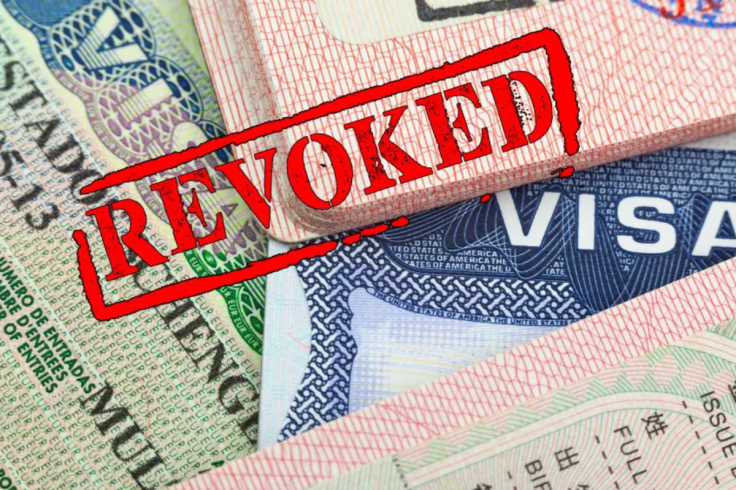
The Trump administration is preparing what officials describe as the largest mass visa revocation in US history, targeting up to 200,000 people holding business and tourism visas.
The move would apply to B1 and B2 visa holders across the United States whose records show they have applied for, or are currently seeking, asylum since 2016.
The planned action, according to AP, is being coordinated in Washington between the State Department and the Department of Homeland Security. The course of action could be announced in the coming weeks.
Two unnamed US officials said the Trump administration policy would strip these travellers of their legal status as visitors, although it would not automatically trigger deportation.
The proposed mass visa revocation under the Trump administration is expected to face legal challenges if it goes ahead.
Trump Administration's Push To Curb Asylum via Tourist Visas
Since President Donald Trump returned to office last year, his team has steadily imposed new hurdles on visa applicants, including demands for extensive social media histories and the posting of sizeable financial bonds for visa processing.
Officials have also pursued outright bans on issuing visas to certain nationalities, building on earlier travel restrictions. The latest initiative targets what senior officials portray as misuse of the visitor visa categories.
In a statement to the Associated Press, State Department spokesman Tommy Pigott said, 'We are coordinating with DHS to identify and revoke the nonimmigrant visas of foreigners who have come to the United States claiming to be short-term visitors, but then file for asylum to stay here permanently.'
Pigott declined to confirm how many visas could ultimately be affected, saying only that 'as the process will be ongoing, the number of revocations remains dynamic and will be done on a rolling basis.'
The AP reported that the business and tourism visas of up to 200,000 foreign nationals could be revoked, a move that, if implemented, would represent the largest single mass visa revocation in US history.
According to the officials who spoke anonymously, most of those currently in the US with pending asylum cases would not be forced onto planes the moment their visas are cancelled.
Instead, they would be recategorised in government systems and lose their formal status as business or tourism travellers. Their asylum claims would continue through the existing legal channels.
Who Could Be Hit by the Trump Admin Visa Policy
B1 visas are typically issued for short business trips such as meetings, conferences or contract negotiations. B2 visas cover tourism, family visits and medical treatment in the US. Together, they make up a huge chunk of non-immigrant admissions, which is partly why a blanket review spanning a decade of visa issuances is such a big deal.
It was not immediately clear from the State Department documents or from the officials who discussed them precisely how many of these visa holders have sought asylum and would therefore fall within the Trump administration's plan.
Current applicants for B1 and B2 visas are already required to affirm that they will not apply for asylum in the US and to demonstrate their intent to return to their country of origin. The new move appears designed to send a blunt signal that breaking that pledge will carry serious consequences, even for those who applied years ago.
In a social media post on Monday, Deputy Secretary of State Christopher Landau argued publicly that the government is responding to what he characterised as abuse of the asylum system.
'People in the US and all over the world are fed up with bogus asylum claims,' Landau wrote on X. 'Asylum isn't supposed to be a loophole to circumvent immigration law.'
He cited the example of a Colombian citizen who arrived on a tourist visa in 2015 and later requested asylum as evidence of a pattern he believes needs to be stamped out.
People in the US and all over the world are fed up with bogus asylum claims. Asylum isn’t supposed to be a loophole to circumvent immigration laws; rather, it’s supposed to provide a narrow safe harbor for persons persecuted because of their “race, religion, nationality,… pic.twitter.com/fNHbj1SsIX
— Christopher Landau (@DeputySecState) August 24, 2026
Critics of similar Trump-era measures have long warned that such blanket crackdowns risk penalising people with legitimate fears of persecution alongside those who may be gaming the rules.
Whether courts will see this latest Trump administration policy as a lawful tightening of visitor visa rules or an unlawful collective punishment of asylum seekers is likely to be one of the central legal questions if, or when, lawsuits land.
A Pattern of Visa Revocations Under Trump Admin
The proposed mass cancellation does not come out of nowhere. In the past 18 months alone, the State Department has revoked about 175,000 visas.
Those revocations covered people who had been convicted or accused of a wide range of offences, from drink-driving to rape and robbery. They also included individuals who have publicly criticised US policies, particularly in the Middle East.
The administration has at the same time ramped up action against what it calls 'birth tourism'. Officials argue that some foreign women travel to the United States shortly before giving birth so that their children can gain US citizenship by being born on American soil.
Trump has repeatedly tried to end birthright citizenship, a bedrock principle of US law, but courts, including the Supreme Court, have rejected those efforts.
Still, the push to crack down on pregnant travellers has fed into a broader narrative that the administration is keen to sell, that the system is being gamed from all angles and that tough medicine is needed.
The State Department documents suggest the screening of current B1 and B2 visa holders began after officials received information from US Citizenship and Immigration Services about asylum applications filed by people who originally entered as visitors.
State Department documents indicate that officials have been reviewing B1 and B2 visas issued between 2016 and 2026 to identify holders who later filed asylum claims. These visas, intended for short-term business trips or tourism, have long been issued on the understanding that applicants intend to return home after their visit.
The new plan focuses specifically on people who entered the country as visitors then sought to remain permanently by claiming asylum.
The officials who described the review spoke on condition of anonymity, saying the revocations are not yet final. They emphasised that the policy would be implemented in coordination with homeland security agencies.
What is still missing is any hard public data on who, exactly, would be swept up if the Trump administration follows through on this plan, and how many of them might have strong, even life-or-death, reasons for seeking asylum in the United States in the first place.
The State Department is expected to begin announcing the policy in the coming weeks, although it could still be challenged or revised.
© Copyright IBTimes 2026. All rights reserved.