'Very Therapeutic': X Users Celebrate as Trump's Helipad Speech Is Drowned Out
Many X users mocked Trump's inaudible helipad speech, with some joking that they wanted him muted for the rest of his presidential term
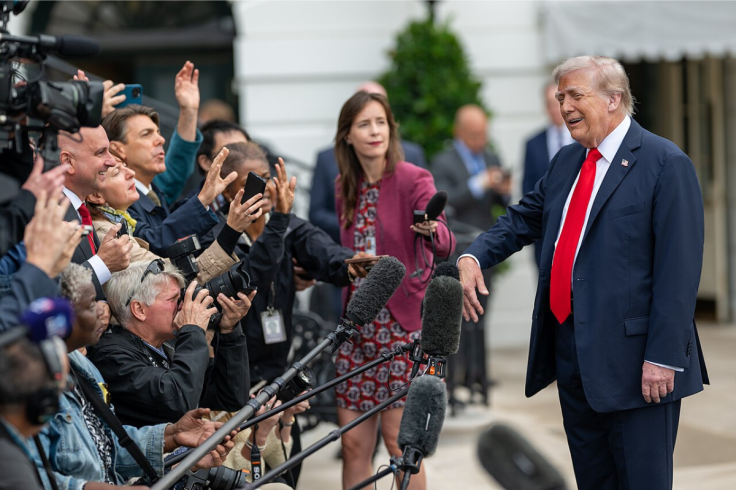
Donald Trump was left inaudible during a White House event on Monday after television networks suspended their shared presidential press-pool coverage, creating an unusual broadcast blackout that quickly drew attention online.
Videos of the event circulated without usable audio from the White House feed, prompting social media users to react to the unusual silence. One post summed up the response: 'Watching him on mute is very therapeutic.'
Trump Goes Silent as White House TV Pool Coverage Stops
The incident came after ABC, CBS, Fox News, CNN and NBC suspended coverage of events designated for the White House television pool. CNN had been scheduled to provide the primary pool coverage on Monday, but the network was removed from the assignment after Trump banned CNN, MS NOW and Politico from the White House.
The White House press pool normally provides shared footage and audio to other broadcasters. When the primary television pool was absent, White House-provided footage of Trump's event did not contain usable audio, leaving viewers watching videos in which the president could be seen speaking but not clearly heard.
The development triggered a wave of reactions on X, with some users joking about keeping Trump muted for the remainder of his presidency. Others described the silence as a welcome break from the president's frequent televised appearances, while several posts mocked the unusual circumstances surrounding the broadcast.
One user wrote, 'They should've done this f*****g years ago', while another asked, 'Can we have this for the next 2.5 years?' Another post said, 'The best thing I've seen all day.' A further reaction described the situation as 'a news cycle without Trump.'
Can we have this for the next 2.5 years?
— Republicans against Trump (@RpsAgainstTrump) September 21, 2026
Watching him on mute is very therapeutic.
— Just Jack (@7Veritas4) September 21, 2026
We can get used to this. Trump muted. 🤐😂
— david (@realdavidonline) September 21, 2026
It’s great to see that the major news outlets are united.
— Pokey (@Pokey9526816868) September 21, 2026
People forget that in all of the oppressive regimes throughout history have started with restricting the press.
Midterms are coming register to vote.
This is our time to take the first step in taking back America.…
It’s a relief. Everything he says is a lie anyway. pic.twitter.com/c9FndO2tM0
— Gregsy (@Gregsy_reborn) September 21, 2026
Pure joy. pic.twitter.com/kS1wp9YDrU
— KissingTheCockroach™ 💜💋🪳 (@cockroachkisser) September 21, 2026
Why Trump Was Inaudible During the White House Event
The lack of sound was linked to the absence of the normal television pool rather than an intentional muting of Trump. Under the system, the network assigned to pool duty sends a small crew to capture the president's remarks and distributes the footage and audio to other media organisations.
As the five major pool networks stopped providing the primary television pool, there was no replacement primary pool providing the shared camera and audio feed normally used by broadcasters.
The absence of the main television pool did not mean there was no audio of Trump elsewhere, as other news organisations could record the event independently rather than relying on the shared White House television feed.
The distinction is important because the disruption affected the shared television-pool feed used by broadcasters, rather than preventing every news organisation from independently recording Trump's remarks. The White House's own livestream, however, did not capture usable audio of Trump's comments.
But there is audio because @RealAmVoice @OANN @NEWSMAX and @BBC all have audio and video crews on site.
— Christopher Fishell (@chieffishell) September 21, 2026
People change the station drop the drop the Ruptardian losers and connect with reality.
There is audio on another feeds you moron
— J (@JayTC53) September 21, 2026
Trump's CNN Ban Triggered the Pool Dispute
The suspension of TV pool coverage followed Trump's decision to ban CNN, MS NOW and Politico from the White House. Trump announced the move on Friday and described the organisations as 'fake news', while the outlets said their journalists had their credentials revoked without notice or process.
CNN's exclusion created a particular problem because it was scheduled to provide Monday's primary television pool coverage. The other four pool networks declined to replace CNN, leaving presidential events without the normal shared TV feed.
The White House has defended Trump's action, with the president saying the administration was targeting 'FAKE NEWS' rather than the free press. His administration has accused the banned organisations of publishing what it considers false reporting, while the outlets dispute the justification for the ban.
CNN, MS Now and Politico Sue Trump Over White House Ban
CNN, MS NOW and Politico subsequently filed a federal lawsuit against Trump and administration officials, alleging violations of their First Amendment rights and the Fifth Amendment's due-process protections. The organisations are seeking to restore their access to the White House and have requested expedited consideration of the case.
The lawsuit adds a legal dimension to the dispute over presidential press access, as the three organisations argue that the government should not be able to remove journalists because of objections to their reporting.
The case was filed in federal court in Washington, DC, and comes as the administration and major news organisations clash over how presidential events should be covered.
© Copyright IBTimes 2026. All rights reserved.
- Recommended For You