

Vladimir Putin Humiliated After Russia Loses 50,000 Troops in a Month Amid 'Energy Ceasefire'
Russia troop losses reportedly exceeded 50,000 in September as Ukrainian officials said Russian strikes continued despite Donald Trump's claimed energy ceasefire
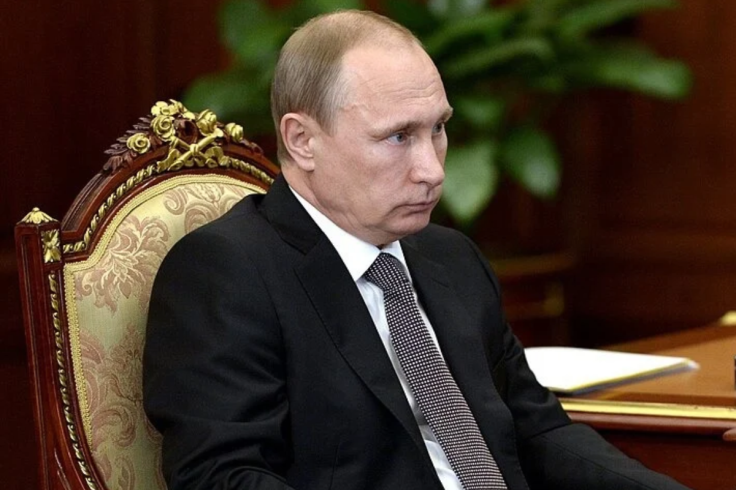
Vladimir Putin's forces suffered more than 50,000 casualties in a single month, according to a NATO estimate, just as an 'energy ceasefire' between Russia and Ukraine was announced then apparently broken within hours.
A NATO official told Bloomberg that Russian troop losses in September exceeded 50,000 personnel, including up to 28,000 killed in action. The figure, cited on Sunday, 11 October, is the highest monthly total recorded in 2026 and comes at a sensitive moment for the Kremlin.
The estimate emerged as Donald Trump announced that Russia and Ukraine had agreed to an immediate 'energy ceasefire'. Within hours, Ukrainian President Volodymyr Zelensky said Russian forces had struck energy infrastructure in Kyiv and Kharkiv, including a power plant.
What the Figures Show
The NATO official, who was not named, told Bloomberg that Russian personnel losses in September exceeded 50,000. That total covers soldiers killed, wounded, captured or missing, rather than deaths alone.
The same official estimated that around 28,000 Russian troops were killed during the month. Ukraine's General Staff, which publishes its own battlefield accounting, put Russia's September personnel losses at 46,230, though it did not break down how many were fatal.
Those numbers are close enough to indicate the scale of the pressure on Russian forces, even if neither figure can be treated as a precise, independently verified count. The Kremlin does not publish regular casualty figures, and wartime estimates from either side carry uncertainty.
Ukraine's General Staff recorded 31,710 Russian personnel losses in January. By September, that monthly figure had risen to 46,230, an increase of almost 46 per cent.
The cumulative toll is large. Ukraine says Russia has lost 1,552,840 personnel since its full-scale invasion began in February 2022, a category that includes killed, wounded, captured and missing troops.
Ukraine's Losses Remain Unclear
The NATO official also estimated that Ukraine's Armed Forces suffered about 5,000 casualties in September. That claim cannot be independently verified, because Kyiv rarely publishes detailed figures for its own battlefield losses.
It reflects how uneven the public information war can be. Ukraine updates Russian loss estimates almost daily, while its own casualties are largely kept out of official statements. That does not make the Ukrainian figure wrong, but it does mean readers should treat it as an estimate rather than settled fact.
Neither Moscow nor NATO has publicly released a full casualty breakdown that would allow the 50,000 and 28,000 figures to be checked. IBTimes UK cannot independently verify the claims, so they should be read as authoritative estimates rather than confirmed totals.
Energy Ceasefire Under Strain
Trump announced the purported deal on Truth Social, writing that the 'energy ceasefire' was effective immediately and adding: 'Do not break it!' He offered no details about its terms, duration or enforcement.
Russia did not immediately confirm that it had agreed to anything. Zelensky, meanwhile, welcomed the announcement as 'good news for everyone', while making clear that Ukrainian skies had not quietened down.
'Unfortunately, Ukrainian skies have been infested with Russian "shaheds" all day today,' Zelensky said in an evening address. 'There have been glide bomb strikes and strikes on our energy infrastructure, too. A power plant in Kharkiv was attacked this evening.'
Ukraine's presidential office confirmed that the strike on Kharkiv's CHP-5 plant came after Trump's post. Zelensky also said a power station in Kyiv had been targeted, causing outages across parts of the capital.
Why Energy Infrastructure Matters
For Ukraine, the issue is not abstract diplomacy. Attacks on power plants, grids and heating systems arrive as winter approaches, when electricity and heat become matters of survival rather than convenience.
Zelensky said Ukraine was 'ready to refrain from striking Russian energy infrastructure', but only if Russia showed the same restraint. He added that Ukraine had proposed de-escalatory steps, while accusing Putin of answering each one with 'nyet'.
'Ukraine wants peace. The question is whether Russia does,' Zelensky said. 'We are awaiting clear details of the dialogue between America and Russia, and we expect Putin to follow through on what President Trump said.'
That is the central problem with the latest announcement. Trump says both parties agreed, Ukraine says it supports the idea in principle, but Moscow has stayed quiet and Russian strikes have continued.
A ceasefire that exists mainly in a social media post is a fragile thing. And with more than 50,000 Russian personnel losses recorded in a single month, Putin has little obvious incentive to slow a campaign that his military appears willing to sustain at extraordinary cost.
© Copyright IBTimes 2026. All rights reserved.