

Trump Signs EO for Moon & Mars Missions—Experts Link Move to China's Space Ambitions
Trump orders Moon return and Mars prep, seen as a bold challenge to China's space ambitions.
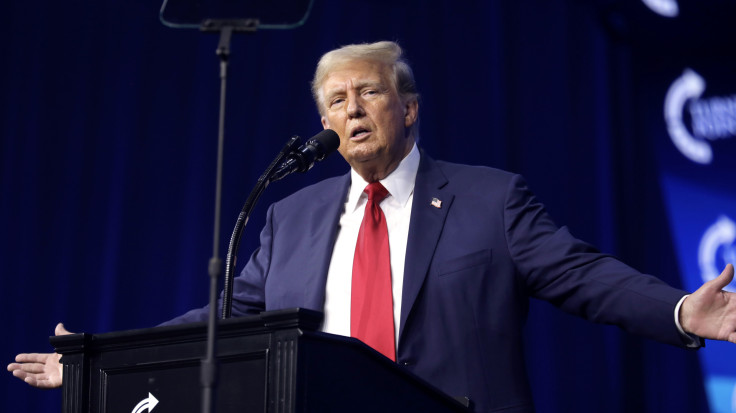
President Donald Trump signed a sweeping executive order on 18 December 2025 that commits the United States to landing astronauts on the Moon by 2028 and establishing initial groundwork for a permanent lunar presence by 2030, while laying strategic foundations for future Mars missions.
The order—titled Ensuring American Space Superiority— marks the most significant shift in US space policy in decades and is widely seen as a direct response to China's rapidly advancing space ambitions.
Bold Space Goals With a Competitive Edge
The executive order underscores a renewed focus on America's position in space, especially as China eyes its own crewed lunar landing by 2030. Officials framed the policy as essential to ensure that the US 'leads the world in space exploration, security, and commerce.'
Trump's directive calls not only for returning humans to the Moon but also for deploying nuclear reactors on the lunar surface and in orbit to support long‑term habitation and scientific operations — technology seen as critical to sustained presence on the Moon and future missions to Mars.
Experts point out that focusing on lunar infrastructure will help test crucial systems necessary for Mars exploration, such as power generation and habitat sustainability.
China's space programme has made no secret of its intent to establish a significant presence on the Moon, with autonomous missions already scouting sites and planning crewed expeditions later in the decade.
NASA Leadership and Strategic Priorities
Just days before the order was signed, the US Senate confirmed private astronaut Jared Isaacman—a billionaire advocate of Mars missions—as NASA's new administrator. Backed by SpaceX's Elon Musk, Isaacman's leadership signals a stronger emphasis on commercial partnerships to help achieve these ambitious goals.
At his confirmation hearing, he stressed the urgency of beating China to the Moon: 'America will return to the Moon before our great rival, and we will establish an enduring presence' — a statement that reflects the competitive framing of current US space policy.
Policy analysts note that the order also reorganises how space decisions are made at the federal level, shifting greater coordination to the White House's Office of Science and Technology Policy.
This reflects Trump's desire for tightly integrated civilian, commercial and defence efforts to advance space objectives. Critics, however, warn that streamlining agencies could sideline some expert voices in favour of political priorities.
Lunar Infrastructure: Power, Science and Commerce
A standout feature of Trump's directive is the emphasis on nuclear power systems for lunar operations. These reactors are intended not just for basic life support but as long‑term energy sources that could sustain habitats, research labs, and resource extraction sites.
Industry experts argue that reliable power beyond solar panels, which fail during the Moon's lengthy nights, is a technological game‑changer.
Advanced small modular reactors could provide continuous energy, supporting everything from communications to propulsion systems.
The emphasis on nuclear power also reflects geopolitical considerations: being first to deploy advanced energy infrastructure on the Moon could offer strategic leverage over rival nations.
Geopolitical Implications and the Space Race
This latest policy move has clear geopolitical overtones. Political analysts describe the directive as a 21st‑century space race reminiscent of Cold War competition, with China and the U.S. vying for strategic dominance off Earth.
The ambition to build a lunar base, coupled with plans to push toward Mars, reflects a broader competition for technological leadership, national prestige and economic opportunity.
As nations invest in lunar and Martian capabilities, the direction of human exploration in the solar system may be shaped as much by rivalry as by discovery. And the next decade could prove decisive in determining who leads humanity's next giant leap.
© Copyright IBTimes 2026. All rights reserved.