

Comet 3I/ATLAS Reveals Secrets: 7.6 Billion-Year-Old 'Cosmic Fossil' Passes Today
Explore the mystery of 3I/ATLAS, an 11-billion-year-old 'cosmic fossil' and the oldest object ever detected as it makes its closest pass to Earth.
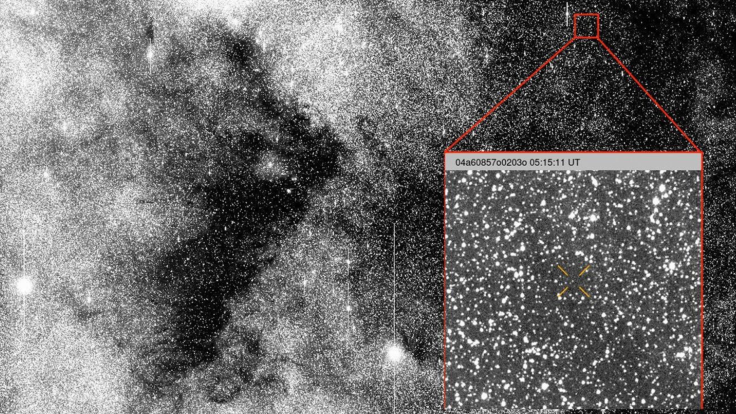
In the early hours of 19 December 2025, while most of the world was asleep, a silent and ancient traveller made its closest pass to our home planet. Comet 3I/ATLAS, a high-speed visitor from the furthest reaches of the Milky Way, glided past Earth at a safe but significant distance of 168 million miles (approximately 1.8 astronomical units).
This isn't just another smudge in the night sky. For astronomers, it is a once-in-a-lifetime opportunity to study a relic that existed long before our own sun was even a spark in a nebula. While the internet is currently awash with breathless speculation about alien technology and gamma-ray threats, the scientific reality is far more profound: we are witnessing a primordial messenger from another star system, passing through our neighbourhood for a brief moment before vanishing into the cosmic dark forever.
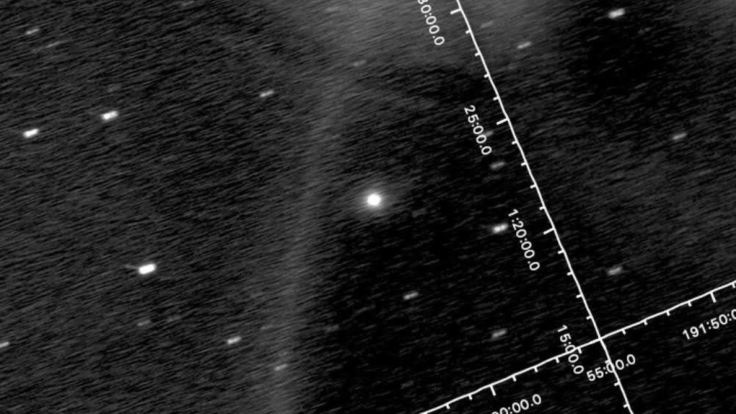
The Ancient Voyager: 3I/ATLAS And The Milky Way's Deep Past
It's hard to believe how big the trip was that 3I/ATLAS took. The Asteroid Terrestrial-impact Last Alert System (ATLAS) in Chile found the object on July 1, 2025. It stood out right away because of its 'hyperbolic' orbit and an orbital eccentricity of 6.13, which is the highest ever recorded for a visitor to the solar system. This visitor is moving at a blistering 42 miles per second (68 km/s), which is so fast that the sun's gravity can't hold it. This is different from the planets or local comets that circle the sun in closed loops.
Data suggests it originated in the 'thick disk' of the Milky Way, a region populated by the galaxy's oldest stars, having entered our system from the direction of the constellation Sagittarius. According to Matthew Hopkins, an astronomer at the University of Oxford, this history implies the comet could be over 7.6 billion years old—with some models suggesting it may even be as old as 11 billion years.
Given that our own solar system is a relatively youthful 4.5 billion years old, 3I/ATLAS is effectively a time capsule from a different era of galactic history. It is likely the oldest physical object humans have ever detected, with a nucleus estimated to be between 0.3 and 5.6 kilometres in diameter.

Beyond The Myths: Science At The Heart Of 3I/ATLAS
Even though there are always going to be 'alien spaceship' theories that are similar to the ones that came up around 1I/'Oumuamua in 2017, the evidence for a natural origin is very strong. The Gemini North telescope in Hawaii recently saw a ghostly green glow coming from the comet. This is a classic sign of 'outgassing,' which happens when gases evaporate and light reflects off of them as the sun warms the icy nucleus.
Furthermore, data from NASA's Psyche mission, the James Webb Space Telescope (JWST), and the European Space Agency's Mars Trace Gas Orbiter confirmed that the comet is accelerating as it moves away. This isn't the result of a hidden engine, but rather the physical thrust generated by jets of vaporised gas escaping the surface—a common behaviour in comets.
Chemical analysis by JWST revealed that 3I/ATLAS is unusually rich in carbon dioxide and contains significant traces of methanol—nearly four times the concentration found in local comets—as well as nickel and cyanide gas. These chemical signatures prove that while 3I/ATLAS comes from another star, it is made of the same fundamental building blocks—ice, rock, and dust—that we find in our own backyard.
As this interstellar guest begins its long exit from our solar system, the window for observation is closing. Tonight, the Virtual Telescope Project in Italy will host a live YouTube webcast at 11 p.m. EST, offering a final real-time glimpse of the object as it heads towards the constellation Gemini.
We may be entering a new era of discovery with the Vera C. Rubin Observatory about to come online, but for now, 3I/ATLAS remains a singular, haunting reminder of our place in a vast and ancient galaxy. It is a true ghost from the deep past, here today and gone for eternity.
© Copyright IBTimes 2026. All rights reserved.