Noah's Ark Search Takes New Turn as Researchers Probe Beneath Boat-Shaped Turkish Mound
Archaeologists and geologists are using radar, drilling, samples and a specialised robot to investigate underground features near Mount Ararat
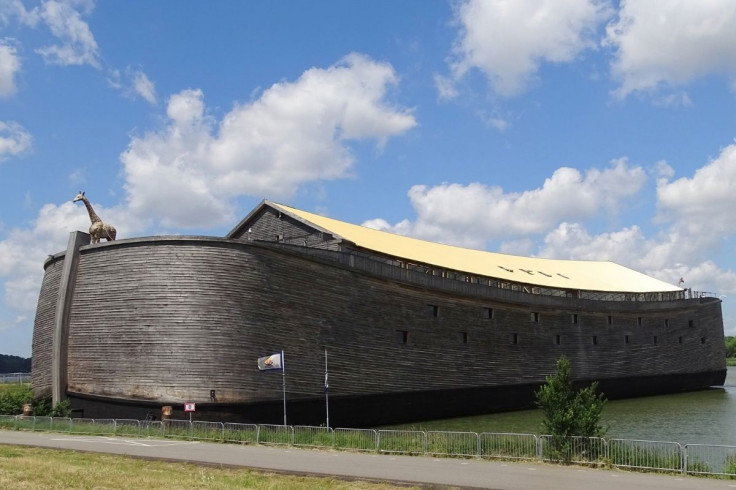
A boat-shaped mound in eastern Turkey has become the focus of renewed efforts to locate Noah's Ark, as researchers investigate unusual features beneath the ground that they believe could offer clues to the biblical vessel's possible resting place.
The Durupınar formation, near Mount Ararat and the Iranian border, has attracted decades of speculation because its outline resembles a large ship.
Researchers are now examining underground structures and geological evidence to determine whether the mound contains anything beyond naturally occurring rock and sediment. The investigation has revived a long-running debate over one of archaeology's enduring mysteries.
Although some researchers believe the formation deserves further examination, no independently verified archaeological evidence has established that it contains Noah's Ark, and the latest findings should not be presented as proof of the biblical account.
Researchers Begin Drilling Beneath the DurupıNar Formation
The latest investigation centres on the 157-metre-long formation in Ağrı Province, where an international research team has begun examining what lies beneath its distinctive outline.
According to the research team, drilling is under way as part of a project involving archaeologists and geologists led by Professor Cenker Atila of Sivas Cumhuriyet University. The research, conducted in cooperation with Noah's Ark Scans, received official approval from Turkish authorities in June 2026.
Its purpose is to investigate the mound's geological structure using modern surveying techniques and physical samples.
Previous ground-penetrating radar surveys identified underground features that the research team has interpreted as possible corridors and angular structures, although radar images alone cannot establish whether these features were created by humans or natural geological processes.
Underground Robot Could Reveal What Radar Cannot
The research team plans to deploy a specially designed robotic device called Gopher through drilled openings to examine any accessible underground spaces.
The robot is intended to capture images and collect material that could help investigators determine whether the radar anomalies represent cavities, natural rock formations or something requiring further archaeological examination.
The wider investigation also includes electrical resistivity measurements, which examine how underground materials conduct electricity, and laboratory analysis of geological samples.
Researchers hope to combine these findings into a three-dimensional model of the formation, while any potential archaeological discovery would require further examination and independent verification before its significance could be established.
Why Geologists Have Questioned the Noah's Ark Claims
The Durupınar formation first attracted international attention in 1959, when Turkish army captain İlhan Durupınar identified its ship-like outline in aerial photographs.
Its approximate length has encouraged comparisons with the vessel described in Genesis, which measures 300 cubits. However, the biblical text does not specify a universally agreed modern conversion for the ancient unit of measurement.
The formation's appearance has also been challenged by geological investigations.
A 1993 review published in the Adventist Review described earlier surveys that found no visible archaeological remains and cited geological explanations involving the movement of material around an obstruction, which could account for the mound's elongated shape.
A separate review by Anne Habermehl, A Review of the Search for Noah's Ark, examined the Durupınar claims and discussed geological objections to identifying the formation as a preserved vessel.
These earlier assessments provide context for the current investigation, particularly when interpreting underground features that might otherwise resemble man-made structures.
What Would It Take To Confirm the Discovery?
The latest drilling could establish whether the mound contains identifiable archaeological material, but unusual underground shapes would not be sufficient to demonstrate that it is Noah's Ark.
Evidence such as securely documented artefacts, reliable dating and geological analysis capable of distinguishing human construction from natural processes would be needed to assess such a claim.
Even the discovery of ancient timber would require further analysis to establish its age, original location and relationship to the surrounding deposits.
For now, the new investigation represents an attempt to test a long-standing archaeological claim rather than confirmation of the biblical vessel's discovery.
© Copyright IBTimes 2026. All rights reserved.
- Recommended For You