

Could NASA's Artemis II Launch Affect Self-Driving Cars? Scientist Warns of Potential GPS Errors
Researchers at National Cheng Kung University in Taiwan detected major changes in the ionosphere after the mission
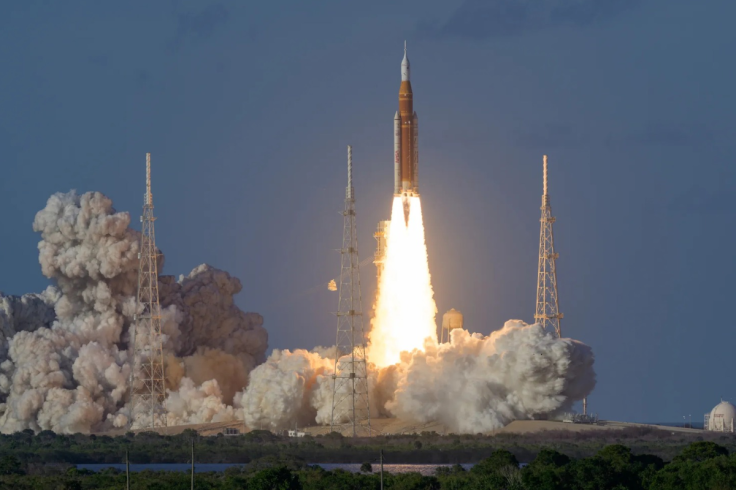
NASA's Artemis II launch from Florida on 1 April 2026 disturbed Earth's upper atmosphere, potentially affecting GPS accuracy, researchers in Taiwan have reported. Ground-based measurements revealed atmospheric changes equivalent to potential positioning errors of several metres.
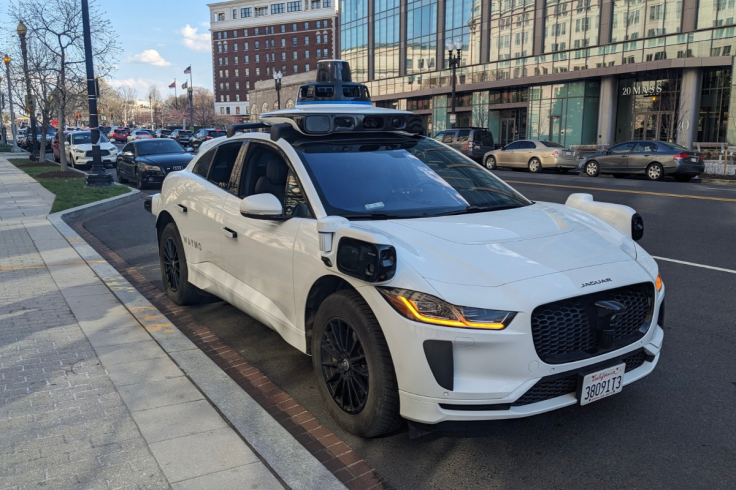
Study co-author Charles Lin warned that inaccuracies of this size could affect self-driving cars and drones. He raised concerns that an autonomous vehicle could misjudge its position because of inaccurate GPS signals.
However, the research did not document any vehicle changing lanes, malfunctioning or causing an accident.
The findings followed NASA's historic Artemis II mission, which sent four astronauts around the Moon for the first time in more than 50 years. Researchers subsequently examined how the Space Launch System (SLS) rocket affected the ionosphere, a region of Earth's atmosphere through which satellite navigation signals travel.
Their analysis identified unusually strong disturbances, raising questions about the potential consequences for technologies that rely on accurate positioning.
Could Artemis II GPS Errors Affect Self-Driving Cars
Charles Lin, an earth science professor at National Cheng Kung University, warned that even relatively small positioning errors could have consequences for autonomous navigation.
'A positioning error of a couple of meters is enough to cause an autonomous car to change lanes,' Lin told Space.com.
He also raised concerns about drone positioning, suggesting that atmospheric disturbances could affect other technologies requiring precise location information.
The warning, however, describes a possible consequence rather than an observed incident. The study did not test self-driving vehicles or establish how their additional navigation and safety systems would respond to inaccurate GPS data.
Autonomous vehicles can use multiple technologies to determine their surroundings and position, including cameras, radar and other sensors. A GPS positioning error does not automatically mean a vehicle would steer into another lane.
The research instead highlights a potential navigation risk that may warrant further investigation.
How Artemis II Disturbed GPS Signals Above Earth
Researchers at National Cheng Kung University analysed measurements from high-precision GPS receivers installed across the United States.
These fixed stations normally help scientists monitor extremely small movements in Earth's crust. Their measurements also reveal changes affecting satellite signals as they pass through the atmosphere.
The team focused on the ionosphere, which contains electrically charged particles beginning approximately 30 miles (50 kilometres) above Earth's surface.
GPS satellites transmit timing signals that receivers use to calculate their positions. Changes in the concentration of free electrons within the ionosphere can alter how those signals travel, potentially affecting positioning accuracy.
During and after the Artemis II launch, researchers detected substantial changes in the ionosphere's electron density.
Their findings indicated potential GPS positioning errors of several metres. However, those measurements did not demonstrate that ordinary GPS users experienced widespread disruption or that individual vehicles received incorrect navigation instructions.
Rocket-related atmospheric disturbances are generally short-lived, unlike some severe solar storms that can affect satellite navigation over longer periods.
Artemis II Engine Burns Produced Extensive Atmospheric Disturbances
The researchers identified two broad regions of reduced electron density associated with the rocket's flight and subsequent engine activity.
One disturbance followed the passage of the SLS core stage, which measured approximately 212 feet (65 metres). Another was associated with later upper-stage engine burns.
According to the research findings described in the published reporting, the disturbances extended approximately 3,100 miles (5,000 kilometres) across North America.
NASA's Artemis II mission timeline records two early upper-stage manoeuvres. The first occurred approximately 49 minutes after liftoff, followed by another about one hour and 48 minutes into the flight.
Those burns adjusted the spacecraft's orbit before Orion continued its preparations for travelling towards the Moon.
The researchers reported that some ionospheric disturbances were up to ten times more intense than those observed following SpaceX Starship test launches.
The comparison concerned atmospheric effects rather than rocket thrust. Starship has greater liftoff thrust than NASA's SLS, but that does not necessarily mean it produces larger ionospheric disturbances.
The stronger effects associated with Artemis II's later engine activity highlighted the importance of where and how rocket propulsion occurs within Earth's upper atmosphere.
What Artemis II Findings Mean for Future Moon Missions
The research was made available as a preprint through ESS Open Archive. Its final peer-review and journal publication status could not be independently confirmed.
Lin explained that rocket launches have previously produced atmospheric disturbances, but the orbital manoeuvres observed during Artemis II presented an unusual case. He warned that such effects could become increasingly important as missions to the Moon and Mars become more frequent.
NASA's Artemis programme aims to support further lunar exploration and establish the foundation for a sustained human presence on the Moon. Future missions could provide researchers with additional opportunities to examine how rocket launches and engine burns affect satellite navigation signals.
For GPS-dependent technologies, the outstanding question is whether disturbances of this scale could produce operational problems under real-world conditions.
The Artemis II findings establish an atmospheric effect, while the potential consequences for autonomous vehicles and drones remain unproven.
Further measurements and testing would be needed to determine whether similar disturbances could interfere with navigation systems during future missions. Such evidence would help establish whether the risks identified by Lin extend beyond theoretical positioning errors.
© Copyright IBTimes 2026. All rights reserved.