

Trump Administration Threatens Europe With 'Devastating' US Retaliation Over Starlink Restrictions
The Trump administration has warned of severe consequences for European businesses as Brussels considers satellite-spectrum changes that could affect Elon Musk's Starlink network
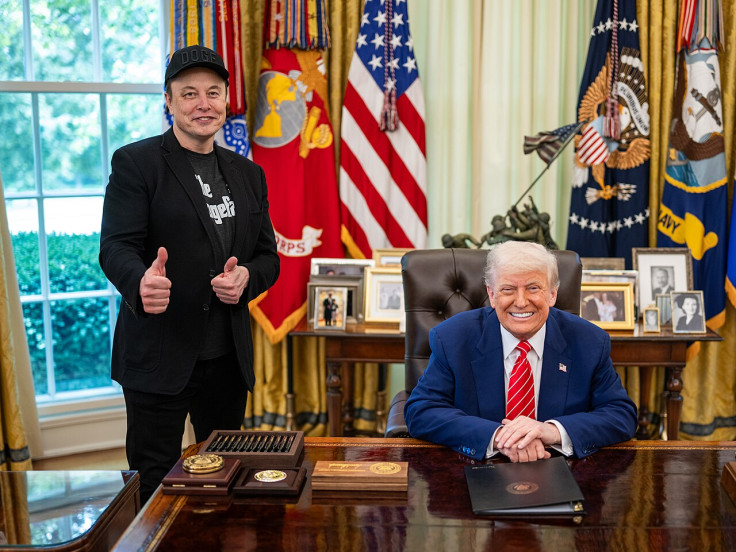
Donald Trump's administration has warned European businesses they could face 'devastating' retaliation if Brussels pushes ahead with satellite-spectrum plans that could restrict American rivals, turning a battle over connectivity into another explosive flashpoint in transatlantic relations.
Andrew Puzder, the US ambassador to the European Union, issued the warning as Europe seeks greater control over critical technology infrastructure. The timing is striking: on 19 October, four of the continent's biggest telecom operators announced they were exploring a joint bid for satellite spectrum, signalling a fresh push to strengthen Europe's position in a market dominated by Elon Musk's SpaceX and its Starlink network.
US Ambassador Issues Stark Warning
Speaking to the Financial Times, Puzder warned European companies they should be wary of possible retaliation if the EU advances its proposed policy.
'They should be wary that it could happen and it would be very devastating for those companies,' he said, pointing to the scale of the US market.
His remarks raise the prospect of a commercial backlash, although he did not announce specific tariffs, sanctions or other punitive measures.
Now comes the penalty for Europe’s years of naivety and dependency.
— Jürgen Nauditt 🇩🇪🇺🇦 (@jurgen_nauditt) October 19, 2026
But, Daddy.
„US threatens EU with “devastating” measures over restrictions on SpaceX and Starlink.
The US Ambassador to the European Union, Andrew Pazder, has warned that European companies could face harsh… pic.twitter.com/PoIepJvVwH
Puzder argued that Europe should not make American companies less competitive in an attempt to strengthen domestic rivals. He also questioned whether the EU's Digital Markets Act was being enforced to improve competition or to generate revenue through fines on US technology firms.
The dispute highlights a widening divide between Washington's defence of American businesses and Brussels' drive to reduce reliance on foreign technology.
What the EU's Satellite Plan Means for Starlink
At the centre of the confrontation is a European Commission proposal adopted on 27 May 2026 to establish a new EU-level selection process for mobile satellite services using the harmonised 2 GHz frequency band.
The current authorisations expire in May 2027. The proposed framework would determine how the spectrum is allocated for future services, including direct-to-device technology that allows compatible smartphones to connect to satellites.
The changes could restrict the frequencies available to some American and Chinese operators, including SpaceX. However, the proposal is not a blanket ban on Starlink, and the final rules have yet to emerge from the EU legislative process.
Brussels says its plan would encourage competition, diversify suppliers and improve Europe's resilience while remaining open to non-EU operators.
SpaceX has warned that the proposed changes could undermine connectivity in Ukraine, where Starlink has played a crucial role in civilian and military communications since Russia's full-scale invasion. The company has raised concerns about potential consequences, rather than reporting a disruption already caused by the proposal.
Four Telecom Giants Explore a European Alternative
On 19 October, Deutsche Telekom, Orange, Telefónica and Vodafone announced that they had signed a letter of intent to explore a joint bid for future European mobile satellite services spectrum.
Their ambition is to strengthen European satellite connectivity and support direct-to-device services that could extend mobile coverage to underserved areas. They also want key ground infrastructure and coordination functions to be based in Europe.
The plan is still at an exploratory stage. The operators have not launched a functioning rival to Starlink, and a satellite partner has yet to be selected. They also do not intend to build a satellite constellation directly through this initiative, which would not replace their existing satellite partnerships.
Even so, the announcement gives fresh momentum to Europe's push for technological sovereignty, with major telecom companies now considering how they could play a greater role in the next generation of satellite communications.
A High-Stakes Transatlantic Showdown
Puzder has urged the US and Europe to cooperate in artificial intelligence and quantum computing rather than let regulatory disputes weaken their position against China. Yet the satellite-spectrum row shows how quickly arguments over competition and sovereignty can spill into wider commercial tensions.
For now, the EU proposal remains under consideration, the four operators are exploring their options, and Washington has not announced specific retaliatory action.
But the stakes are unmistakable: as Europe tries to secure a stronger foothold in satellite communications, the prospect of a US backlash is adding a powerful new dimension to the fight over who controls the infrastructure connecting the world.
© Copyright IBTimes 2026. All rights reserved.