Starlink Has 12M Subscribers, but Elon Musk Says It Could Deliver Most of the World's Internet Within a Decade
Starlink is scaling fast, but Musk's vision depends on a huge expansion of capacity, access, and demand
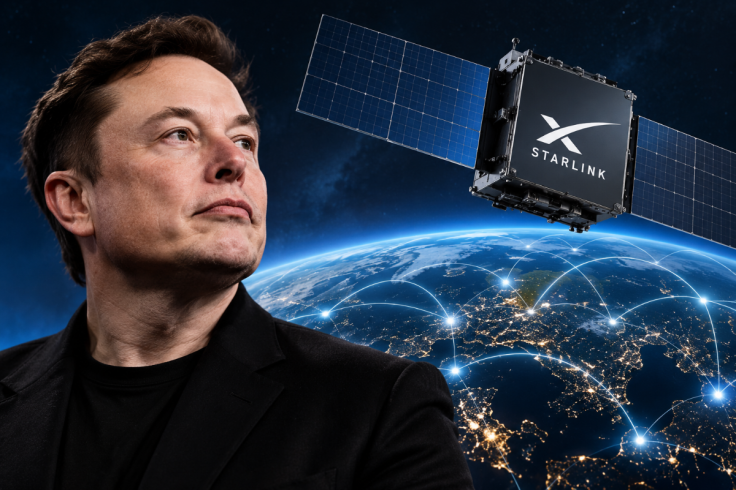
Elon Musk says Starlink could eventually carry most of the world's internet, but SpaceX's own figures show that turning the prediction into reality will require a far bigger network and customer base.
Musk made the projection during SpaceX's 4 August 2026 earnings call, saying it was not out of the question for Starlink to deliver a majority of the world's internet in less than 10 years, at least in countries where the service is permitted to operate. Gwynne Shotwell, SpaceX's president and chief operating officer, used more measured language, saying Starlink could represent a significant portion of global internet traffic.
The distinction matters because the claim is about internet delivery and traffic, not a simple majority of people using Starlink. That makes network capacity, usage levels, regulation, and the economics of expansion central to whether the projection can be achieved.
The Claim Is About Traffic, Not Users
Starlink had 12 million subscribers as of 30 June 2026, according to SpaceX's second-quarter results. But the company defines a subscriber as a service line, rather than a unique person, so the figure cannot be treated as a count of individual internet users.
SpaceX's filings also show the potential scale of the markets it is targeting. As of 31 March, Starlink operated across 164 countries, territories, and other markets that collectively were home to more than 3.3 billion people. By the end of June, the number of markets had risen to 167.
Those figures illustrate why subscriber growth alone is not enough to assess Musk's prediction. A network could carry a large share of traffic without serving a majority of users, particularly if its customers consume significant amounts of data.
Starlink Is Already Becoming a Major Revenue Engine
The financial numbers show that the network is not merely a long-term experiment. SpaceX reported $4.291 billion (£3.24 billion) in Connectivity revenue for the second quarter, up 66% year-on-year, while Connectivity operating income reached $1.656 billion (£1.25 billion), a 79% increase.
Yet average revenue per user, or ARPU, fell to $66 (£49.88) from $85 (£64.23) a year earlier. SpaceX said the decline was primarily linked to international expansion and lower-priced plans.
That creates an important part of the scaling equation: Starlink is adding customers quickly, but expanding into more markets can also mean lower revenue per connection. The business therefore needs greater network capacity and enough usage to support growth even as pricing varies between countries.
V3 Is the Capacity Bet
The most important hardware change is Starlink's planned V3 satellite generation. SpaceX says each V3 satellite is designed to provide 1 terabit per second of downlink capacity. The company expects Starship to deploy as many as 60 V3 satellites per launch, which it says could provide roughly 20 times the downlink capacity deployed by a Falcon 9 launch.
That matters because Musk's projection ultimately depends on how much traffic Starlink can carry, rather than simply how many terminals it can sell. SpaceX says its existing constellation of roughly 9,600 broadband and mobile satellites supported more than 700 terabits per second of cumulative downlink capacity as of 31 March. V3 is intended to increase that capacity substantially, allowing the network to handle more customers and heavier data consumption.
Global Reach Still Has Hard Limits
Satellite coverage does not automatically equal universal access. SpaceX has repeatedly noted that Starlink's ability to operate depends on regulatory approvals in individual markets. Customers also need compatible equipment, suitable service plans, and access to the network itself. Capacity can become another constraint where subscriber density is high.
That means Musk's 'majority' scenario depends on several things happening together: more high-capacity satellites, frequent launches, regulatory permissions, affordable service, and sustained demand. Starlink is already growing at a scale that would have seemed extraordinary for a satellite broadband provider a few years ago. The harder question is whether that growth can continue quickly enough, and with enough capacity behind it, to transform a rapidly expanding network into a dominant share of global internet traffic.
© Copyright IBTimes 2026. All rights reserved.
- Recommended For You