

Zelensky's Bombshell Piers Morgan Interview: 'I Feel Betrayed' by Trump as Musk Row Explodes
The Ukrainian president warns of deadly consequences from military satellite disruption as he accuses Trump of betrayal and questions whether Kyiv can still count on Washington
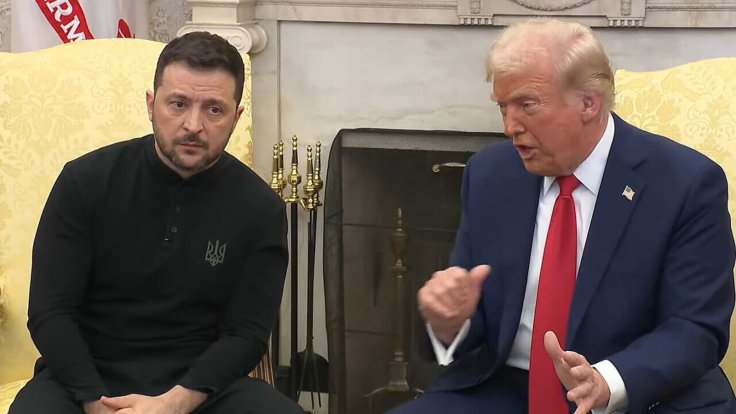
Volodymyr Zelensky has warned that 'people will die' if Ukraine loses vital battlefield satellite connectivity, using a tense interview with Piers Morgan to accuse Donald Trump of betrayal and to question whether Kyiv can still depend on US-controlled technology.
In an interview published on 14 October, the Ukrainian president described recent disruption to military satellite communications as a serious mistake and warned of potentially devastating consequences for troops defending the country against Russia.
The confrontation over satellite access has become another flashpoint in a widening dispute over US policy towards Ukraine, with questions mounting over who authorised speed restrictions, why they happened and whether Kyiv can rely on critical systems controlled beyond its borders.
'People Will Die': Zelensky's Stark Warning to Musk
'This decision will bring a lot of human losses,' Zelensky told Morgan. Asked whether people could die as a result, he replied: 'Of course. People will die, of course, if attacks will continue and if Starlink does not work.'
Ukrainian officials reported that sudden speed restrictions affected military satellite terminals used while moving, disrupting operations involving strike drones, interceptor drones and frontline logistics. The reported limit was around 100mph, or 160km/h, posing a particular problem for fast-moving unmanned aircraft.
BREAKING: President Zelensky tells @piersmorgan he feels 'betrayed' over Trump announcing an energy ceasefire and diesel deal with Putin.
— 🇺🇦🇬🇧 Pippa 🇬🇧🇺🇦 President Zelenskyy 🥵 (@ILoveUkraine90) October 14, 2026
'This is not the right side of history.
🎥 Piers Morgan pic.twitter.com/rIdvzV2B2H
The disruption came as Ukraine faced continuing Russian attacks, making reliable communications essential for coordinating operations and defending against incoming threats. However, the available reporting does not establish that the restrictions were imposed deliberately to help Russia.
Musk, head of SpaceX, said decisions on Starshield speed or usage limits rested with the US military and ultimately the US president. His comments shifted attention towards Washington, but did not independently establish who was responsible for the specific restrictions.
There is also an important technical distinction. Starlink is SpaceX's commercial satellite internet service, while Starshield is its military-focused system designed for government use. The reported disruption concerned Ukrainian military connectivity, not a confirmed nationwide shutdown of civilian Starlink services.
'I Feel Betrayed': Trump Relationship Hits New Low
The satellite dispute has erupted alongside a wider breakdown in relations between Zelensky and Trump.
Asked by Morgan whether he felt betrayed by recent developments, Zelensky answered: 'Really, yes.' He also expressed regret over losing a powerful strategic partner and warned that the United States risked taking the wrong side of history.
When Morgan asked whether Ukraine was losing America, Zelensky replied: 'Yes, but not because of us.'
'It's painful when President Trump chooses one side, not our side,' he said, adding that he could accept Trump occupying a middle position between Kyiv and Moscow, but argued that 'if you are in the middle, you have to stay in the middle, not on the wrong side'.
Tensions have also grown over Russian energy exports. Trump announced a move to lift sanctions to allow Russian diesel to reach the United States and global markets, while pressing Ukraine to stop attacks on Russian oil refineries. He has also called for Ukraine to have a new president, adding another source of friction between the two leaders.
Intelligence Concerns Add to Kyiv's Anxiety
Zelensky has also raised concerns about Ukraine not receiving its usual advance warnings ahead of Russian missile attacks. The issue has fuelled fears about the reliability of intelligence cooperation, although the circumstances remain disputed.
The satellite restrictions and the warnings issue are not, on their own, proof of a coordinated decision to weaken Ukraine. Reporting has described uncertainty over the disruption, and Zelensky himself said he hoped the satellite problem might have been a technical failure.
Connectivity Returns, but Key Questions Remain
On 15 October, a Ukrainian Defence Ministry source said Starshield connectivity for military systems operating while in motion had been restored and remained operational. The ministry was still seeking clarification about the reasons and circumstances surrounding the restrictions. The source did not establish whether every restriction had been lifted.
That restoration brought relief, but it did not settle the central question of accountability. Musk has pointed to US government control of Starshield limits, while Ukrainian officials continue to seek answers about the disruption.
For Zelensky, the episode has highlighted a serious vulnerability: Ukraine's ability to defend itself can be affected by decisions made outside the country. His warning was stark, but the broader message was clear. When battlefield communications are critical to survival, even a temporary disruption can carry consequences far beyond a technical dispute.
© Copyright IBTimes 2026. All rights reserved.