

Ukraine Says SpaceX Limits Starlink Speeds Amid Rising Tensions Between Zelensky and Trump
Ukrainian officials said terminals lost connectivity above 100mph; Musk said the US government controls Starshield
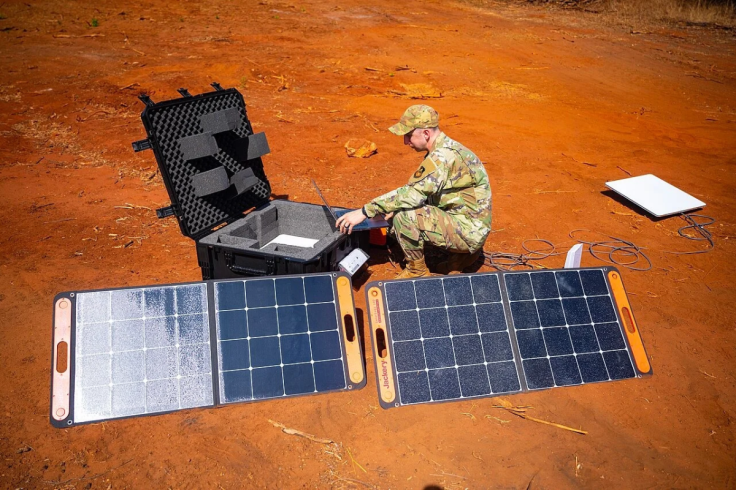
Ukrainian defence forces reported speed limits on military-grade Starshield satellite terminals operating across Ukraine overnight from 13 to 14 October. They claim the change disrupted drone operations as relations between Kyiv and Washington deteriorated.
The terminals lose satellite connectivity when travelling faster than 100mp/h (160km/h). Ukrainian officials alleged the restriction was politically motivated.
US officials denied involvement in the restrictions, while SpaceX Chief Executive Elon Musk stated on X that Starshield operational parameters are set directly by the US Department of Defense rather than commercial SpaceX policy.
Drone Operations Disrupted Without Warning
Ukrainian forces said the new speed restrictions on Starshield terminals disrupted telemetry for high-speed interceptor drones used to counter Russian jet-powered Shahed drones. Mid-range strike drones, frontline reconnaissance and tactical logistics were also affected.
Starshield is SpaceX's separate, military-grade satellite network, funded by the US Department of Defense. According to Musk, its operating rules, including speed limits, are set by the US military and government.
In Ukraine, encrypted Starshield terminals help keep drones, frontline units and logistics connected, including in areas where radio communications are jammed. Field units reported data links dropping for 10 to 20 seconds at high speeds or disappearing entirely.
Serhii Beskrestnov, a military technology adviser to President Volodymyr Zelenskyy, said Ukrainian forces received no advance warning of the speed ceiling. He said it caused several active combat missions to fail or be cancelled. Units including the 7th Air Assault Corps in the Huliaipole sector reportedly aborted supply and surveillance operations.
Responding to criticism on X, SpaceX chief executive Elon Musk said Starshield was a government system funded through US Department of Defense contracts. He distinguished it from commercial Starlink, which he said was intended strictly for civilian or defensive use.
Mykhailo Fedorov, a former Ukrainian defence minister, said connectivity had been partially restored, although the 160km/h speed threshold remained. Ukrainian authorities said removing the restriction entirely was essential to maintaining the country's air defences.
Dispute Escalates Over Ukrainian Strikes on Russian Refineries
Trump had publicly criticised Zelenskyy over Ukrainian drone strikes on Russian oil refineries, blaming them for higher global fuel prices. He also suggested Ukraine should elect a new president.
Reports said senior US officials warned Kyiv that access to US intelligence sharing and channels for purchasing Patriot interceptors could be suspended if attacks on Russian energy infrastructure continued. Trump and Matthew Whitaker, the US ambassador to NATO, publicly denied that intelligence cooperation had been halted.
Before the slowdown, the Trump administration had eased sanctions on Russian fuel under a diesel supply arrangement with Moscow and declared a unilateral energy ceasefire. Zelenskyy accused Russia of violating the truce with continued missile attacks on Ukrainian energy facilities.
In an interview, Zelenskyy said he felt betrayed by Washington's shift. He said restricting satellite communications weakened air defences and cost lives, adding that those responsible understood the consequences. His account differed from statements by SpaceX and US officials.
Europe Looks for Ways to Strengthen Ukraine's Air Defences
Polish Foreign Minister Radosław Sikorski questioned on social media whether satellite services were being used as geopolitical leverage, saying European customers were watching contractor reliability.
British leaders agreed to accelerate air defence support for Kyiv, bringing forward £10 million worth of Lightweight Multirole Missiles from a £45-million package intended to counter jet-powered drones.
European partners also approved a military space programme involving up to €24 billion (£20 billion) in investmentand a joint orbital data-sharing agreement. Alternatives under evaluation include the European Union's IRIS² constellation, national military networks and providers such as Eutelsat.
© Copyright IBTimes 2026. All rights reserved.