

Vera C. Rubin Observatory Predicts 50 Interstellar Comets Like 3I/ATLAS
Rubin Observatory's next-gen tech could find 50 interstellar objects, ending the mystery of ancient visitors like 3I/ATLAS.
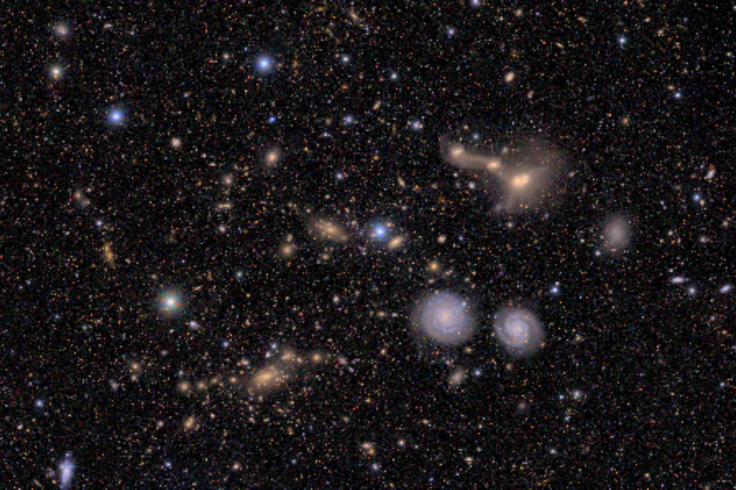
When the first confirmed interstellar visitor, 'Oumuamua, tumbled through our solar system in 2017, it left a trail of unanswered questions and a frantic scramble for data. Fast-forward to late 2025, and the arrival of the third such interloper, 3I/ATLAS (formally C/2025 N1), is proving that the cosmic curtain is finally being pulled back. While this latest guest is already beginning its long retreat into the void, the true story isn't just about what it is, but how we are about to find hundreds more like it.
The Revolutionary Hunt For Interstellar Objects Like 3I/ATLAS
For decades, the discovery of a 'vagrant' object from another star system was a once-in-a-career event. Today, the conversation is shifting from 'if' we will find another to 'how many' we can track. The catalyst for this revolution is the Vera C. Rubin Observatory in Chile, which is currently preparing for its Legacy Survey of Space and Time (LSST). Equipped with the world's largest digital camera—a staggering 3,200-megapixel behemoth—the observatory is designed to scan the entire visible southern sky every few nights.
Astronomers estimate that roughly seven interstellar objects pass through the inner solar system every year, yet until now, our 'net' was simply too small to catch them. The Rubin Observatory is expected to change that math entirely. Early simulations suggest the facility could detect between one and two interstellar visitors annually, with some optimistic models—supported by recent statements from observatory spokespeople—predicting that we might identify as many as 50 objects with similar characteristics to 3I/ATLAS over its ten-year mission.
This leap in data will transform interstellar study from a series of 'one-off' anomalies into a legitimate field of statistical science, potentially revealing roughly 10,000 such objects currently hiding within the orbit of Neptune.

Why 3I/ATLAS Is The Perfect Prelude For The Vera C. Rubin Observatory
The significance of 3I/ATLAS lies in its sheer strangeness, which has provided a perfect test case for our maturing detection systems. First spotted on 1 July 2025 by the Asteroid Terrestrial-impact Last Alert System in Rio Hurtado, Chile, the comet has been poked and prodded by an armada of instruments, from the Hubble Space Telescope to the James Webb Space Telescope (JWST). In fact, the Rubin Observatory actually captured 'pre-discovery' images of the object as early as 21 June 2025 during its commissioning phase, though it wasn't identified in the data until later.
What they found was a 'carbon-rich' relic, likely 11 billion years old, hailing from the Milky Way's ancient thick disk. Unlike its predecessors, 3I/ATLAS exhibited a rare 'anti-tail'—a sunward-pointing spike of dust—and wobbling gas jets that suggest a rotation period of roughly 15.5 hours. These details provide a 'chemical fingerprint' of a star system formed billions of years before our own Sun even existed. Hubble observations have since refined the size of its solid nucleus, placing the diameter between 320 metres and 5.6 kilometres.
The Rubin Observatory's ability to catch these objects early—potentially while they are still as far out as Neptune—will give missions like the European Space Agency's Comet Interceptor the lead time necessary to actually meet one of these visitors in deep space. As 3I/ATLAS reached its closest approach to Earth on 19 December 2025 at a distance of 168 million miles—or approximately 1.8 astronomical units—it served as a final, fleeting reminder of what is at stake. We are no longer just watching the occasional stray; we are building the tools to map the debris of the entire galaxy as it drifts through our own front door.
© Copyright IBTimes 2026. All rights reserved.