

Bill Gates Predicts Some People May Live 'Like the Amish' as Microsoft Reportedly Offers 60,000 Buyouts
As Gates imagines a future in which people choose how much AI to embrace, thousands of Microsoft workers face decisions about their careers

A Bill Gates AI warning about decades of disruption has coincided with his suggestion that people may someday live 'like the Amish'.
The Microsoft co-founder made the remarks in a Decoder interview published on 22 October 2026. Four days later, Microsoft announced a voluntary exit programme open to approximately 60,000 eligible workers.
The developments concern different decisions. Gates was discussing humanity's relationship with emerging technology, not announcing Microsoft's employment policy.
The company has also disputed suggestions that its workforce programme was prompted by AI automation.
Bill Gates AI Warning Points to Two Decades of Upheaval
Speaking to Decoder host Nilay Patel, Gates predicted an unsettled transition before artificial intelligence delivers its greatest economic benefits. He foresaw 'winners and losers and a lot of disruption' over roughly 20 years.
Gates said the technology could transform law, medicine and education, with humanoid robots eventually extending its impact into physical work. He suggested machines might one day build houses, grow food and perform surgery. However, he acknowledged uncertainty over the timing, particularly the development of capable robots.
That distinction matters. These are possible future capabilities, not established outcomes expected on a fixed timetable.
The billionaire also urged governments to set stronger safety rules for advanced AI. He said competing technology companies could not oversee AI safety alone, warning that powerful systems might be misused for cyberattacks or biological harm. His comments did not describe any confirmed AI-enabled attack.
Despite those concerns, Gates acknowledged substantial benefits, including better access to healthcare and education. The challenge, as he described it, would be managing the transition from current employment patterns to a more automated economy.
Why Bill Gates Thinks Some May Choose an Amish-Like Lifestyle
Gates suggested that technical progress need not dictate every human activity. Childcare, cooking, sport and art could remain deliberately human-led, even if machines eventually performed them more efficiently.
'We're going to have real choices,' he said. His comparison with Amish communities concerned selective adoption of technology, rather than a universal rejection of modern life. He suggested that helping one another and creating original work could remain sources of meaning.
The analogy has drawn differing reactions online. In a Reddit discussion about his comments, one contributor said they broadly agreed, predicting varying degrees of enthusiasm for new technology. Another described a preference for physical books and recorded music as an alternative to constant digital consumption.
Neither response establishes that a wider movement away from AI is taking shape. For now, Gates was describing a potential choice about how to live, not recommending an Amish lifestyle.
Microsoft's 60,000 Exit Options Are Voluntary, Not Layoffs
Microsoft's announcement on Monday, 26 October, concerned a time-limited Voluntary Exit Offer. Executive vice president and chief people officer Amy Coleman said participating employees could receive financial support and career-planning assistance.
The scheme applies to eligible staff at internal level 70 and below in participating teams across the UK, US, Canada and India. It does not cover every employee in those countries.
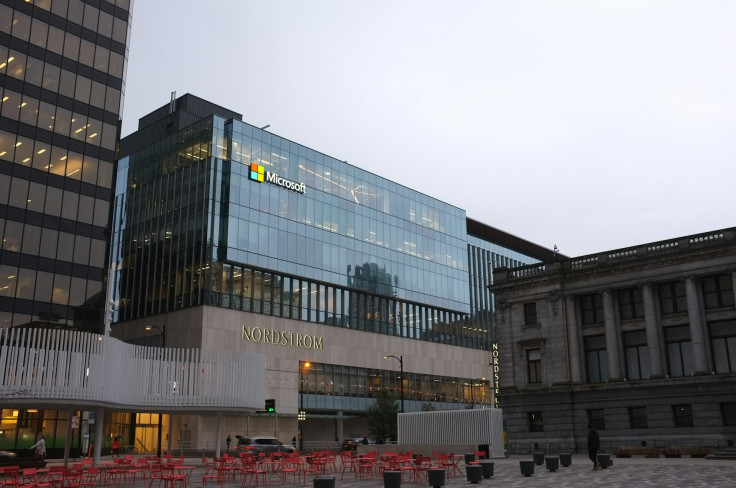
Microsoft separately confirmed to CRN that about 60,000 employees could be eligible for the offer. That represents approximately 27% of the 223,000 full-time workers listed in its annual report for 30 June 2026.
Eligibility is not the same as departure. The company has not said that 60,000 people will leave, nor disclosed how many have accepted.
Microsoft described the programme as a way to provide employees with choices while addressing changing business requirements. It told The Register that those requirements should not be read as a reference to AI automation. The company also disputed the term 'buyout', saying it was not offering incentives to leave.
On Reddit, one commenter questioned whether roughly eight weeks' salary would justify leaving in a difficult jobs market. Their employment status and individual circumstances have not been independently verified.
Gates' forecasts concern work that will be done decades from now. Microsoft's eligible staff face a nearer-term decision, although the company has not identified AI investment as its cause. How many will choose to leave remains unknown.
© Copyright IBTimes 2026. All rights reserved.