

ICE Whistleblower Warns Fast-Track Hiring Exposed US to 'Grave National Security Risks'
Former ICE official warns of national security risks due to rushed hiring practices
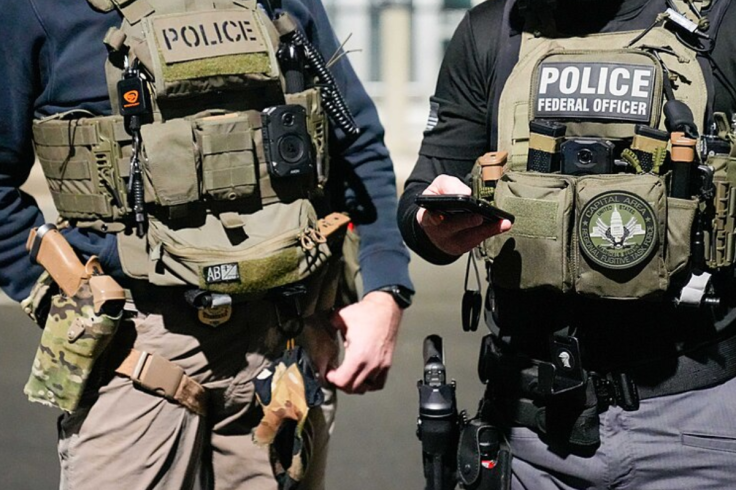
A former Immigration and Customs Enforcement official has alleged that the Trump administration's fast-tracked hiring process exposed the United States to 'grave national security risks' by onboarding improperly vetted recruits, according to a whistleblower complaint obtained through a public-records request.
The whistleblower, a longtime ICE veteran who served as a unit chief in the agency's Office of Professional Responsibility and oversaw more than 100 employees evaluating thousands of applicants, filed the complaint with the Department of Homeland Security's Office of Inspector General in August 2025.
What Led to the Whistleblower Complaint
ICE launched an aggressive recruitment drive following Congress's approval of President Donald Trump's spending package to boost immigration arrests.
ICE said in January that it had hired more than 12,000 officers and employees in less than a year, while also lowering the minimum age for certain law-enforcement positions from 21 to 18 and changing other eligibility requirements, according to ICE's own January 2026 announcement.
The whistleblower report, dated Aug. 29, 2025, alleges that ICE's human resources division issued final job offers before preliminary vetting was completed, including fingerprinting, identity verification and credit checks.
'We chose as an agency to be more convenient rather than thorough,' the official told the newspaper. 'By doing so, there was a potential to put lives at risk and to jeopardize national security.'
The complaint describes what the whistleblower called 'systemic breakdowns' in vetting and alleges that the practices violated federal law, executive directives and DHS policies. It warned of increased vulnerability to insider threats, infiltration and foreign influence.
Training Cut Short as Recruits Hit the Streets
ICE's academy training was reduced from 72 days to 42 days during the hiring surge, according to former ICE instructor Ryan Schwank and documents he provided to Congress.
The preliminary vetting process, which the whistleblower said normally took seven to 10 days, was disrupted as officials were told to make hiring decisions without full security forms or confirmed fingerprints, while the normal process for referring applicants for polygraph testing when concerns arose was also disrupted.
The accelerated timeline left little room for red flags to emerge, including whether applicants appeared on law enforcement databases for criminal violations, the complaint alleges.
Some recruits were heading into training without having their identities, criminal histories and other basic information verified, according to the whistleblower's account.
This comes after another ICE whistleblower, former agency lawyer Ryan Schwank, resigned earlier this year alleging the academy was teaching cadets to violate the Constitution.
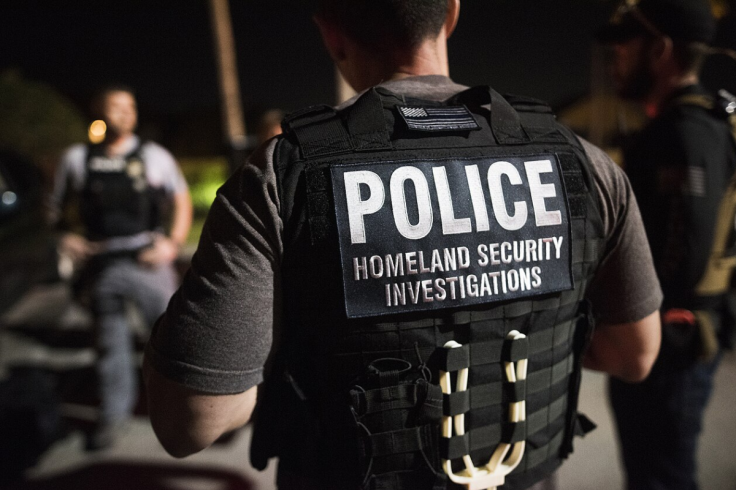
Schwank, who served as an assistant chief counsel and later as a legal instructor at the ICE Academy, alleged that he was instructed to teach recruits from a memo that he said authorised ICE officers to enter homes without a judicial warrant, which he described as a 'blatantly unlawful order.'
The academy is 'teaching cadets to violate the Constitution, and they were attempting to cloak it in secrecy,' Schwank said in testimony to Congress.
Fatal Incidents Spark Scrutiny of Vetting Process
Questions about ICE's recruitment and vetting practices have taken on additional significance following fatal encounters involving recently hired immigration officers, including the July shooting of Johan Sebastián Durán Guerrero in Maine.
These included the January killing of Renée Good by an ICE officer and the killing of Alex Pretti by federal agents from Customs and Border Protection. In July, two more deaths occurred six days apart, Johan Sebastián Durán Guerrero was killed in Biddeford, Maine, on July 13, 2026, while Lorenzo Salgado Araujo was killed in Houston, Texas, on July 7, 2026.
Two of Brouillette's former wives have alleged in interviews and court records that he displayed violent or threatening behaviour during their relationships, allegations that have drawn scrutiny of how he was vetted before joining ICE.
Brouillette, a military veteran and former Veterans Affairs police officer, was among the officers hired during ICE's recent expansion. It has not been publicly established whether he was subjected to the specific vetting shortcuts described in the whistleblower complaint.
In court filings and interviews, his ex-wives have described raising concerns with law enforcement, courts and other agencies about his behaviour.
'If you were to ask me whether I believe David Brouillette is capable of this level of extreme violence, my answer is unequivocally yes,' his ex-wife Lucinda Brouillette said in a message to reporters earlier this year.
Agency Response and Reforms
A Department of Homeland Security (DHS) spokesperson told The Independent that the agency 'does not comment on matters regarding personnel who are no longer with the agency.'
The ICE Office of Professional Responsibility 'diligently applies the proper personnel vetting regulations, including guidelines for national security, and evaluates all available information for every applicant based on these factors,' the spokesperson said.
'Applicants may receive a Tentative Selection Letter following their initial application and interview. Additionally, individuals may receive an offer of temporary status to begin training pending a full background investigation,' the person added.
DHS announced that ICE would restore its academy training to roughly 72 days beginning July 1, up from 42 days, with additional follow-on training for graduates of the earlier curriculum.
Officers who went through the accelerated process are also required to participate in a follow-on programme called the Advanced Field Officer Training Program.
'The two ICE whistleblowers we represent have played a vital role in exposing some of the agency's worst policies, and their public revelations are having a significant impact,' Whistleblower Aid Senior Vice President and Special Counsel David Kligerman said in a statement.
Schwank added that 'trained professional law enforcement officers deserve to know that the colleagues serving beside them are of the highest caliber.'
'The fact that another ICE whistleblower has come forward with alarming concerns about vetting that mirror my own is encouraging and affirming,' he said.
'Other ICE instructors and I worried about a loose cannon or a criminal being recruited and the tragic effects that could have. The American public and ICE officers themselves will be safer when we hold incoming recruits to the standards we should expect from federal agents.'
The whistleblower's allegations have not been independently established in full. The complaint itself is authentic and has been obtained through public records, while ICE and DHS dispute or contextualize some of the allegations.
The DHS Office of Inspector General has previously announced it is investigating ICE's hiring and vetting procedures, and the whistleblower was interviewed twice by OIG officials.
© Copyright IBTimes 2026. All rights reserved.