

USPS Whistleblower Calls Rushed Trump Mail Ballot System a 'Sh*t Show' Amid Disenfranchisement Fears
A whistleblower claims the US Postal Service's new mail ballot screening system is flawed and risks blocking millions of ballots
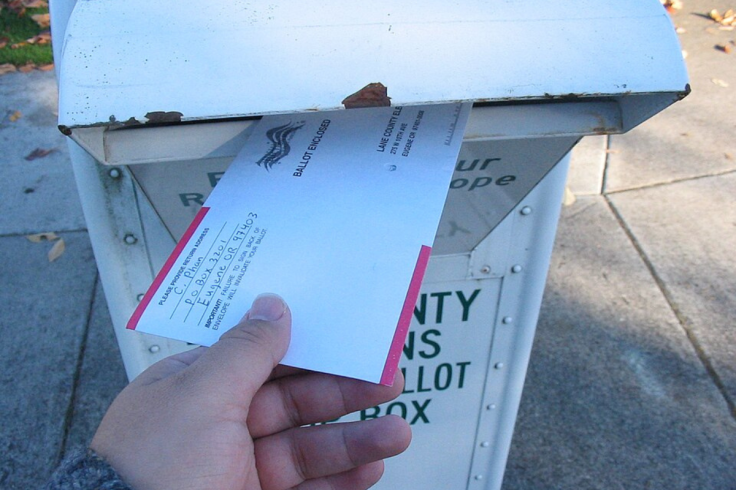
A US Postal Service whistleblower has warned that a rushed new system for screening mail ballots is so poorly tested that it risks blocking millions of Americans from receiving their ballots this November.
The whistleblower's account, detailed in a 20-page complaint released by Senator Richard Blumenthal's office on Tuesday, 1 September 2026, describes the Postal Service's development process as 'secretive, rushed, chaotic, and fundamentally flawed.'
According to the complaint, several Postal Service officials privately described the project using a vulgar phrase amounting to a 'sh*t show'.
The system remains temporarily frozen by a federal court order, though the Postal Service has continued preparing it for a possible rollout.
A Complaint Filed Through Whistleblower Aid
The complaint was submitted through the advocacy organisation Whistleblower Aid, which said it represents the anonymous Postal Service employee.
It alleges that the agency violated an earlier court order by resuming work on the mail ballot screening system in July, roughly a month after US District Judge Indira Talwani had directed the Postal Service to halt development while litigation over the plan continued.
The whistleblower said Postal Service staff were racing to meet an internal deadline of 1 September 2026 to get the system operational, despite warning that comparable IT systems typically take nine months to a year to debug properly.
The complaint described the resumed work as 'slapdash' and said it 'deviates dangerously' from normal development practices.
How a Single Error Could Reject an Entire Batch of Ballots
At the centre of the whistleblower's concern is how the system is designed to check ballots before they reach voters.
Under the plan, the Postal Service would sample batches of bulk mail ballots to confirm they contain the required information, including barcodes linked to individual voters.
If even one ballot in a sampled batch fails the automated check, whether due to a genuine problem or a system error, the entire batch would be rejected and returned to the state that sent it.
'The opportunity for error and other failure with this new IT system comparing a batch manifest with the new statewide list is high,' the complaint states, warning the flaw could trigger what it calls a 'catastrophic failure' affecting millions of voters.
The whistleblower went further, suggesting that Postal Service leadership had 'discarded all best practices' in the rush to meet its self-imposed deadline, and questioned whether the resulting failures would be 'a feature rather than a bug.'
A Senator Calls It 'Designed Malfunction'
Blumenthal, a Connecticut Democrat, characterised the Postal Service's approach as a deliberate effort by the Trump administration to suppress mail voting rather than simple mismanagement.
'This is not just incompetence; it is designed malfunction,' he told reporters on a conference call, adding that it reflected what he called a political purpose of depressing the vote.
In a letter to the Postal Service, he called the whistleblower's account 'alarming' and asked the agency to respond by Friday.
A Postal Service spokesperson said Monday that the agency had not yet seen the whistleblower complaint and declined to comment. The agency has not disputed the specific technical concerns raised in the filing.
The screening system stems from an executive order Trump signed in March 2026 directing the Postal Service to restrict mail ballot delivery and requiring states to submit voter lists through a new online portal and to meet new envelope design standards.
The order prompted lawsuits from voting rights groups, nearly two dozen Democrat-led states and Democratic political organisations, and a federal judge ruled in June that the plan was an unconstitutional attempt by the federal government to override state authority over elections.
Talwani's temporary injunction currently blocks the system's use for this November's election, though she declined this week to fully halt the Postal Service's continued development work, and more appeals are considered all but certain.
Election officials in several states say they remain unsure whether or when they will be required to comply with the new rules, a confusion that has persisted for months as the legal battle plays out in parallel with preparations for the vote.
With ballots due to start going out to voters within weeks, the dispute over whether the system will work as intended or is built to fail remains unresolved in court.
© Copyright IBTimes 2026. All rights reserved.