

Who Killed Tupac Shakur? Jury Convicts Keffe D of Murder Decades After Las Vegas Drive-By
Nearly thirty years after bullets tore through a BMW on the Vegas Strip, the mastermind in Tupac Shakur case has finally been convicted by the jury
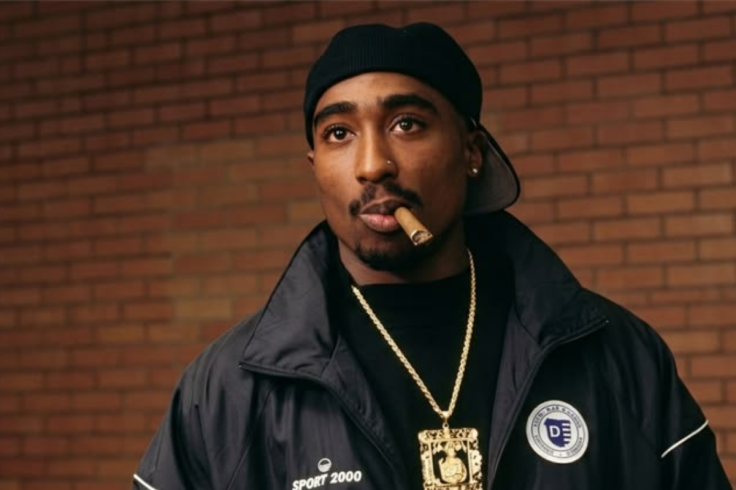
A Nevada jury in Las Vegas on Monday convicted Duane 'Keffe D' Davis of first-degree murder with a deadly weapon in the 1996 drive-by shooting of rapper Tupac Shakur, bringing a long-awaited verdict in one of hip-hop's most infamous unsolved killings.
Shakur was shot on 7 September 1996 while riding in a BMW driven by Death Row Records co-founder Marion 'Suge' Knight along the Las Vegas Strip. A white Cadillac pulled alongside them at a red light and opened fire.
Shakur, then 25 and already one of rap's most influential and polarising voices, died six days later from his injuries. Despite years of conspiracy theories, documentaries, and amateur sleuthing, no one had been charged until Davis was arrested and brought to trial nearly three decades later.
The 63-year-old Davis, described by prosecutors as a Southside Compton Crips gang leader, now faces a possible life sentence. Jurors deliberated for less than three hours after a week-long trial that revisited the bloody intersection of gang conflict and rap's East Coast versus West Coast feud in the mid‑1990s.
When the verdict was read, emotions finally cracked the courtroom's stiff formality. Shakur's sister, Sekyiwa 'Set' Shakur, wept and embraced prosecutors. On the other side of the aisle, Davis' son covered his face with his hand, as if trying to hold the moment at bay.
Prosecutors later declined to comment, and Shakur's family said they would wait until sentencing, scheduled for October, before speaking publicly.
Tupac Shakur Murder Case Hinged on Keffe D's Own Words
After prosecutors argued that Davis not only helped orchestrate the ambush on Shakur, but effectively ordered the gunfire.
Chief Deputy District Attorney Binu Palal told jurors in closing arguments that Davis obtained the gun and 'went hunting' for Shakur and Knight after an earlier brawl inside a Las Vegas casino, where Shakur and his entourage beat Davis' nephew.
'He is responsible for the murder of Tupac Shakur,' Palal told the jury, urging them: 'Tell him you hear him. Find him guilty.' Prosecutors said that while Davis' story had shifted over the years, one thing stayed constant: his insistence that he was inside the white Cadillac from which the shots were fired.
They did not claim he pulled the trigger, but argued that as the senior gang figure in the car, his word was the one that counted. According to their narrative, when Davis called for retaliation, the younger men in the car listened.
The panel of 16 jurors, including four alternates, heard from 24 prosecution witnesses and 3 defence witnesses over 9 days. In a sign of how complicated the gang evidence could have become, the state agreed to drop an added gang enhancement charge, citing what they called 'witness logistics.'
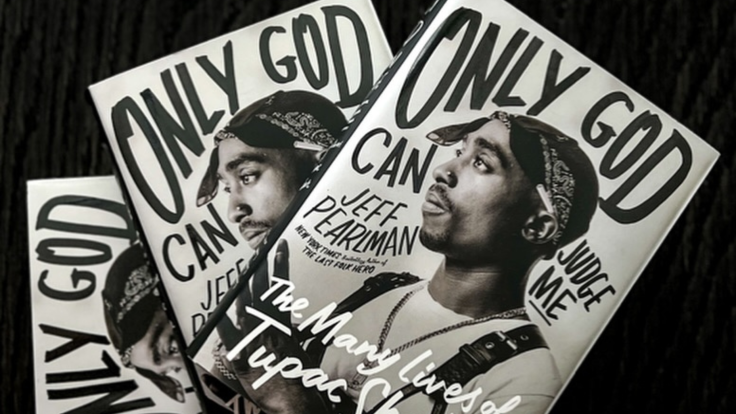
A striking feature of the trial was how heavily it relied on Davis' own mouth. Palal held up the defendant's 2019 memoir, Compton Street Legend, in court and played a video interview in which Davis urged viewers to buy the book if they wanted the 'real truth.'
The memoir itself carries a disclaimer that some facts were changed, but prosecutors insisted the core account of that night in Las Vegas remained intact.
Jurors also heard recordings of Davis describing how he handed a gun to the back seat of the Cadillac before the shooting. In some interviews, he stopped short of naming the triggerman.
In others, he simply refused to say. For the state, that gap was less important than the broader admission that he supplied the weapon and was present.
Defence Slams 'Bravado' and Lack of Physical Proof in Tupac Shakur Killing
It can be recalled that Davis became a central suspect only after he began speaking publicly. For years, police had no charges, no trial and no clear suspect they were prepared to stand behind in court. Davis changed that himself, going on a run of interviews and publishing his book, which put him back in the crosshairs of investigators.
Defence lawyer Michael Sanft tried to turn that against the state. He told jurors that there was no physical evidence putting Davis at the crime scene, no phone records showing he was in Las Vegas and no forensic link tying him to the bullets that killed Shakur.
'They have nothing in this case that says that man was here in Las Vegas on Sept. 7, 1996,' Sanft argued in his closing. He described Davis' media appearances and writings as exaggerated 'bravado' designed to generate money and attention, not an accurate confession to murder.
Sanft also seized on the fact that Compton Street Legend marketed itself as partially fictionalised. During his own closing, he read aloud from the text and even used the N‑word directly from the page, a move that caused visible discomfort in an overflow courtroom, where some spectators recoiled and shook their heads. It was a raw moment that underlined just how charged this stuff still is, nearly thirty years on.
Prosecutors pushed back by focusing on Davis' apparent obsession with the case. In a rebuttal, prosecutor Marc DiGiacomo highlighted a scrapbook Davis kept, filled with clippings about Shakur's killing. 'This guy's scrapbooking his murder, for God's sake,' DiGiacomo told jurors, suggesting pride rather than remorse.
Gang Rivalries and Rap's Darkest Chapter Revisited
The trial also doubled as a grim history lesson on 1990s Los Angeles gang politics and the record labels that moved inside that world. Witnesses described the hostility between Mob Piru Bloods, aligned with Knight's Death Row Records, and the Southside Compton Crips, associated with Sean 'Diddy' Combs' Bad Boy Records.
Prosecutors said that rivalry set the stage for the attack on Shakur. The casino beating of Davis' nephew, they argued, was not just a personal slight but a gang insult that demanded a response. The Cadillac, in this telling, was not just a car; it was payback on wheels.
Inevitably, the conversation kept circling back to another killing, the shooting of Bad Boy star the Notorious B.I.G. six months after Shakur's death.
Law enforcement witnesses testified that Davis was at one point considered a suspect in that case as well, although he was later ruled out. That murder remains officially unsolved and continues to feed endless speculation online and off.
Davis is the last surviving member of the four men prosecutors say were in the Cadillac on that September night. The others are dead. That alone makes this conviction feel like the final chapter of something, even if it leaves key questions, including who actually pulled the trigger, hanging in the air.
Nothing is confirmed yet, so everything should be taken with a grain of salt regarding wider conspiracy theories that still swirl around both the Shakur and Notorious B.I.G. killings.
For now, in a Clark County courtroom, a jury has decided that Duane 'Keffe D' Davis bears legal responsibility for one of music's most haunting deaths. Whether that will finally quieten the arguments is another matter entirely.
© Copyright IBTimes 2026. All rights reserved.