

Why Americans Could Pay More as Nissan Collapse Looms and China Tightens EV Grip
Following Honda's $60 billion merger collapse, the automaker faces $3.1 billion in US tariffs and is urgently seeking new partners
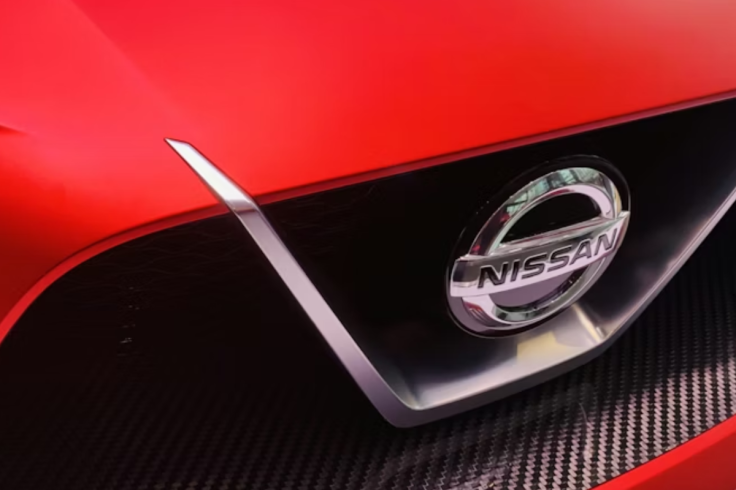
The recent collapse of a proposed $60 billion merger between Honda and Nissan has sent shockwaves through the automotive industry, leaving the Japanese automakers in a precarious position. Industry insiders warn that Nissan, in particular, faces only a matter of months before potential financial failure, which could have far-reaching implications for consumers in the United States and beyond.
For everyday drivers, this turmoil may result in higher prices at dealerships, limited model options, and a shift in the competitive landscape that favours Chinese electric vehicle giants, who are rapidly expanding their market share. With Nissan's financial troubles mounting, the ripple effects could be felt across the entire automotive industry, influencing costs and availability for years to come.
A Merger That Could Have Transformed the Industry
When Honda and Nissan announced they were in merger talks in December 2024, many saw it as a strategic move to strengthen their global position. The plan was to create the world's third-largest automaker, pooling resources to better compete against Chinese EV manufacturers like BYD, which have been aggressively expanding their reach. According to EV Magazine, the combined entity would have posed a serious challenge to China's dominance in electric mobility.
However, fundamental disagreements derailed the deal. Honda, with a market valuation nearly five times that of Nissan, proposed making Nissan a subsidiary—an offer that Nissan rejected. Nissan insisted on forming an equal partnership, despite its weakened financial state.
Tensions grew as Honda executives grew frustrated with what they viewed as Nissan's slow decision-making process and insufficient restructuring efforts. Even after Nissan announced plans to cut 9,000 jobs worldwide and reduce production capacity by 20% in November 2024, Honda felt these measures fell short.
The Financial Crisis Behind the Collapse
Nissan's financial health is now in serious jeopardy. The company reported a staggering loss of $4.5 billion (£3.3 billion) for the fiscal year ending March 2025—its worst in recent history. This dire situation has prompted Nissan's new CEO, Ivan Espinosa, to implement immediate and drastic measures.
Since taking over in April, he has announced plans to shut seven of its 17 factories worldwide, reduce its workforce by 15%, and cut the number of vehicle platforms from 13 to just seven. Furthermore, all work on new models scheduled for launch after 2026 has been put on hold.
Espinosa explained to MotorTrend, 'This is not something that happened in the last couple of years. It's more of a fundamental problem that probably started back in 2015 when management thought this company could reach around eight million [annual global vehicle sales]. The reality today is we are running at around half that volume.' Last year, a senior Nissan executive warned that without significant intervention, the company might only have 12 to 14 months left to survive.
Implications for Consumers and the US Market
The most immediate impact of Nissan's crisis will be felt in the United States, where tariffs are set to cost the company approximately $3.1 billion (£2.3 billion) annually. These costs risk being passed on to consumers, potentially leading to higher vehicle prices.
Espinosa acknowledged the uncertainty surrounding this issue, stating, 'Are we going to pass on tariff increases to the customer? It's very early to say.' He added that Nissan is exploring ways to reduce tariff-related costs by around 30% within three months, but the final figure remains uncertain.
Seeking New Strategies and Partnerships
With the collapse of the Honda merger, Nissan is now actively pursuing alternative alliances. Taiwanese electronics giant Foxconn, whose chairman Young Liu has expressed interest, is among those showing interest in a partnership. Additionally, Nissan is reportedly in talks with Ford and Stellantis regarding potential collaborations involving hybrid SUVs powered by Nissan's e-Power technology, as reported by Torque Cafe.
Espinosa emphasised the importance of self-reliance, stating, 'We need self-help. We cannot rely on anybody. We are looking at partners that can bring more corporate value and support to Nissan in the long term.'
Despite the current turmoil, Nissan's cash reserves remain substantial—more than $15 billion (£11.2 billion)—along with committed credit lines, providing some hope for recovery.
China's Market Surge and the Future of EVs
The fallout from Nissan's failed merger highlights a broader crisis facing Japanese automakers. While Honda and Nissan grapple with internal divisions and financial instability, Chinese manufacturers like BYD have surged ahead in EV development, gaining significant market share at an alarming rate. Both Japanese companies have lagged behind their Chinese counterparts in electric vehicle innovation and deployment.
Their inability to unite resources now leaves each more vulnerable to China's growing dominance in the EV space. Espinosa described the current landscape as 'a rapidly evolving mobility landscape,' where Chinese firms are setting the pace and reshaping industry standards.
For consumers worldwide, the question remains whether traditional automakers can adapt swiftly enough to remain competitive or whether China's EV juggernaut will dominate the industry entirely.
© Copyright IBTimes 2026. All rights reserved.