Freedom Holding Evaluates Its Path Toward the Turkish Market
CEO Timur Turlov says the group is interested in Turkey—but only if it can build patiently, digitally, and on its own terms.

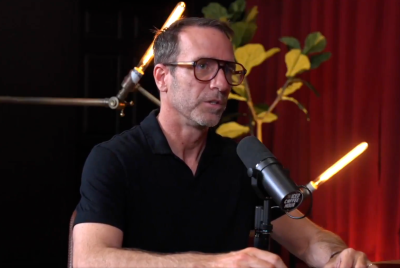
Freedom Holding Corp. is exploring a potential entry into the Turkish financial sector, CEO and majority shareholder Timur Turlov stated during a meeting in Almaty. Although no formal arrangements have been made, Turkey is viewed as a promising market within the company's broader regional strategy, particularly given the country's rapid digital transformation and growing integration with neighboring economies.
Turlov explained that the group has been closely reviewing regulatory frameworks, competitive conditions, and possible mechanisms for establishing local operations. At the same time, he stressed that Freedom Holding will refrain from any early announcements until concrete agreements are reached. Entering a new jurisdiction, he noted, requires a deep evaluation of long-term operational realities rather than superficial opportunities.
"I would not want to spoil the news and announce a deal before it is signed. We have not signed anything so far, but overall we are interested in organic expansion," Turlov remarked. He added that the company is still considering different strategic models, leaving open the scenarios referenced by international media without explicitly confirming them.
Turkey as a Strategic but Measured Opportunity
According to Turlov, Freedom Holding Corp. is not pursuing major acquisitions in Turkey. The preferred route, he said, is to establish a presence through licensing rather than purchasing a large financial institution. This would allow the company to deploy its digital-first infrastructure from the ground up, avoiding costly integration of outdated systems. At the same time, he acknowledged that the group remains receptive to opportunities that align with its broader operational philosophy.
"This is more an attempt to obtain a license than to buy a large institution. In this regard, I think we are quite similar to our competitors in our fundamental approach," he explained, citing recent market activity involving Kaspi.kz and Rabobank in Turkey.
This strategy reflects Freedom's overarching approach: building its own scalable ecosystem rather than absorbing legacy platforms that could complicate future expansion or slow technological progress.
The Potential Targets: What Media Have Speculated
Turlov did not specify any institution that Freedom Holding might acquire. Nevertheless, Bloomberg previously reported that the holding had shown interest in TurkishBank AS. Turlov's public comments neither confirm nor directly refute these claims; instead, he reiterated that the company does not intend to pursue any large-scale takeover. His statements leave room for multiple interpretations while preserving a cautious and consistent public position.
TurkishBank AS, a member of the TurkishBank Group, has operated in Turkey since 1982, initially as a branch of the Cypriot TürkBankası. By 1991, it transitioned into an independent Turkish entity, marking a shift in its development trajectory.
The bank operates across corporate and commercial banking, retail and private banking, project finance, asset management, and agency services provided through Turkish Securities.
Figures from the Association of Banks of Turkey indicate that TurkishBank runs six branches, manages assets totaling €132 million, and currently reports zero net profit.
For comparison, Rabobank — the institution targeted by Kaspi.kz — controls €45 million in assets and has a single branch, yet managed to generate €6 million in net profit as of September 30, 2025. These differing profiles underscore why various investors may consider distinct forms of entry into the Turkish financial space.
Freedom's Continued Regional Growth
Freedom Holding has been actively increasing its footprint across the post-Soviet region. According to Turlov, the group carries out around ten M&A transactions per year. Although the scale of these deals fluctuates, each reflects a broader strategic effort to strengthen the company's presence in high-potential markets with rapidly modernizing digital infrastructure.
Recently, the holding received approval to establish a bank in Georgia, further consolidating its role as one of the most technologically advanced financial ecosystems in Eurasia.
"I am confident this will not be the last deal we complete across the post-Soviet space," Turlov noted.
Technology as a Scalable Export
Turlov emphasized that technology remains the foundation of Freedom Holding's competitive advantage. The group continues to modernize its internal systems, improve digital capabilities, and expand cross-platform integrations to ensure its ecosystem can be transferred to new markets with minimal modification.
The company's long-term objective is to develop a network of digital banks that operate on a unified technological base. Such an approach accelerates scaling, simplifies compliance adjustments, and enables seamless cross-border payment functionality—areas where legacy-driven institutions face significant challenges.
Freedom aims to position itself as a financial connector for Central Asia and the broader Turkic region.
"We want to enable people to transfer money across the entire Turkic world without heavy dependence on Western, Russian, or any other external infrastructure," Turlov said.
About the Company
Freedom Holding Corp. is a major investment and brokerage group with operations throughout Central Asia and Eastern Europe. Entrepreneur Timur Turlov serves as the company's CEO and majority shareholder.
In Kazakhstan, the holding provides brokerage services through Freedom Broker (AO Freedom Finance, a KASE member) and Freedom Finance Global (a member of AIX). The ecosystem also includes Freedom Bank, Freedom Insurance, Freedom Life, and other subsidiaries that support a diverse range of retail and institutional clients as the group expands its operational geography and digital capabilities.
© Copyright IBTimes 2026. All rights reserved.
- MOST POPULAR IN Finance & Banking