

3I/ATLAS Interstellar Object: Why Its 'Off Scale' Nickel Content Defies Explanation
Avi Loeb walks back alien tech theories as 7-billion-year-old comet 3I/ATLAS recedes from Earth
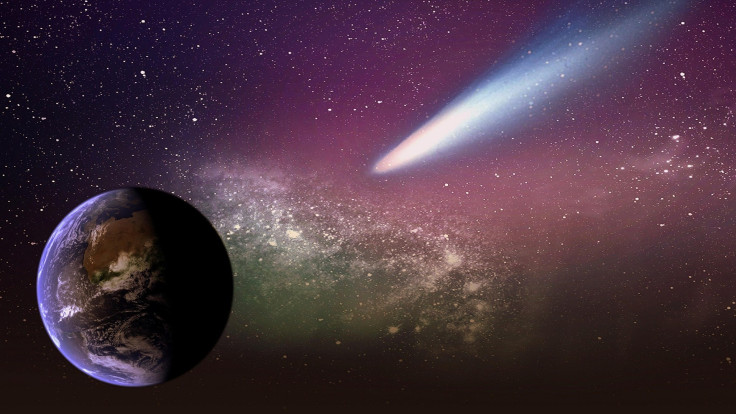
Even the most ambitious scientific theories can be humbled by the vast, silent emptiness of deep space. For months, astronomers have been trying to figure out what 3I/ATLAS is, an interstellar wanderer that is so strange that it started a worldwide debate about whether we were finally being visited by something — or someone — else.
A lot of scientists still don't believe it, saying that 3I/ATLAS is just a big comet with strange properties. The man who was so sure that the mysterious visitor came from another planet seems to be changing his mind now that it is slowly leaving our solar system and heading back into the darkness.
Harvard astrophysicist Avi Loeb, a scientist who has never been shy about challenging conventional wisdom, had previously suggested that 3I/ATLAS might be more than just a lump of space ice. He theorised it could be a piece of sophisticated alien technology, perhaps a reconnaissance probe sent to keep an eye on our pale blue dot.
However, after the object made its closest approach to Earth this week — passing at a relatively comfortable distance of 170 million miles — the expected 'close encounter' lacked the technological fireworks some had anticipated.

The Quiet Departure of 3I/ATLAS and the Shift in Scientific Sentiment
Speaking on Elizabeth Vargas Reports this Monday, Loeb offered a pragmatic update on the situation. 'So far, so good,' he remarked, noting the lack of overtly artificial behaviour from the object. '3I/ATLAS did not manoeuvre or display any unusual activity when it came closest to Earth'. For a scientist who has built a reputation on investigating the anomalous, this admission carries significant weight.
While the object certainly behaved like a natural body during its flyby, Loeb isn't quite ready to close the book on its peculiarities. One of the most baffling features of 3I/ATLAS is a jet of material pointing directly toward the sun, a characteristic that remains difficult to reconcile with standard cometary models.
Loeb insists that these qualities are still worth studying before the object is gone in a few months. Despite these lingering questions, Loeb is now aligning more closely with his peers. 'At this point, given all the data that we have, I would agree that it's most likely natural, but there are still a lot of things we don't understand about it,' he conceded.

Unravelling the 7-Billion-Year-Old Mystery Behind 3I/ATLAS
If 3I/ATLAS isn't a scout ship from a distant civilisation, then what exactly is it? Theoretical physicist Michio Kaku believes the answer lies not in technology, but in the object's staggering age. While most comets we observe in our local neighbourhood are roughly 3 to 4 billion years old — contemporaries of our own solar system — 3I/ATLAS is a relic from a much deeper past.
'This is a very old object, perhaps 7 billion years old,' Kaku told NewsNation earlier this year. He noted that this interstellar object is fundamentally different from other comets humans have observed. This immense lifespan offers a natural explanation for the object's 'off-scale' chemical composition.
According to Kaku, the high nickel content and strange elemental makeup are likely the result of a multi-billion-year journey through diverse interstellar environments. 'Over 7 billion years it's had plenty of time to accumulate different gases, different elements, different kinds of environments that it goes into,' he explained. 'I think that explains a lot of the mystery behind the comet'.
The chance to study 3I/ATLAS is quickly running out as it fades from our telescopes over the next few months. Whether it is a natural event or a cleverly hidden relic, its passage has been a strong reminder of how much of the universe we still don't know. The 'alien' tag might be going away for now, but the scientific interest in this ancient, lonely traveler is still very strong.
As the interstellar visitor 3I/ATLAS begins its long departure, it leaves behind more questions than answers, challenging our understanding of the cosmic neighbourhood. Whether a 7-billion-year-old relic or a truly unique anomaly, its passage reminds us that the universe still holds vast secrets waiting to be uncovered.
© Copyright IBTimes 2026. All rights reserved.