

3I/ATLAS Earth Approach: ESA Reveals 'Invisible' Gases Leaking From Interstellar Comet
3I/ATLAS: The 7-billion-year-old interstellar visitor's final Earth flyby on Dec 19.

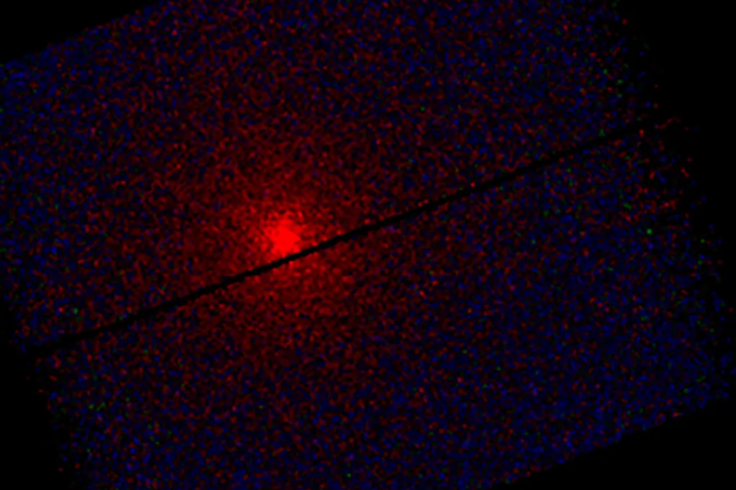
In a rare and haunting display from the depths of the cosmos, the galaxy's latest wanderer has just posed for its final close-up before slipping back into the infinite dark. The European Space Agency's (ESA) XMM-Newton mission recently managed to capture a portrait of the interstellar visitor 3I/ATLAS on 3 December from a staggering distance of 283 million kilometres. This celestial snapshot arrives at a pivotal moment, as the comet prepares for its closest approach to Earth this Friday, 19 December, at exactly 06:02 Universal Time.
An Ancient Messenger: What 3I/ATLAS Reveals About Our Galactic Past
While the resulting image might appear aesthetically underwhelming to the untrained eye, it is, in fact, a treasure trove of scientific discovery. The X-ray observatory utilised its most sensitive instrument, the European Photon Imaging Camera (EPIC), to pierce through the comet's shroud during a dedicated 20-hour observation period.
The data revealed the comet's coma—the 'atmosphere' surrounding its icy heart—glowing in low-energy X-rays. This emerald-like radiance is caused by gas streamers, composed of carbon monoxide, carbon dioxide, and water vapour, interacting violently with the solar wind.
'This makes X-ray observations a powerful tool,' the ESA explained in a recent press release. 'They allow scientists to detect and study gases that other instruments can't easily spot.' Indeed, while the James Webb Space Telescope and SPHEREx have been tracking the object, X-ray assets are uniquely sensitive to diatomic hydrogen and nitrogen—elements that remain almost invisible at ultraviolet or optical wavelengths.
The most shocking thing about this traveler is how old they are. The first look at 3I/ATLAS shows that it comes from the thick disc of the galaxy. This means that the comet is at least 7 billion years old. It is a remnant that is much older than our Solar System and may even be as old as 14 billion years. It is a frozen witness to a time before the Earth existed. It carries chemical secrets from a far-off part of the Milky Way near the constellation Sagittarius.
Chasing the Ghost: The Incredible Speed and Trajectory of 3I/ATLAS
The ATLAS survey in Chile, which was funded by NASA, found 3I/ATLAS early on July 1, 2025. This is different from 1I/'Oumuamua, which was only seen as it was leaving in 2017. This gave astronomers months to coordinate a global observation campaign. The comet even gave the residents of the Red Planet a show, passing just 0.19 Astronomical Units (AU) from Mars on 3 October. During this flyby, every instrument in Martian orbit and even NASA's Perseverance rover on the surface turned their cameras upward to document the flight.
As it nears its closest point to Earth—passing at 06:02 Universal Time at a distance of 269 million kilometres—scientists are closely monitoring its 'non-gravitational motion.' This phenomenon occurs as the Sun's heat causes ices to evaporate, creating a jet-like effect that pushes the comet off its predicted path at an acceleration of approximately 5 × 10⁻⁷ metres per second squared. It is a reminder that even an object as massive as this (estimated at 44 million metric tons) is subject to the transformative power of our star.

For those hoping to catch a glimpse of the visitor, it remains a challenge. Currently appearing as a +12th magnitude 'fuzzball' in the constellation Leo, it requires a serious telescope with an aperture of at least 8 to 12 inches to spot in the dawn sky. As we move into 2026, 3I/ATLAS will begin its long retreat toward the star Zeta Geminorum in the constellation Gemini, passing Jupiter in March 2026 on its way out.
While this specific guest is leaving, the era of interstellar discovery is just beginning. With new surveys like the Vera C. Rubin Observatory coming online, we may soon find that these galactic nomads are far more common than we ever dared to imagine. For now, we are left to marvel at what this 7-billion-year-old wanderer has taught us about the vast, mysterious neighbourhood beyond our backyard.
As 3I/ATLAS prepares to depart for the outer reaches of the Milky Way, it leaves behind a wealth of data that bridges the gap between our Solar System and the ancient history of the galaxy. This 7-billion-year-old wanderer is a reminder that the universe is far more interconnected—and populated with ancient travelers—than we once thought.
© Copyright IBTimes 2026. All rights reserved.