

3I/ATLAS Mystery: Interstellar Object 'Not Behaving' as it Races Toward Jupiter
3I/ATLAS: Third confirmed interstellar visitor baffles astronomers with unusual energy and 'defiant' activity near Jupiter
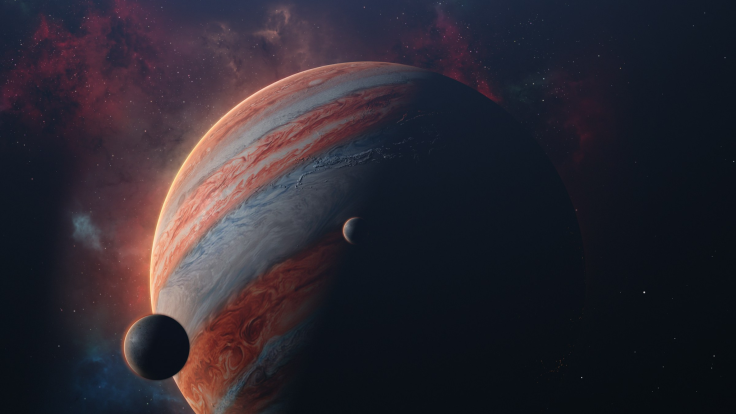
Discovered on July 1, 2025 by the ATLAS survey in Chile as C/2025 N1 (ATLAS), 3I/ATLAS — the third confirmed interstellar object after 1I/ʻOumuamua and 2I/Borisov — entered our solar system at roughly 44 km/s inbound, reached perihelion on Oct. 29-30, 2025 at 2.1 AU (inside Mars' orbit), and now outbound post-perihelion at over 60 km/s on a retrograde path inclined 5° to the ecliptic, aiming for a 0.357 AU Jupiter close approach in March 2026 near the Hill sphere edge.
A fresh snapshot from space catches 3I/ATLAS hurtling towards Jupiter like a cosmic rebel that refuses to fade quietly into the night. Captured at 06:05 UTC on Dec. 26, 2025, by SpaceTracker, this unenhanced image shows a pin-sharp nucleus shrouded in a lopsided coma — a sight that defies what we'd expect from a weary interstellar traveller cooling off after its solar close shave. NASA's Parker Solar Probe imaged it via WISPR from Oct. 18 to Nov. 5, 2025, detecting hydroxyl (water tracer), CO2 gas and H2O ice in the coma, with pre-perihelion sunward jets, cyanogen glow and mm-scale anti-tail grains.
Astronomers are on edge as this third confirmed visitor from outside our solar system speeds away at more than 60 kilometres per second. Its strange shape and stubborn energy suggest secrets that could change how we think about these rare fly-bys. With Jupiter's gravity pulling on it, every new frame like this one is important because it gives us clues about whether 3I/ATLAS will finally act like a textbook comet or keep going against the grain.
Precovery TESS data from May to June 2025 showed activity at 6.4 AU. Hubble set the nucleus radius at less than 2.8 km, which is bigger than previous ones. Loeb thinks that non-gravitational steering might be used to make the trajectory exactly match Jupiter's.

3I/ATLAS Defies Expectations With Asymmetric Glow
The image lays bare a compact, fiercely bright core wrapped in a diffuse, uneven coma — no artificial tweaks, just the raw view of an object still organised when physics suggests it should be scattering. At this stage, outbound from the inner solar system and heading Jupiter-wards, many comets would show a symmetric haze or tidy tails shaped by solar wind and magnetic fields. Instead, the asymmetry persists, pointing to directional gas release, quirky dust properties, or perhaps spin-driven quirks that hold the structure together.
Comparing it to November and early December shots reveals a steady pattern: the nucleus stays razor-defined amid an off-kilter glow. High-speed outgassing from solar heat usually evens things out or aligns tails predictably, but here the imbalance endures as sunlight weakens. Harvard astrophysicist Avi Loeb has flagged similar traits — sunward anti-tails, pulsing jets, faint non-gravitational nudges and UV halos out of step with solar input — as potential signs of rare material or breakup modes unseen in typical long-period comets. NASA and ESA watchers, from planetary defence desks, agree: interstellar oddballs demand fresh scrutiny, not off-the-shelf assumptions. No Earth impact risk; outbound past 167 million miles from Earth by Dec. 19, 2025, fading rapidly.
This timing proves crucial. Jupiter's gravity will soon tug harder, stressing the coma and any lingering activity. Pure ice-vapour drive might dim the brightness or reshape the outline as solar heat drops further. Yet if asymmetry stems from targeted venting, rotation, or tougher innards, those hallmarks could hold firm — or intensify — giving observers a baseline to track real-time shifts.

3I/ATLAS Jupiter Flyby Sparks Critical Watch
For planetary defence teams at NASA's Coordination Office and the European Space Agency, speedsters like 3I/ATLAS pose no collision risk but test our grasp of fast-movers in dynamic gravity and heat zones. Each crisp image sharpens models for tomorrow's interstellar guests, be they dead rocks, ice bombs, or hybrids with surprises. No single photo screams 'exotic', yet the mounting anomalies — from earlier pulsed jets to this enduring form — build a case that 3I/ATLAS stays lively and patterned longer than nature might dictate.
People all over the world are interested in the human angle. Amateur astronomers with backyard telescopes have joined professionals in recording data, which is part of citizen science that adds to global archives. Imagine the excitement: a speck from another star system flies by at escape velocity, testing our cosmic rulebook just as Jupiter gets closer.
If patterns hold up even when things change, it makes the case for dedicated intercepts stronger. For example, ESA's Comet Interceptor is set to launch in 2029 to get a closer look at these mysteries. The global network, which includes IAC Tenerife, SOHO and GOES-19, kept an eye on the perihelion brightening without any major outbursts.
No one is yelling 'fake' here. But 3I/ATLAS doesn't want to settle into boring decay; instead, it brings attention to gaps in comet lore. Time-series consistency is important for forensic-style analysis, and this December frame fits perfectly into a story of defiance. With Jupiter's power growing and more imaging slots opening up, the next few weeks could be the deciding factor: does this wanderer follow the rules or write a new chapter in the weirdness of space? It races on for now, a high-octane puzzle that needs our attention.
As 3I/ATLAS charges toward its Jupiter rendezvous in March 2026, its unyielding asymmetry and energy defy comet norms, urging astronomers to watch closely — join citizen science efforts via the IAU Minor Planet Center and share your observations to unlock this interstellar puzzle.
© Copyright IBTimes 2026. All rights reserved.