

AI-Powered Cockroach Spies Could Navigate Hard-To-Reach Zones Where Robots and Humans Fail
Designed for the German military, these bio-hybrids carry cameras and radar

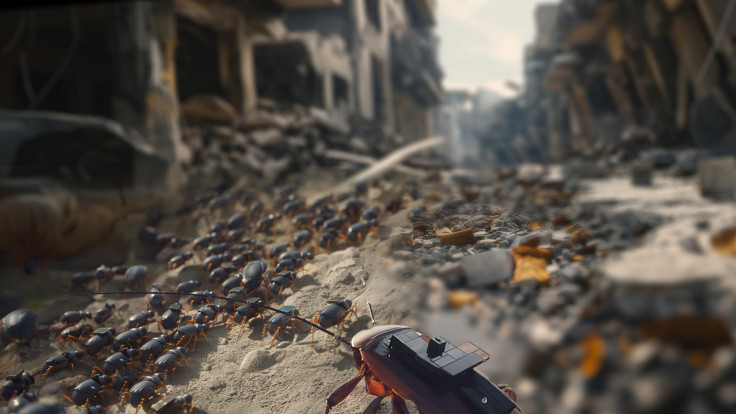
Innovative technology is turning resilient insects into tiny surveillance units designed for high-risk environments. By equipping these hardy creatures with micro-electronics, researchers are creating tools that can slip into spaces far too tight for standard machinery. These biological hybrids offer a clever solution for gathering data where traditional robots simply cannot go.
Inside a lab in Berlin, the staff at SWARM Biotactics are converting bugs into biological machines. This German firm builds tiny electronic kits that change Madagascar hissing cockroaches into portable scouting devices. These setups allow the creatures to transport imaging gear, audio recorders, and sensing equipment across cramped or risky locations.
Purposeful Species Selection
Stefan Wilhelm, the company's head, told CBS that selecting this specific bug was intentional. The Madagascar hissing variety is large enough to haul light equipment, remains hardy in harsh conditions, and is a frequent subject of scientific research.
'Millions of years of evolution actually produced a very resilient, a very mobile, and a very capable insect,' Wilhelm said. 'That is, for what we want to do, a perfect, perfect animal, actually.'
❗️🪳🇩🇪 - A German defense startup, SWARM Biotactics, is developing cyborg cockroaches equipped with miniature high-tech backpacks for potential use in intelligence, surveillance, and reconnaissance missions.
— 🔥🗞The Informant (@theinformant_x) December 15, 2025
These live insects, typically Madagascar hissing cockroaches, are… pic.twitter.com/itqdoPPI77
The integrated setup combining life forms and technology from SWARM has a total mass of 15 grams. Technical experts are currently aiming to lower this weight to 10 grams to minimise the physical burden on each bug. Each unit is outfitted with hardware such as visual lenses or detection systems, transforming the creature into a discreet scouting tool.
Versatile Environmental Survival
Wilhelm notes that these pests can withstand contact with toxic substances, high temperatures, and radiation. Such traits allow them to function in areas where standard machinery or people face too much danger. 'It's low signature, it's super energy efficient. It's almost undetectable ... and you can scale it almost unlimitedly,' he said.
When nature meets innovation: At Bundeswehr Cyber Innovation Hub, we’re testing bio-robotics – remote-controlled organisms for missions where conventional tech fails. Unveiled for the first time at MSC Innovation Night with Swarm Biotactics, this is where sci-fi meets reality. pic.twitter.com/tYudINPfyH
— Sven Weizenegger (@svenweizenegger) February 17, 2025
Additionally, the business has begun testing different types of bugs, including crickets and short-horned grasshoppers, for upcoming projects.
Navigational Mechanics
Experts in insect neurology at the firm fasten wires to the bugs' feelers to trigger their innate movement instincts. 'It's a roach with a backpack, and we're nudging him into the right direction,' Wilhelm said.
Staff at the firm can use handheld remotes to guide the creatures. Furthermore, the business is developing software to enable independent movement. 'With that algorithm we create, you can steer a whole swarm of insects towards a target. And that could be 10, that could be also, like, a hundred,' he said.
The startup Swarm Biotactics presented live cockroaches equipped with microbackpacks with cameras, sensors, and radio modules. These insects are controlled through neurostimulation, transforming into reconnaissance biorobots. pic.twitter.com/k1qzyFRU9Z
— Light Science 🇦🇷 (@LightSciencXXII) July 24, 2025
The business maintains that the procedure causes no discomfort to the bugs. 'They're very important for us, and they need to be in very good condition, and have a good life, in order to, you know, perform well in their missions. We make sure we take good care of them,' Wilhelm said.
Future Prospects for SWARM
SWARM Biotactics was established during a period of growing concern in Germany about Europe's security. This comes as the conflict in Ukraine persists and the United States pushes the region to take more responsibility for its own military protection.
'It gives you, you know, a capability no other system can give you because it can go to places where you otherwise couldn't go with any other technology,' Wilhelm said. He mentioned that aerial craft or ground troops would be required to transport the groups to specific zones. Within these clusters, various bugs can be fitted with distinct versions of the miniature kits.
'Some cockroaches are more for the camera, some are more for communication, for positioning. We triangulate between the swarms to get a good sense of where the swarm is exactly, if it's underground or denied areas. But you can carry a lot of different sensors, according to what you need,' he added.
Military Collaboration
The startup is partnering with the Bundeswehr, the German armed forces, to evaluate the performance of these insects during outdoor trials. At present, the firm is concentrating on protection and scouting rather than equipping the pests with weaponry, according to Wilhelm. However, he admitted that this priority might shift down the line.
'But it needs to be, of course, you know, within the legal framework,' he said, later noting, 'That is something we need to develop over time, whether that is an application which is useful or not. We don't focus on that right now.'
Wilhelm is confident that these insect clusters could prove helpful during emergency recovery efforts. The bugs can navigate through debris to search for trapped individuals. According to Wilhelm, the initial broad-scale uses for these groups may occur within the next year and a half to two years.
© Copyright IBTimes 2026. All rights reserved.