

Musk Predicts Poverty's End: AI Will Bring 'Universal High Income', Work Becomes Optional
Musk foresees a future where AI replaces work, poverty ends, and universal high income becomes reality
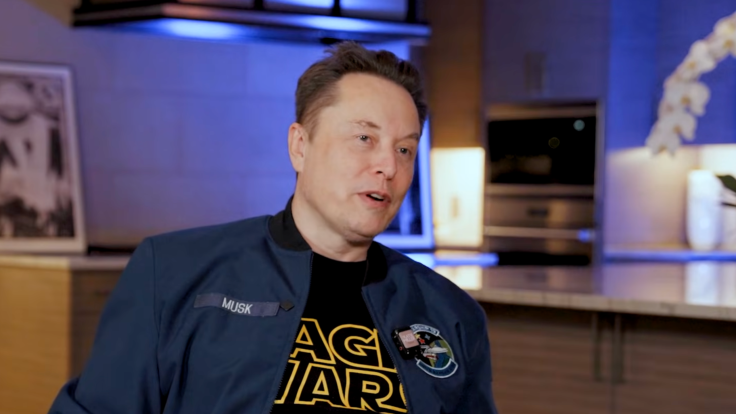
CEO and co-founder of Tesla and SpaceX, Elon Musk, has shared his views on the future of work and wealth in an AI-proliferated world, stating that someday artificial intelligence and robotics would render money useless, poverty would be eliminated, and work itself would become optional rather than compulsory.
His remarks at high-profile technology and investment forums offer a provocative, radical perspective on how society may develop over the coming decades.
Musk's forecasts have been controversial across industries, raising questions about how the economy can keep pace with rapidly accelerating automation, how universal income schemes would play out, and the future of human dignity and purpose in a post-work society.
Work Might Become Optional in an AI Future
Recently, at the US-Saudi Investment forum, Musk announced that, within the next 10-20 years, work would be optional due to AI and robotics. He compared forced labour to simple, pleasure activities, noting in his prediction that 'work will be optional.'
He illustrated this by comparing planting and cultivating vegetables in a garden to purchasing them in a store: 'It's much harder to grow vegetables in your backyard, but some people still do it because they like growing vegetables. That will be what work is like, optional.'
This vision challenges the traditional economic theory that individuals trade labour to earn income to satisfy their basic needs. According to Musk, robots and AI systems would do most of the work, especially humanoid robots like Tesla's Optimus, and they would not force people to work.
Money Could Become 'Irrelevant'
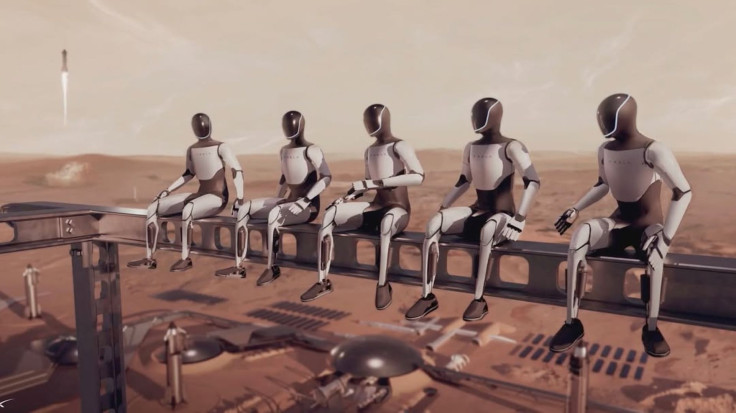
Musk has also indicated that money itself can become irrelevant over time, besides optional work. In the same conference, he predicted that, with advancing technological saturation, currency might become a thing of the past, as in science-fiction post-scarcity cultures: 'I think at some point currency becomes irrelevant.'
The concept stems from hypothetical literature and tech futurism speculations about a world in which automation generates far more than society demands, and in which basic goods and services become universal and free of traditional labour and compensation models. However, critics claim that such a view may be overly optimistic, given the social, economic, and political complexities involved in such a shift.
'Universal High Income' Instead of Basic Income
Musk has also proposed a 'universal high income,' a concept distinct from universal basic income (UBI). Based on this assumption, extensive automation would result in high productivity and wealth, enabling the government to provide a high level of income to every citizen, so that they would not have to work to access goods and services.
However, this is well beyond the plans for traditional UBI, which would provide a minimal safety net but not necessarily a comfortable standard of living without gainful employment. A universal high income is an imagined world in which there is no material scarcity, and individuals are not limited by economic means to engage in creative or other forms of personal interests.
Still, the way to such a future is not unanimously judged. Some commentators and economists caution that a post-work society will likely increase social disparities, primarily as automation's benefits are concentrated among capital owners rather than the rest of the population. Others claim that universal income suggestions should be accompanied by new social policies and new forms of governance to make it fair and stable.
Challenges and Potential Disruption
Musk has admitted that this vision could be achieved without trauma or disruption. Rapid automation may send millions of people onto the streets and cause significant reorganisation of economies, education, social welfare and political systems. He said there will be much trauma and disruption along the way, but emphasised that technological advancements tend to outpace society's adaptation.
Economists at Goldman Sachs have cautioned that 300 million full-time jobs globally are vulnerable to automation, and these issues should be considered when planning to mitigate the effects of such drastic economic changes. These estimates indicate that some positions might be eliminated, while others might change or evolve as new technologies emerge.
The biggest question is how mankind can derive meaning and purpose in a world where labour is optional and basic needs are fulfilled without traditional labour. Some mention the ability to be more creative, educated, and free of work; others emphasise the need to reassess what a meaningful contribution in the highly automated age should look like.
How Realistic Is Musk's Vision?

Musk's predictions have elicited excitement and scepticism. Supporters perceive his predictions as a hopeful destination toward a more prosperous, hate-free world of work-free existence. Such outcomes, according to sceptics, may be elusive or unevenly represented due to structural disparities, political barriers and technological constraints.
Some critics argue that the concept of a post-work society must not overlook immediate issues, including income inequality, job displacement, and the need for strong social safety nets to counter transitional phases. Social scientists and policymakers stress the importance of proactive structures to support economic transitions, given that AI benefits society at large rather than increasing wealth in the hands of a few elites.
With the ongoing development of AI and its impact on the industry, predictions like Musk's will continue to dominate discussions of the future of work, wealth distribution, and economic policy. Regardless of whether work becomes optional or money becomes irrelevant, the debate has illuminated the extent to which automation and artificial intelligence will influence global society over the next few decades.
© Copyright IBTimes 2026. All rights reserved.