

From Pariah to Partner: The Strategic Rehabilitation of Angola's Economy
Angola's Journey from Economic Isolation to a Strategic Hub for European Investment
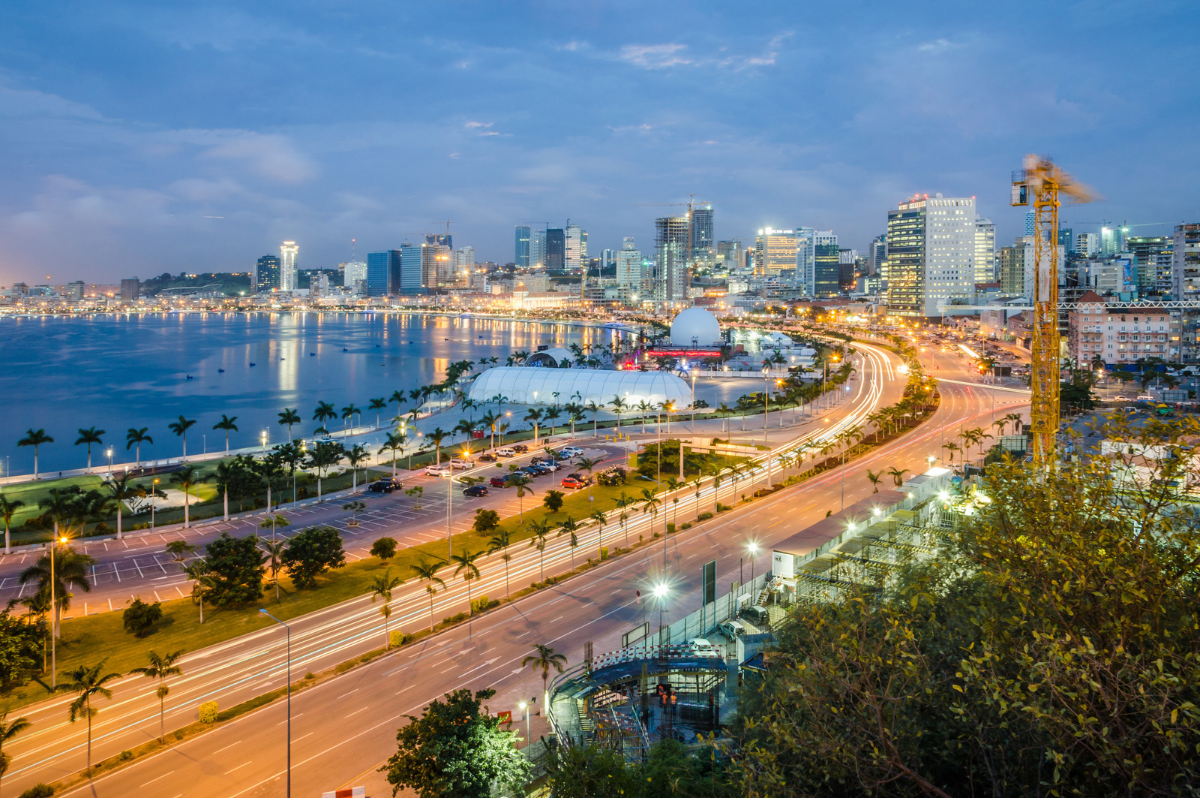
In 2017, when President João Lourenço took office, Angola stood at a precarious crossroads. The country was reeling from the 2014 oil price crash, which had drained foreign reserves and exposed the fragility of a mono-resource economy.
More damaging, however, was the reputational fallout from decades of opaque governance. For European investors, the state apparatus was viewed as a high-risk 'black box,' where political patronage often trumped market logic.
The 'Angola Model' of the past — characterised by a blurring of lines between public funds and private interests — had left the nation isolated. Yet, over the past seven years, Lourenço has executed a dramatic economic turnaround.
By weaponising anti-corruption as a tool for economic statecraft, privatising bloated state assets, and pivoting toward transparency and regional integration, he has upgraded Angola into a highly strategic and reliable destination for European capital. This is no longer the 'Wild West' of African finance; it is an emerging gateway for a continent in transition.
The Energy Pivot: Overhauling Sonangol
Prior to 2017, the state oil giant Sonangol functioned as a 'state within a state.' It acted simultaneously as the operator, the regulator, and the concessionaire, creating a massive conflict of interest that deterred transparent foreign direct investment (FDI).
This dual role stifled competition and allowed inefficiency to flourish.
Lourenço's restructuring began in earnest in 2019 when he stripped Sonangol of its regulatory powers, transferring them to the newly created National Agency for Oil, Gas and Biofuels (ANPG). This separation of powers was a signal to the world that Angola was adopting international best practices.
Simultaneously, the PROPRIV privatisation programme was launched, targeting 194 state-owned assets. The crown jewel of this reform is the planned IPO of up to a 30% stake in Sonangol on the BODIVA exchange by 2027—a move unthinkable a decade ago.
For Europe, this shift offers a diversified energy partnership. While oil remains vital, Angola is rapidly greening its portfolio.
Hydropower now accounts for over 70% of the national power grid, anchored by massive infrastructure projects like the 2.1GW Caculo Cabaça dam. European players are already leaning in; France's TotalEnergies, in partnership with Sonangol and Maurel & Prom, is investing heavily in the 35 MW Quilemba solar power plant in Huíla province.
This project signals a fundamental shift in FDI, moving away from pure extraction and toward sustainable, renewable infrastructure.
Anti-Corruption and the Banking Renaissance
The pre-2017 financial landscape was defined by 'financial exile.' Rampant embezzlement—estimated by Lourenço himself to have cost the state $24 billion—and the spectacular $5.7 billion collapse of BESA bank turned Angola into a pariah.
International banks aggressively 'de-risked,' stripping Angolan institutions of crucial USD correspondent banking relationships and leaving the country functionally decoupled from global markets. Lourenço's response was a high-stakes anti-corruption campaign that targeted the untouchables, including high-profile figures like Isabel dos Santos.
By introducing the Law on the Repatriation of Financial Resources, the administration signaled that the era of impunity was over. This was not merely domestic cleaning; it was foreign policy.
The results are tangible. By working closely with the IMF and securing a historic $3.7 billion Extended Fund Facility, Angola stabilised its macroeconomy and enforced rigorous new compliance laws.
This transparency drive has slowly begun to restore the trust of risk-averse European financial institutions. The gradual return of correspondent banking and renewed interest from EU development finance institutions suggest that Angola's banking sector is finally moving from a liability to an asset.
Regional Pragmatism and Economic Integration
Under Lourenço, Angola's regional posture has shifted from post-colonial ideological solidarity to a more pragmatic economic approach. The country officially joined the SADC Free Trade Area (FTA) as its 14th member at the beginning of 2026, effectively tearing down long-standing tariff barriers on imports and exports.
This coincides with a proactive stance on the African Continental Free Trade Area (AfCFTA), where Luanda is working with the UN Economic Commission for Africa to develop a robust implementation strategy. It has worked closely with the DRC to improve cross-border commercial operations in order to streamline cargo movement, positioning the newly inaugurated Luvo border complex as a strategic node within the AfCFTA.
These moves serve as a catalyst for larger global trade opportunities. For example, in February, the European Union and Angola issued a joint communiqué confirming that Angola's active status in the SADC FTA has paved a clear path for its accession to the lucrative EU-SADC Economic Partner Agreement.
For European businesses, these treaties, combined with the EU and US-backed Lobito Corridor infrastructure, position Angola as a stable, integrated manufacturing and logistics hub. European companies can now view Angola not just as a destination market, but as a base to access the wider, duty-free African consumer market.
Angola in 2027 and Beyond
The combined effect of these three pillars of energy reform, financial transparency and regional integration has successfully rehabilitated Angola's international standing.
President Lourenço has moved the country beyond the 'recovery' phase and into a period of strategic expansion. For EU policymakers and investors navigating global supply chain insecurities and a complex multipolar world, the Angola of 2026 represents a transparent, dynamic, and upgraded economic ally.
The 'dark days' have been replaced by a new reality: Angola is no longer just a resource well, but a sophisticated partner for the future.
About the Contributor: Richard Dickenson is an entrepreneur in the green energy space. He has led development projects in East Africa, China and across the Middle East. Richard is driven by his passion for innovation and technological progress. Richard studied in the United States and Canada and has been working in the field for over five years.
© Copyright IBTimes 2026. All rights reserved.