

Ramses II Head With Royal Inscriptions Found in Egypt Suggests Statue of Pharaoh Believed To Challenge Moses
Royal inscriptions and a colossal head in Egypt suggest a Ramses II statue stood close to 28 feet tall
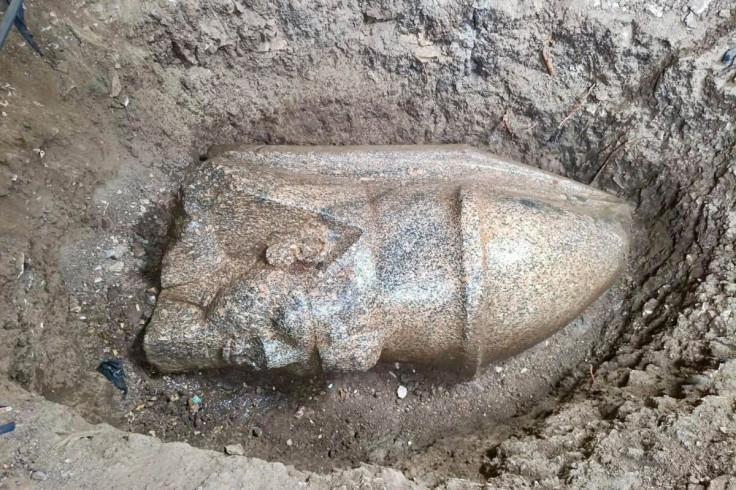
Egypt's Ministry of Tourism and Antiquities has reported the discovery of a Ramses II head in the Nile Delta following a homeowner's alert about an inscribed stone. Officials estimate the complete statue may have stood approximately 28 feet (8.5 metres) tall.
Ramses II ruled Egypt more than 3,000 years ago and is popularly linked to the pharaoh in the biblical Book of Exodus. In that account, the ruler enslaves the Israelites and defies Moses, incurring God's wrath. The text does not name Ramses II, and the discovery does not establish that identification.
Royal Inscriptions Identify Ramses II
The excavation began after a resident encountered a carved stone block bearing inscriptions while working on land outside his home in Behbeit El Hagar, also rendered Behebat al-Hijara, in Gharbia province. The Egyptian Gazette reported that he alerted local antiquities officials.
An inspection team identified the stone as an ancient artefact, prompting a wider excavation by the Supreme Council of Antiquities. The work uncovered remains of two royal statues and a separate block of pink granite bearing hieroglyphic inscriptions.
Hisham El-Lithi, the council's secretary-general, put the height of the Ramses II head at approximately 5 feet, 3 inches (1.6 metres). It depicts the king wearing the double crown, symbolising the unification of Upper and Lower Egypt.
Researchers also recovered part of the statue's back pillar, bearing an inscription containing one of the pharaoh's royal names. El-Lithi's estimate of the statue's original height includes the base and derives from the head's size, rather than a surviving complete figure.
Another Possible Likeness of Ramses II
The second statue survives as a section approximately 7 feet, 10 inches (2.4 metres) long. Its legs and base are missing, but its recovered head retains clearly visible, well-preserved facial features and the traditional striped royal headdress known as a nemes.
Researchers consider its resemblance to the first statue an indication that both may depict Ramses II. That identification remains tentative, unlike the first head, which officials identified as representing the king.
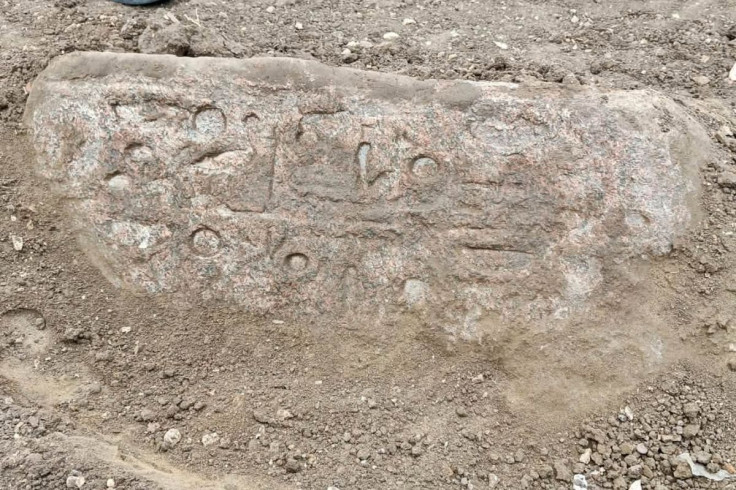
About 3 feet (0.9 metres) north of the second statue, archaeologists discovered a pink granite block approximately 4 feet, 3 inches (1.3 metres) long.
The stone carries the royal titles 'Nesu Beti', meaning 'King of Upper and Lower Egypt', and 'Sa Ra', meaning 'Son of Ra'. The ministry's reported announcement identifies both as titles of Ramses II.
Ramses II Finds May Clarify Delta History
Born in 1303 BC, Ramses II is widely regarded as one of the most influential and powerful kings of Egypt's New Kingdom, an era spanning 1570 to approximately 1069 BC. The Nile Delta region was a political, cultural and economic stronghold in ancient Egypt.
The village is known for the remains of a large temple dedicated to the goddess Isis. Tourism and Antiquities Minister Sherif Fathy welcomed the discoveries as an important addition to Egypt's archaeological record, expressing hope that they would deepen understanding of the area's historical significance.
Fathy also praised the homeowner for promptly reporting the stone rather than attempting to remove or retain it. He highlighted the contribution ordinary citizens can make to protecting the country's cultural heritage for future generations.
Excavations are continuing as researchers examine the relationship between the statues, the granite block and their surroundings. Further study could establish where the figures originally stood and how they relate to the site's architectural development.
© Copyright IBTimes 2026. All rights reserved.