

Musk's xAI Scores Win as GOP-Dominated Appeals Court Halts Minnesota's AI Deepfake Porn Ban Without Explanation
The Eighth Circuit issued a one-sentence order without explaining its decision, as xAI challenges the law on First Amendment grounds
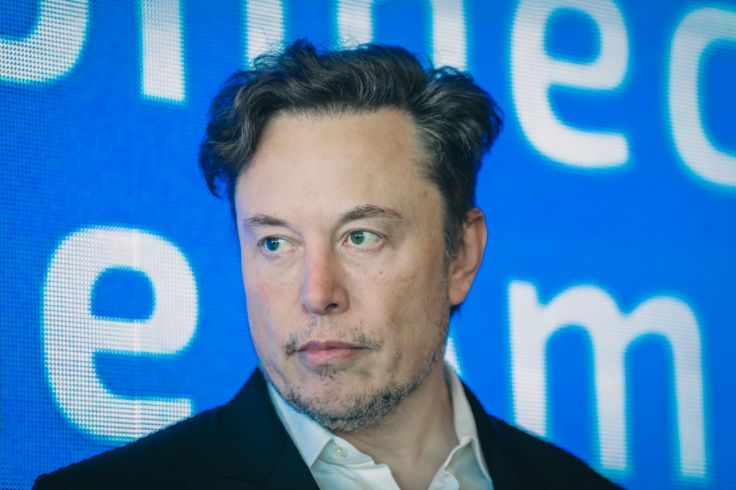
A federal appeals court has put Minnesota's first-in-the-nation ban on AI 'nudification' tools on hold, in a one-sentence order that gave no reasons.
The US Court of Appeals for the Eighth Circuit, based in St. Louis, granted Elon Musk's AI company xAI an injunction pending appeal on Friday, 2 October 2026, putting enforcement on hold while the company challenges the law on First Amendment grounds.
A lower court had twice refused to grant xAI emergency relief. Minnesota's attorney general's office said it strongly disagreed and would continue to defend the law.
A One-Sentence Order
The court gave no explanation for its decision. It issued a brief, one-sentence order granting xAI's request, CBS Minnesota reported. The case is X.AI LLC v. Keith Ellison, No. 26-2806, and the order does not decide whether the law is constitutional.
It overrides the district court's refusal to halt enforcement while the appeal proceeds. US District Judge Donovan W. Frank denied xAI a temporary restraining order on 31 July, a day before the law took effect.
On 4 September, it rejected its request for a preliminary injunction, finding that the company had not shown irreparable harm and had waited too long to seek emergency relief, Reuters reported. xAI disputed those findings on appeal.
The Eighth Circuit is widely regarded as one of the more conservative federal appeals courts, with most of its active judges appointed by Republican presidents. The reporting did not identify the judges on the panel that issued the order, and nothing in the order links its composition to the outcome.
'Overbroad, Content-Based Ban on Free Speech'
xAI argues the law violates the First Amendment. In a complaint filed on 27 July, the company said the statute 'imposes an overbroad, content-based ban on free speech and the tools of visual expression'.
The law is narrower than a general ban on sexual AI imagery. HF 1606 prohibits anyone who owns or controls a website, application, software, programme or other service from allowing users to 'nudify' an image or video, or doing so on a user's behalf, and from advertising such services.
It defines nudification as altering or generating an image or video to depict an intimate part of an identifiable person not shown in the original, realistic enough that a reasonable person would believe it belongs to them, and exempts services that require the user's own technical skill.
In defending the law, Minnesota pointed to xAI's own product. The state argued that the measure was needed to address what it described as a 'staggering amount' of child sexual abuse material generated by AI products such as Grok Imagine, xAI's image-generation tool. That is the state's argument in the litigation, not a court finding.
Near-Unanimous at the Capitol
The law passed with overwhelming bipartisan support. The Minnesota House approved it by 132 votes to one on 23 April 2026, the Senate passed it 65-0 on 29 April, and Governor Tim Walz signed it on 7 May. It took effect on 1 August. Republican state Representative Drew Roach, the lone opponent, called it an 'ineffective, messaging bill'.
The state is not backing down. 'We are disappointed in the Eighth Circuit's decision and respectfully but strongly disagree with it,' Attorney General Keith Ellison's spokesperson told CBS Minnesota.
'Minnesota's nudification ban outlaws AI technology products from generating sexual images that harm and harass people in the vilest way possible. We will continue to vigorously defend the law as the appeal proceeds, and we are proud to do so.'
xAI did not immediately respond to requests for comment, Reuters reported. Until the appeal is resolved, enforcement of Minnesota's law is on hold under the Eighth Circuit's injunction, and the court has not said why it granted it.
© Copyright IBTimes 2026. All rights reserved.