Trump Backs Away From Industry-Funded AI Regulator After Zuckerberg, Musk and Nvidia's Huang Object, Report Says
They reportedly warned Trump that an industry-funded AI watchdog could entrench the dominance of leading AI laboratories
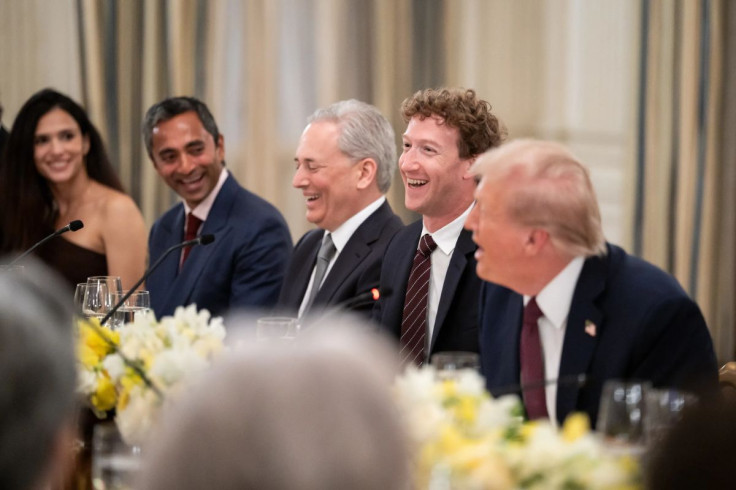
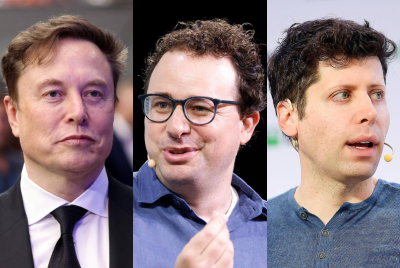
Mark Zuckerberg, Elon Musk and Nvidia chief Jensen Huang reportedly persuaded Donald Trump not to move forward with an industry-funded artificial intelligence watchdog after warning it could hand even greater power to the biggest AI laboratories.
The three technology billionaires separately raised concerns with Trump last month about a proposal for an independent AI standards body modelled on the Financial Industry Regulatory Authority, or FINRA, according to The Wall Street Journal.
Google DeepMind CEO Demis Hassabis promoted the idea, which would have created an industry-funded organisation to set standards and oversee frontier AI development.
Zuckerberg, Musk and Huang reportedly argued that such a system risked entrenching the dominance of OpenAI, Anthropic and Google DeepMind, while also raising questions about who would control the body and determine its membership. After the separate conversations, Trump did not move forward with the proposal, the Journal reported.
AI Chiefs Warned of Power Concentration
The reported intervention exposes a widening split inside Silicon Valley over how advanced AI should be governed.
Supporters of stronger oversight argue that increasingly capable models require common safety standards and independent scrutiny. Critics counter that rules shaped by the largest laboratories could give established companies an advantage over smaller rivals.
Administration officials have reportedly told AI executives that reaching agreement has become difficult because the industry remains divided and company chiefs can take their views directly to Trump. The disagreement is also playing out within Trump's own administration.
The Journal reported that senior officials, including Treasury Secretary Scott Bessent and White House chief of staff Susie Wiles, have pushed for greater government scrutiny. Bessent was particularly concerned that AI-enabled cyberattacks could wreak havoc on the banking system.
Zuckerberg and Huang Push Back on New Rules
The reported lobbying came shortly before Zuckerberg and Huang publicly argued that AI companies could manage safety without sweeping new regulation.
Huang told Salesforce's Dreamforce conference this week that safety was fundamentally 'an engineering problem, not a legal one'.
'We don't need any new laws. We don't need new regulations,' Huang said, arguing that companies already have strong market incentives not to release products they consider unsafe.
Zuckerberg similarly argued that individual laboratories have enough incentive and responsibility to manage safety themselves, pointing to Meta's decision to delay releasing its Muse AI agent over security concerns.
He nevertheless described independent evaluators and outside safety advisers as an industry best practice. Musk's position has been less straightforward.
He recently mocked some warnings about imminent AI-driven human extinction, but separately backed Anthropic chief Dario Amodei after he called for greater caution around rapidly advancing frontier systems.
Trump Remains Sceptical of AI Restrictions
Trump has repeatedly framed rapid AI development as crucial to maintaining America's technological advantage over China and has criticised proposals that he believes could slow development.
The dispute leaves the White House balancing two competing pressures: warnings that powerful AI systems require stronger safeguards, and arguments from some of the technology industry's most influential executives that regulation could hinder competition while strengthening companies already leading the race.
© Copyright IBTimes 2026. All rights reserved.
- Recommended For You