Trump's Support for AI Faces New Scrutiny After Fake Kissing Image Targets Him and Natalie Harp
A viral fake image shows how generative AI can blur political reality before corrections have time to catch up across social media

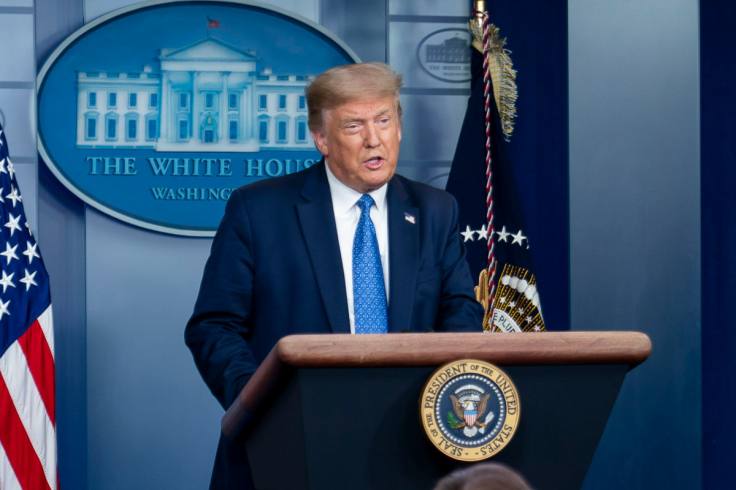
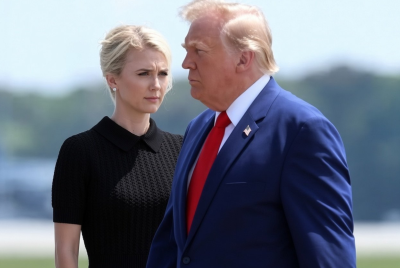
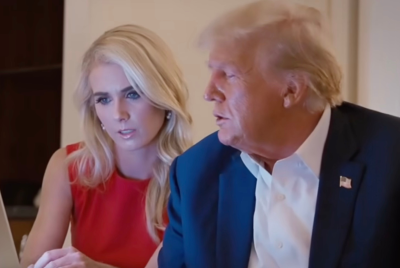
President Donald Trump's support for artificial intelligence drew fresh commentary on Sunday, 20 September, after fake images purporting to show him kissing a woman whom social media users claimed was White House aide Natalie Harp circulated widely online.
The woman's identity cannot be independently confirmed from the images, and no verified photographic source for the purported encounter has been established.
The Washington Post reported on 19 September that two circulating versions of the image, one clearer and one blurrier, were AI-generated.
Its analysis found signs associated with generative AI, including distorted hands, while detection tools from OpenAI and Google also flagged versions of the picture. The Post said it could not determine who originally created the image or establish with certainty which version appeared first.
The White House rejected the image as false, telling The Post that it was 'clearly a fake photo.' The clearer version also showed a woman's hand with six fingers, a visual anomaly that investigators cited while assessing the image's authenticity.
Trump's AI Stance Comes Under Scrutiny After Viral Image
In an opinion column published Sunday by MS NOW, Kaivan Shroff used the episode to argue that synthetic political imagery can be difficult to counter once it has spread widely.
He wrote that viewers may continue to remember an image even after fact-checkers or officials have challenged its authenticity.
Shroff also linked the episode to Trump's own use and promotion of AI-generated political material. That is an argument made in commentary, not an established finding that Trump's conduct caused this particular image to circulate.
The verifiable facts are narrower. Images purporting to show Trump kissing a woman said online to be Harp spread across social media; the White House denied their authenticity, and independent analysis found evidence that the images were created with artificial intelligence.
Harp is Trump's executive assistant. Financial disclosures released by the administration this month showed that Trump gave Harp, communications adviser Margo Martin and deputy director of Oval Office operations Chamberlain Harris $45,000 (£33,610.73) each as holiday gifts, while director of Oval Office operations Walt Nauta received $20,000 (£14,950.10). Those disclosed gifts do not establish any romantic relationship between Trump and Harp and should not be treated as evidence supporting the fake image.
The Post also reported that an early user who helped the clearer image go viral said he had not created the underlying picture and had not independently verified that the woman shown was Harp. That uncertainty matters because the image itself cannot establish her identity.
Trump's AI Stance Remains Focused on Rapid Development
Trump has continued to oppose broader restrictions on artificial intelligence. On 14 September, he wrote on social media that the only 'control or 'guardrails'' AI needed was a 'STRONG AND SMART (High IQ!) PRESIDENT.'
He also alleged that there was a 'SICK conspiracy' against AI and data centres and argued that restricting the technology could benefit China.
The Associated Press reported that those remarks came as technology executives, including Anthropic chief executive Dario Amodei and OpenAI chief executive Sam Altman, called for stronger safeguards or a slower pace of development.
Trump rejected their concerns and argued that the US should maintain its advantage over China. Those statements are political positions in an ongoing debate over AI oversight. They do not establish that particular safeguards are unnecessary, nor do calls for stronger regulation by industry executives establish that a specific regulatory approach is required.
The fake kissing image has therefore become part of a broader discussion about how easily synthetic political material can circulate.
In this case, the strongest available evidence supports describing the images as AI-generated fakes while avoiding claims about the woman's identity, the creator's motive, or any relationship between Trump and Harp.
No verified photographer or original photographic source has been identified for the purported scene. The White House has rejected the image as inauthentic, and the available analysis does not support presenting it as evidence of a real encounter.
© Copyright IBTimes 2026. All rights reserved.
- Recommended For You