

Ben Meiselas Stunned After Donald Trump Is Spotted 'Slumped Over' and 'Struggling To Walk Around'
Trump's health scrutiny resurfaced after Meiselas said the president looked 'slumped over' following an Ohio midterm rally
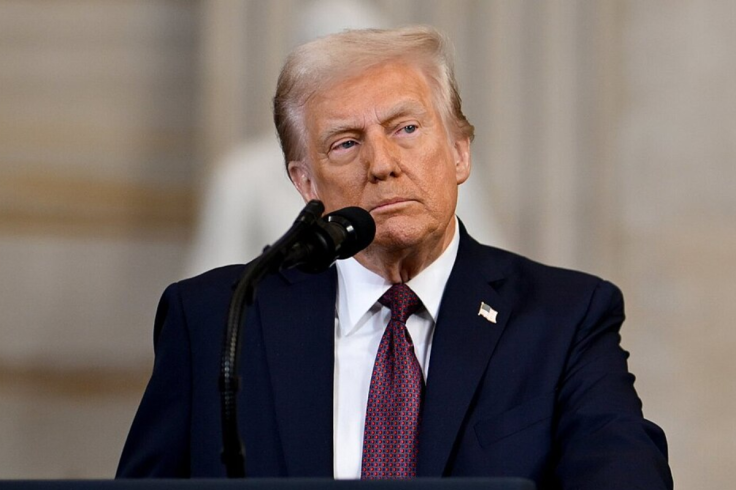
Donald Trump health questions resurfaced after MeidasTouch co-founder Ben Meiselas commented on images of the president returning from an Ohio campaign rally.
Meiselas said Trump, 80, appeared 'slumped over' and was 'struggling to walk around' after arriving back in Washington, D.C.
The images followed Trump's appearance at a Republican midterm rally in Vandalia, Ohio, on Saturday, 3 October.
Independent wire photographs showed the president walking across the White House South Lawn after stepping off Marine One. The photographs do not establish why Trump appeared to hold a particular posture or move in a particular way. Nor do they provide evidence of an underlying medical condition.
Ben Meiselas Comments on Donald Trump's Return From Ohio
Trump spoke at the Vandalia-Butler High School Student Activity Center while campaigning for Republican candidates ahead of the 3 November midterm elections.
Republican gubernatorial nominee Vivek Ramaswamy and US Sen. Jon Husted were among the prominent Ohio Republicans connected with the event.
Meiselas discussed Trump's rally and subsequent return to Washington during a MeidasTouch episode published on Sunday, 4 October. The programme reviewed footage from the event and images of Trump after his journey back from Ohio.
'He left Dayton, Ohio, he arrived back in Washington, D.C., slumped over, struggling to walk around,' Meiselas said.
His wording represented his interpretation of Trump's appearance rather than a medical finding. Photographs and brief videos can document posture and movement, but they cannot determine what caused either. That distinction matters especially when reporting on the health of a public figure.
Trump also spoke about his daily aspirin use during the Ohio rally. He said taking aspirin was partly 'psychological' and indicated that he preferred a larger tablet.
The president's physician had previously recommended low-dose aspirin. A medical memorandum released after Trump's May 2026 examination listed aspirin among his medications for cardiovascular prevention.
Donald Trump Health Records Provide Important Context
Public attention surrounding Trump's health has intensified during his second term, particularly after photographs showed bruising on his hand and swelling in his lower legs.
Those issues have previously been addressed through formal medical statements rather than assessments based solely on photographs.
In July 2025, physician to the president Sean P. Barbabella said Trump had been diagnosed with chronic venous insufficiency. The White House memorandum described it as a benign and common condition among people over 70.
The same medical update said bruising on Trump's hand was consistent with frequent handshaking combined with aspirin use. It also said examinations found no evidence of deep vein thrombosis, arterial disease, heart failure, renal impairment or systemic illness.
Trump later underwent another medical examination at Walter Reed National Military Medical Center on 26 May 2026. Barbabella's subsequent report noted slight swelling in Trump's lower legs, but said the condition had improved compared with the previous year.
The examination also included a neurological assessment. According to the physician's memorandum, Trump displayed normal mental status, motor strength, sensation, reflexes, gait and balance.
Trump also scored 30 out of 30 on the Montreal Cognitive Assessment, according to the report. Barbabella concluded that the president remained in 'excellent health' and was fully fit to perform the duties of the presidency.
Those findings provide important context for Meiselas's comments. They do not determine what was happening in photographs taken several months later, but they remain the latest formal medical assessment cited in connection with Trump's health.
Photos Alone Cannot Establish a Medical Diagnosis
Questions surrounding a president's health are legitimate matters of public interest, particularly when raised during an election campaign. However, observations about someone's appearance should remain separate from claims about a specific medical condition unless supporting evidence is available.
In this case, Meiselas described Trump as 'slumped over' and 'struggling to walk around' after his return from Ohio. His comments prompted renewed scrutiny of the president's appearance.
The available photographs can show how Trump looked at particular moments. They cannot establish why he appeared that way or whether his posture was connected to a medical issue. No verified medical evidence linked to the 3 October images has established a medical explanation for Trump's posture or movement.
The most recent formal examination cited here found normal neurological function, gait and balance. Meiselas's remarks should therefore be understood as his interpretation of the images, not a medical diagnosis.
© Copyright IBTimes 2026. All rights reserved.