

Bank of America Faces Massive Penalties After Regulators Identify Serious Anti-Money Laundering Failures
Regulators reportedly identified delays in reporting more than $5 billion in suspicious transactions at Bank of America
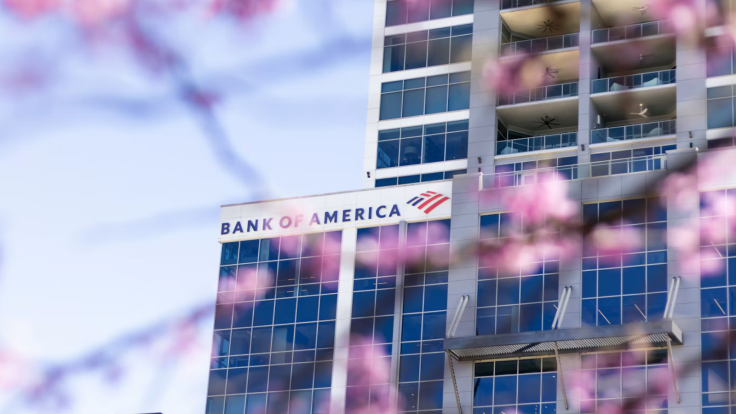
The Financial Crimes Enforcement Network, or FinCEN, assessed a $1.2 billion (£899,965,200) civil penalty against Bank of America, N.A., in the United States on 13 October 2026 over anti-money laundering failures. The US Treasury stated that the bank failed to report more than $5 billion (£3,750,750,000) in suspicious transactions promptly.
The enforcement action followed a December 2024 order from the Office of the Comptroller of the Currency, or OCC, requiring the bank to address deficiencies in its anti-money laundering programme. Regulators identified continuing failures to escalate potentially suspicious activity to the bank's investigators more than a year after that order.
The OCC also assessed a $750 million (£562,466,250) penalty. FinCEN agreed to credit the OCC payment against its $1.2 billion (£899,965,200) assessment, so the two penalties should not be added together.
Bank of America Reporting Delays Covered Billions
More than $1 billion (£750,025,000) of the suspicious transactions reported late involved national security concerns and other priority financial crime risks, according to the Treasury. That amount was included within the wider figure exceeding $5 billion (£3,750,750,000).
The figures describe suspicious activity, which does not by itself establish criminal conduct by the customers involved. They should not be interpreted as a finding that every transaction represented proceeds from crime.
Banks must maintain systems to detect potential money laundering and report suspicious activity to federal authorities. Their responsibility includes recognising warning signs and providing timely information so investigators can examine possible connections between transactions, businesses and individuals.
The Treasury stated that suspicious activity accumulated without investigation for extended periods, resulting in late reports of limited use to law enforcement. The findings concerned both the identification of potentially suspicious transactions and the handling of activity that warranted further examination.
Warnings Failed To Reach Bank of America Investigators
The Treasury's account of the OCC findings identified weaknesses in transaction monitoring and escalation. The bank knew for years that potentially suspicious activity was not reaching its investigators for review but failed to correct the problem.
Its monitoring system failed to review large volumes of transactions properly. Some suspicious activity reports were submitted late or contained inaccurate information, undermining the reporting process through which banks alert authorities to potential financial crime.
The Treasury also criticised the bank's reliance on law enforcement inquiries, requests from other financial institutions and similar outside interventions to identify potentially suspicious transactions. Such referrals were taking the place of a stronger role for its own monitoring systems.
Customer due diligence presented further problems. Procedures did not adequately account for customers' extensive reliance on payments from unknown third parties, according to the Treasury.
The bank failed to respond promptly or meaningfully to mounting warning signs involving possible narcotics proceeds, trade-based money laundering and fraud, the Treasury stated. These findings concerned deficiencies in the bank's oversight and response to potential risks.
Earlier Order Put Bank of America Compliance Under Scrutiny
The December 2024 order had already required Bank of America to address weaknesses in its compliance programme. The OCC subsequently identified problems involving staffing, training, internal audits and management's response.
The OCC identified insufficient expertise among some compliance personnel. Internal audits failed to identify longstanding concerns that regulators later uncovered.
The Treasury described the $750 million (£562,466,250) assessment as the largest penalty in the OCC's history. Separately, Bank of America agreed to pay $11,662,930 (£8,748,946) to settle potential civil liability for apparent sanctions violations, according to the Office of Foreign Assets Control.
Bank of America Must Review Historical Transactions
FinCEN's consent order requires Bank of America to work with an independent consultant to identify and report suspicious transactions that earlier controls failed to detect.
The bank must also undergo independent reviews of its suspicious activity monitoring, customer due diligence and due diligence for foreign correspondent accounts. A further review concerns the data governance framework supporting its anti-money laundering programme.
© Copyright IBTimes 2026. All rights reserved.