

Trump Chopper Close Call at DCA Triggered by Radio Blind Spot, NTSB Says
NTSB report highlights radio failures and temporary operating location as key factors
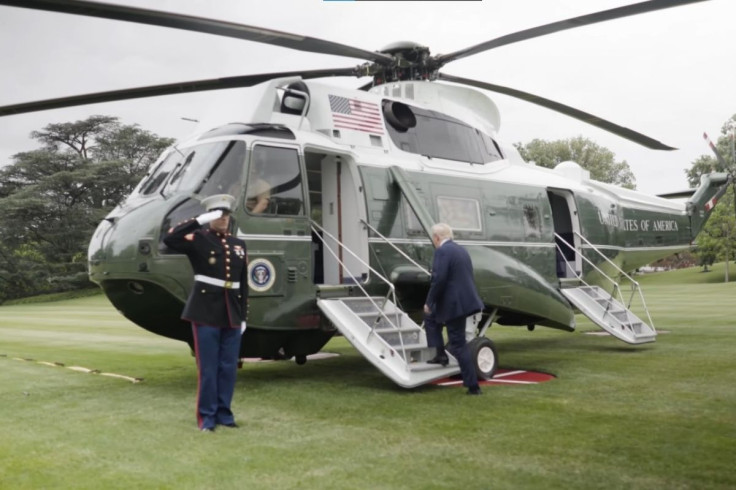
Trump's Marine One helicopter came within 0.82 nautical miles and 700 feet vertically of a passenger jet near Reagan National Airport on August 4. The incident followed a radio failure that prevented controllers from receiving the required departure warning, according to a preliminary NTSB report. President Donald Trump was aboard Marine One at the time.
The NTSB found the problem was more than a missed radio call. The temporary operating location at the Ellipse lacked adequate line of sight to radio equipment used by Reagan National's control tower. The first transmission was not received; a second was described as 'broken and completely unreadable'.
Controllers and Marine One personnel had discussed the problem days earlier. At a July 30 meeting, the helicopter unit acknowledged communications had been 'spotty', while controllers said they had repeatedly failed to receive the required three-minute warning. Both sides agreed on a backup plan, but that also failed on August 4.
The Radio Blind Spot That Left Controllers in the Dark
Marine One normally provides Reagan National air traffic controllers with a three-minute warning before departure. That warning allows controllers to manage nearby commercial traffic and prevent aircraft from occupying the same airspace as the presidential helicopter.
On August 4, Marine One attempted to make the required notification but was unable to establish reliable communication with the tower. The crew then tried to relay the message through helicopter facilities at Joint Base Anacostia-Bolling, but that attempt also failed, according to the NTSB.
Without the warning, a commercial jet departed Reagan National as Marine One took off from the Ellipse. The aircraft was Envoy Air Flight 3742, an Embraer E-170 bound for Pensacola, Florida. Marine One lifted off at about 2:34 p.m. as the passenger jet began its climb from Runway 1.
Why White House Construction Created the Radio Gap
The NTSB's findings point to the temporary Marine One operating location as an important factor. Because construction was taking place at the White House, Marine One was using the Ellipse rather than its usual South Lawn location.
FAA technicians later found inadequate line of sight between the radio transmitter and the Ellipse. The discovery prompted the FAA to move the equipment from a nearby residential location to the top of Reagan National's control tower. Subsequent tests reportedly showed communications improved after the change.
The FAA had already announced corrective measures earlier this month, including relocating the antenna and changing procedures to improve communication between Marine One and controllers. The NTSB's preliminary findings have now confirmed the technical basis for those changes.
A Known Problem the Warning Controllers Never Received
Perhaps most concerning, the communications issue was known before the August 4 incident. During the July 30 meeting, controllers told HMX-1, the Marine Corps unit responsible for presidential helicopter operations, that they had not been receiving the required departure notifications. The unit said communications had been inconsistent.
Both sides agreed that another aircraft could relay the warning if direct contact failed. But that contingency did not work when it was needed.
The NTSB said the incident, therefore, involved more than a single failed transmission. It exposed a weakness in a communication process that had already been identified as unreliable.
Marine One and Jet Came Within 700 Feet
The aircraft did not collide. The NTSB has not concluded that a collision was imminent, but the breach of required separation raised immediate concern given the sensitivity of the airspace.
At their closest point, Marine One and the passenger jet were separated by about 0.82 nautical miles horizontally and 700 feet vertically. The FAA described the event as a 'momentary loss of separation', after which the aircraft continued moving away from one another.
The Marine One crew also saw the departing aircraft after being alerted by the tower and temporarily delayed its movement, according to the preliminary findings.
Why the DCA Incident Matters After 2025 Crash
The episode has taken on renewed significance because it occurred in the same airspace where an Army Black Hawk helicopter and an American Airlines regional jet collided in January 2025.
That crash killed all 67 people aboard the two aircraft. The NTSB later identified serious weaknesses in the management of helicopter and aircraft operations around Reagan National.
Following that disaster, restrictions were imposed on helicopter operations around the airport, while procedures were tightened for presidential helicopter movements.
The latest incident suggests those measures may not have fully addressed the underlying communication vulnerabilities.
The NTSB investigation remains ongoing. Investigators have identified the radio coverage gap, the temporary operating location and the failed backup communication method as key factors explaining how commercial traffic continued moving while Marine One, carrying the president, was airborne.
© Copyright IBTimes 2026. All rights reserved.