

'Software Engineering' Pioneer Margaret Hamilton, Who Wrote Apollo 11 Code, Dies Aged 90
The MIT computer scientist helped establish software engineering and designed systems that kept the lunar mission running despite critical computer overloads
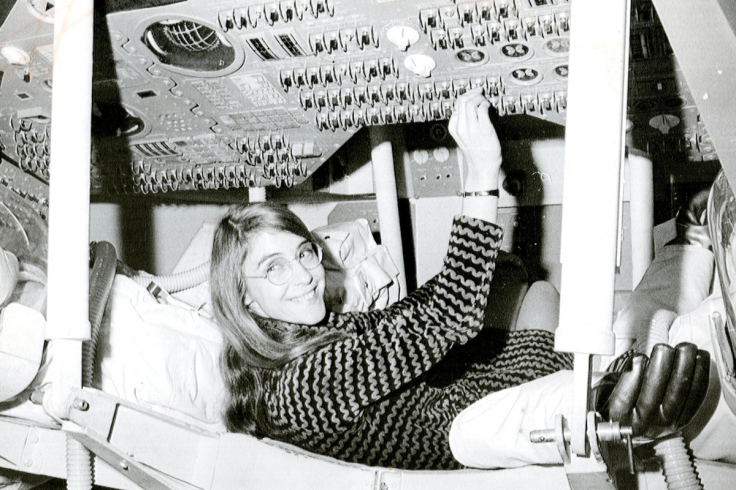
Margaret Hamilton, the computer scientist who led the software team that helped land Apollo 11 on the Moon and helped define 'software engineering' as a field, has died aged 90, the Massachusetts Institute of Technology (MIT) has confirmed.
She was hired as the first programmer on the Apollo project at the university and the first female programmer on the project, MIT said.
The role was initially intended to be temporary, but it became the foundation of a career in software engineering that helped establish the field as a recognised discipline and left a lasting mark on computing and space exploration.
Hamilton used the term 'software engineering' at a time when software work was often seen as a support function rather than an engineering discipline in its own right.
Her insistence on rigorous methods and formalised practices for developing complex, safety-critical code helped shift attitudes inside NASA and beyond, influencing how later generations of engineers thought about software reliability.
How Apollo 11's Software Steered Through Crisis
Apollo's computers could not easily be fixed from the ground in real time, so Hamilton and her team designed the system to cope with unexpected problems during flight. Its priority-driven software was built to keep executing the most important tasks while lower-priority jobs were dropped or deferred.
That design proved critical during the final stages of the Apollo 11 descent. The onboard computer produced 1202 alarms after additional processing demands from the rendezvous radar overloaded it. Rather than allowing the overload to disrupt the landing, the software restarted and re-established the highest-priority tasks, allowing the descent to continue.
The flight software controlled guidance, navigation and control functions for the Lunar Module and the Command and Service Module, leaving little room for error in how it handled limited memory and processing power. Neil Armstrong and Buzz Aldrin went on to land safely in the Sea of Tranquility in July 1969.
One of the most widely reproduced images of the programme shows Hamilton smiling beside a stack of printed software listings about as tall as she was.
MIT said the pile represented the software developed by the Lunar Module and Command and Service Module teams, a visible record of the code that underpinned the Apollo Guidance Computer.
From Indiana to MIT and the Moon
Hamilton was born in 1936 in Paoli, Indiana, and studied mathematics and philosophy at Earlham College. After moving to Massachusetts, she worked at MIT, where she initially developed software for weather prediction and military air defence projects before joining the Apollo programme.
Her early work at MIT exposed her to complex, real-time systems, experience that proved important when she moved on to the Apollo Guidance Computer software.
By the time she became director of the Software Engineering Division at MIT's Instrumentation Laboratory, she was leading a large team responsible for code that had to work in unforgiving conditions.
Building on Apollo: A Career in Software
After leaving MIT in the 1970s, Hamilton founded two software companies, Higher Order Software, established in 1976, and Hamilton Technologies. MIT said the latter developed systems around its Universal Systems Language, with a focus on reliability, error prevention and defensive programming.
The Universal Systems Language and its associated tools were designed for systems in which failure could have serious consequences, such as aerospace, defence and other safety-critical industries. Hamilton promoted approaches intended to catch errors early in the design process and to support rigorous verification of complex software systems.
Honours and Tributes to a Spaceflight Pioneer
In 2016, President Barack Obama awarded Hamilton the Presidential Medal of Freedom, the United States' highest civilian honour. He said she 'symbolizes that generation of unsung women who helped send humankind into space'.
Hamilton also received NASA honours and several awards from engineering and computing bodies recognising her work on mission-critical software and her contributions to software engineering as a discipline.
Universities, including Earlham College, granted her honorary degrees in acknowledgement of her achievements. Earlham College said it was saddened by her death and praised her pioneering spirit and legacy.
NASA and MIT colleagues have highlighted Hamilton's role in building confidence in software as a central part of spaceflight. The widely shared photograph of her beside the stack of Apollo code has been used in exhibitions and educational material as an example of the scale and importance of that work.
MIT said Hamilton is survived by her daughter, a son-in-law, two grandsons and four great-grandchildren.
© Copyright IBTimes 2026. All rights reserved.